
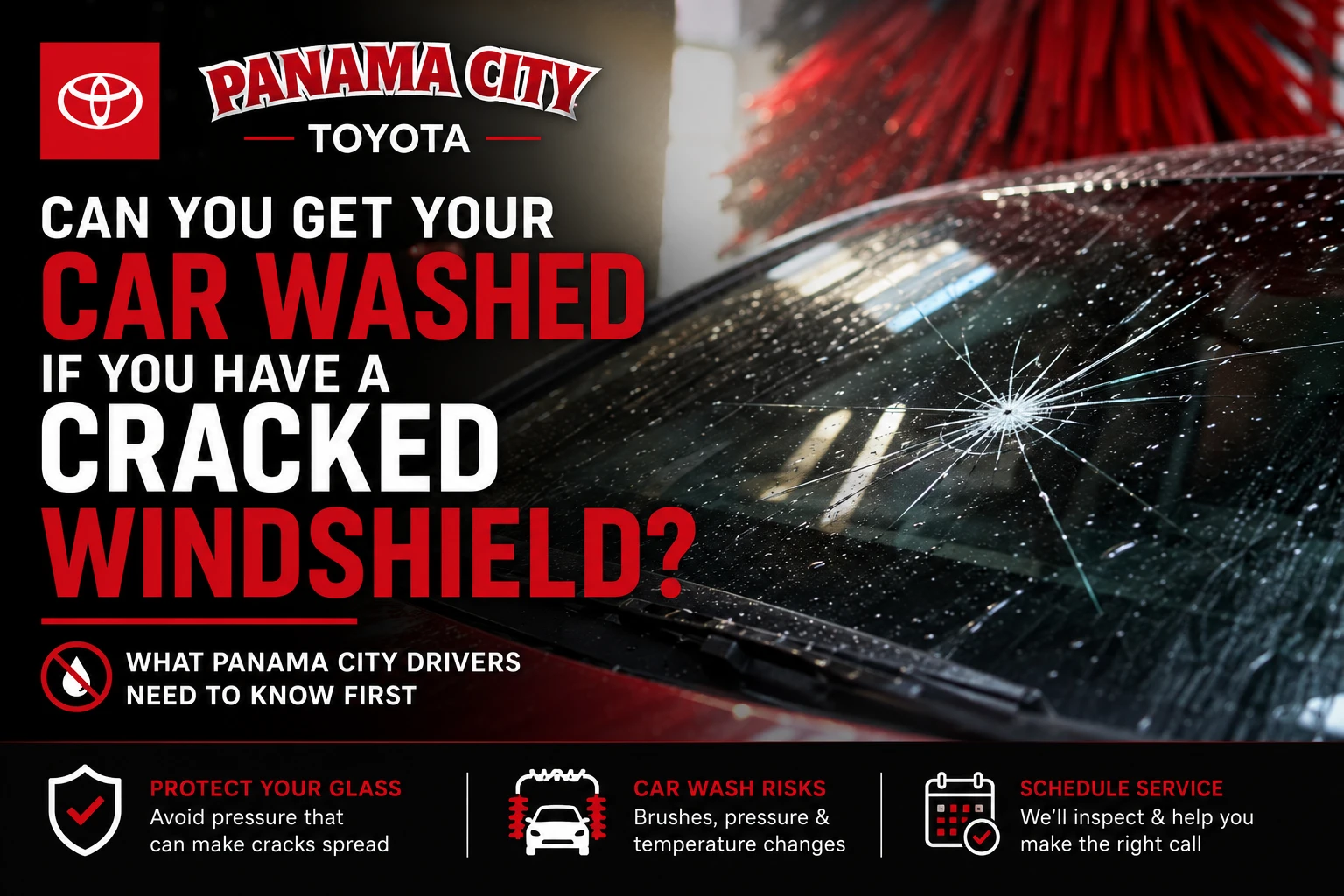
Can You Wash a Car With a Cracked Windshield?
A cracked windshield does not always mean you can never wash your car, but it does mean you should be careful. Automatic car washes, high-pressure water, spinning brushes, strong dryers, and sudden temperature changes can make existing windshield damage spread.
For very small chips, a gentle hand wash may be the safer short-term option. If the crack is long, spreading, near the edge of the windshield, or in your line of sight, skip the wash and schedule an inspection before putting more stress on the glass.
A cracked windshield can make even simple maintenance decisions feel uncertain. Maybe your Toyota needs a wash after a week of rain, pollen, beach air, road dust, or bugs on the glass. But if there is already a chip, crack, or star-shaped break in the windshield, is it safe to run the vehicle through a car wash?
The short answer is: it depends on the size, location, and severity of the crack, but it is usually smarter to avoid automatic or high-pressure car washes until the windshield is inspected or repaired.
A small chip may not seem like a major issue at first, but water pressure, temperature changes, soap, brushes, air dryers, and vibration can sometimes make windshield damage spread. If the crack is already long, deep, near the edge of the glass, or in the driver’s line of sight, a car wash may create extra risk.
At Panama City Toyota, our service team helps local drivers understand when a simple chip needs attention, when a windshield concern should be inspected, and when it may be better to delay washing the vehicle until the glass is repaired.
Quick Answer: Should You Wash a Car With a Cracked Windshield?
You can sometimes gently hand wash a vehicle with a very small windshield chip, but you should avoid automatic car washes, high-pressure spray, spinning brushes, and strong air dryers if the windshield has a crack. These can add pressure, vibration, and temperature stress to already damaged glass.
If the crack is spreading, longer than a few inches, near the windshield edge, or blocking your view, do not run the vehicle through a car wash. Schedule an inspection or repair first.
Why a Cracked Windshield Can Get Worse in a Car Wash
Your windshield is designed to protect you, support visibility, and help maintain the structure of the cabin. When the glass is cracked, it is already under stress. A car wash can add more stress in several ways.
Automatic car washes may use high-pressure water, rotating brushes, strong detergents, forced air dryers, and sudden changes in temperature. Even if each part of the process seems harmless, the combination can make an existing crack more likely to spread.
Common car wash risks include:
- High-pressure water pushing into the crack
- Brushes adding vibration or direct pressure
- Hot or cold water creating temperature stress
- Air dryers forcing moisture deeper into damaged glass
- Existing cracks spreading toward the edge of the windshield
- Small chips becoming longer cracks after the wash
That does not mean every cracked windshield will break during a car wash. But once the glass is damaged, the safer choice is to reduce pressure and avoid anything that could make the crack worse.
Is a Touchless Car Wash Safer for a Cracked Windshield?
A touchless car wash may be safer than a brush-style car wash because it does not physically scrub the windshield. However, touchless washes often rely on strong water pressure and chemical cleaners to remove dirt without contact.
That means a touchless wash can still be risky if your windshield crack is already spreading or if the damage is close to the edge of the glass.
If you must clean the vehicle before repair, a gentle hand wash is usually the safer option. Use low water pressure, avoid spraying directly into the crack, and do not scrub aggressively over the damaged area.
When You Should Not Use a Car Wash With a Cracked Windshield
You should avoid automatic car washes if the windshield damage looks serious or unstable. Some cracks are more likely to spread than others, especially when exposed to pressure, vibration, heat, or cold.
Avoid the car wash if:
- The crack is longer than a few inches
- The crack is spreading
- The damage is near the edge of the windshield
- The crack is in the driver’s line of sight
- The glass has multiple chips or cracks
- You hear creaking or see movement near the damaged area
- Water has already entered the crack
- The crack appeared after an impact or road debris
- The windshield was recently damaged and has not been inspected
If you are unsure, it is better to pause the wash and get the windshield checked first.
Can Water Get Into a Windshield Crack?
Yes, water can get into a windshield crack. That moisture may not seem like a problem right away, but it can make the damage harder to repair and may contribute to spreading if the glass is exposed to heat, cold, vibration, or pressure.
In Panama City, drivers deal with heat, humidity, rain, salty air, sand, road debris, and sudden weather changes. Those conditions can make it even more important to address windshield damage early.
A small chip that could have been repaired may become a larger crack if it is ignored for too long.
What About Washing Around the Crack by Hand?
If the crack is very small and you need to clean the vehicle, hand washing is usually the safest approach. The goal is to clean the car without putting extra pressure on the damaged glass.
A safer hand-wash approach includes:
- Use low-pressure water
- Avoid spraying directly into the crack
- Use a soft microfiber towel
- Do not scrub the cracked area
- Avoid extreme hot or cold water
- Dry the windshield gently
- Do not use a pressure washer near the crack
- Schedule repair as soon as possible
This is not a replacement for repair. It is simply a lower-risk way to clean the vehicle temporarily.
Can a Pressure Washer Make a Windshield Crack Worse?
Yes, a pressure washer can make a windshield crack worse. Direct high-pressure spray can push water into the damaged area and add stress to the glass. If the crack is already weak, the pressure may cause it to spread.
Avoid using pressure washers directly on:
- Windshield cracks
- Stone chips
- Star-shaped impact damage
- Edge cracks
- Previously repaired glass
- Areas where the glass looks separated or unstable
If your windshield has damage, keep high-pressure water away from it until the glass is inspected.
Does Heat Make Windshield Cracks Spread?
Heat can make windshield cracks worse, especially when the glass experiences sudden temperature changes. For example, a hot windshield hit with cold water may expand and contract quickly, increasing stress around the damaged area.
This matters in Florida because your vehicle can sit in direct sun for hours. If the glass is already hot, running it through a car wash with cooler water or strong air drying may create extra stress.
To reduce risk:
- Avoid washing the vehicle when the windshield is extremely hot
- Park in the shade before cleaning
- Avoid sudden temperature changes
- Do not blast the crack with cold water
- Repair chips and cracks early
Should You Repair the Windshield Before Washing the Car?
In many cases, yes. If the crack is visible, spreading, or more than a small chip, it is better to repair or replace the windshield before using an automatic car wash.
Repairing the issue first can help protect your visibility, prevent the damage from spreading, and reduce the chance of turning a small problem into a larger one.
If the windshield damage is minor, a technician can help determine whether repair is possible. If the damage is severe, replacement may be the safer option.
Is It Safe to Drive With a Cracked Windshield?
A small chip may not immediately make the vehicle unsafe to drive, but a larger crack can affect visibility and windshield strength. Any crack in the driver’s line of sight should be treated seriously.
You should schedule service or inspection soon if:
- The crack blocks your view
- The damage reflects sunlight at night or during sunrise/sunset
- The crack is spreading
- The windshield has multiple damaged areas
- The crack reaches the edge of the glass
- You are planning a long drive
- You frequently drive on highways or rough roads
Your windshield is part of your vehicle’s safety system. It is not just a piece of glass.
What Should You Do Before Washing a Car With a Cracked Windshield?
Before washing the vehicle, inspect the windshield carefully. Look at the size, location, shape, and direction of the crack. If it looks larger than before or reaches toward the edge of the glass, skip the car wash and schedule inspection.
Use this quick checklist:
- Is the crack longer than a few inches?
- Is the crack in your direct line of sight?
- Is the damage close to the windshield edge?
- Has the crack grown recently?
- Are there multiple cracks or chips?
- Has water already entered the crack?
- Did the crack happen after a rock impact?
- Are you considering an automatic car wash?
If you answer yes to any of these, avoid the car wash and get the windshield checked first.
Why Local Drivers Should Take Windshield Cracks Seriously
Panama City drivers face a mix of heat, rain, coastal air, highway driving, construction areas, and road debris. A small windshield chip can happen quickly, especially on busy roads or after a vehicle ahead kicks up a rock.
Once damage appears, waiting too long can make the repair more difficult. Even regular driving can create vibration that causes the crack to grow. Add a car wash into the mix, and the risk can increase.
Taking care of the issue early helps protect visibility, safety, and long-term repair costs.
Schedule Toyota Service in Panama City, FL
If your Toyota has a cracked windshield, a chip, or another visibility concern, Panama City Toyota can help you decide the right next step. Our service team can inspect your vehicle, explain what we see, and help you schedule the right repair or maintenance visit.
Panama City Toyota serves drivers from Panama City, Panama City Beach, Callaway, Lynn Haven, Pretty Bayou, Springfield, and surrounding Florida communities.
Schedule service online with Panama City Toyota or contact our service team before running your vehicle through an automatic wash with windshield damage.
Suggested internal links to add in the editor:
- Schedule Service: /schedule-service
- Service Center: /service-center.html
- Service Specials: /service-parts-specials.html
- Parts Department: /parts/
Frequently Asked Questions
Can I go through a car wash with a cracked windshield?
It is usually better to avoid automatic car washes if your windshield is cracked. High-pressure water, brushes, dryers, vibration, and temperature changes can make the crack spread. A gentle hand wash is safer until the windshield is inspected or repaired.
Is a touchless car wash safe with a cracked windshield?
A touchless car wash may be safer than a brush-style wash, but it can still use high-pressure water and strong drying systems. If the crack is long, spreading, or near the edge of the windshield, avoid the wash and schedule inspection first.
Can a car wash make a windshield crack worse?
Yes. A car wash can make a windshield crack worse, especially if the wash uses high-pressure water, spinning brushes, strong air dryers, or sudden temperature changes. These can add stress to already damaged glass.
Can water get inside a cracked windshield?
Yes. Water can enter a windshield crack. Moisture inside the damaged area may make the crack harder to repair and can contribute to spreading over time, especially with heat, vibration, or pressure.
Can I pressure wash a cracked windshield?
No. You should avoid pressure washing a cracked windshield. Direct high-pressure spray can push water into the crack and may cause the damage to spread.
Is it better to repair a windshield before washing the car?
Yes. If the crack is visible, spreading, near the edge, or in the driver’s line of sight, repair or inspection should come before an automatic car wash. This helps reduce the risk of making the damage worse.
Can I hand wash a car with a cracked windshield?
You may be able to gently hand wash a vehicle with a small windshield chip or minor crack. Use low water pressure, avoid spraying directly into the crack, and dry the glass gently. Do not scrub or use a pressure washer on the damaged area.
When should I stop driving with a cracked windshield?
Stop driving or schedule immediate inspection if the crack blocks your view, spreads quickly, reaches the edge of the glass, or affects your ability to see clearly. Windshield damage can affect visibility and safety.
Does Florida heat make windshield cracks worse?
Florida heat can contribute to windshield crack growth, especially when hot glass is exposed to cooler water or sudden temperature changes. Parking in shade and repairing chips early can help reduce the risk of spreading.
Where can I schedule Toyota service in Panama City, FL?
You can schedule Toyota service with Panama City Toyota in Panama City, FL. The service team can help with maintenance, inspections, Toyota parts, and repair-related questions.
Now that you have finished reading this guide, we at Panama City Toyota hope you’ve learned some of the risks associated with washing your vehicle if your windshield is cracked. If you have additional questions before you start washing your car, or if you are looking for a new or used Toyota vehicle, don’t hesitate to reach out to us. You can also visit us for a quick cracked windshield repair.


