
Toyota’s official 2026 4Runner materials say the lineup offers nine grades and starts at $41,570 MSRP before delivery processing and handling, while Toyota’s configurator shows the 2026 Sequoia starting at $64,825 MSRP. That price spread alone tells you these SUVs solve different problems, even though both can wear rugged styling and off-road hardware. At Panama City Toyota, we see the 4Runner as the more focused adventure-first option and the Sequoia as the bigger family-and-towing answer with a more premium ceiling.
Before we break the SUVs down section by section, here is the fastest way we frame the decision for local shoppers:
- Pick the 2026 Toyota 4Runner if you want easier maneuverability, a more trail-focused personality, and strong capability without moving into full-size SUV size or pricing.
- Pick the 2026 Toyota Sequoia if you need stronger towing, standard hybrid torque, and a roomier three-row cabin for family duty or long Gulf Coast trips.
- Compare Toyota versus Toyota first because these two SUVs already cover very different needs before you even look at non-Toyota competitors.
Table of Contents
- Size, Seating Capacity, and Cargo Space Compared
- 1.1 4Runner Packaging, Third-Row Flexibility, and Everyday Agility
- 1.2 Sequoia Cabin Space, Family Seating, and Full-Size Utility
1.3 Size and Practicality Comparison Tables - i-FORCE MAX Hybrid Power and Towing Capability
2.1 4Runner Powertrains, Tow Ratings, and Adventure-Ready Balance
2.2 Sequoia Hybrid Muscle, 9,500-Pound Towing, and Long-Haul Comfort
2.3 Powertrain and Capability Comparison Tables - TRD Pro Trims and Panama City Lifestyle Fit
3.1 Trail Capability Head to Head - Choose Your 2026 SUV at Panama City Toyota
- 2026 Toyota 4Runner vs Sequoia FAQs
Size, Seating Capacity, and Cargo Space Compared
Key Takeaway: The 2026 Toyota 4Runner gives Panama City drivers a more maneuverable midsize SUV with available seating for up to seven, while the 2026 Toyota Sequoia delivers the roomier full-size cabin, more passenger flexibility, and the stronger case for larger families or heavier travel routines.
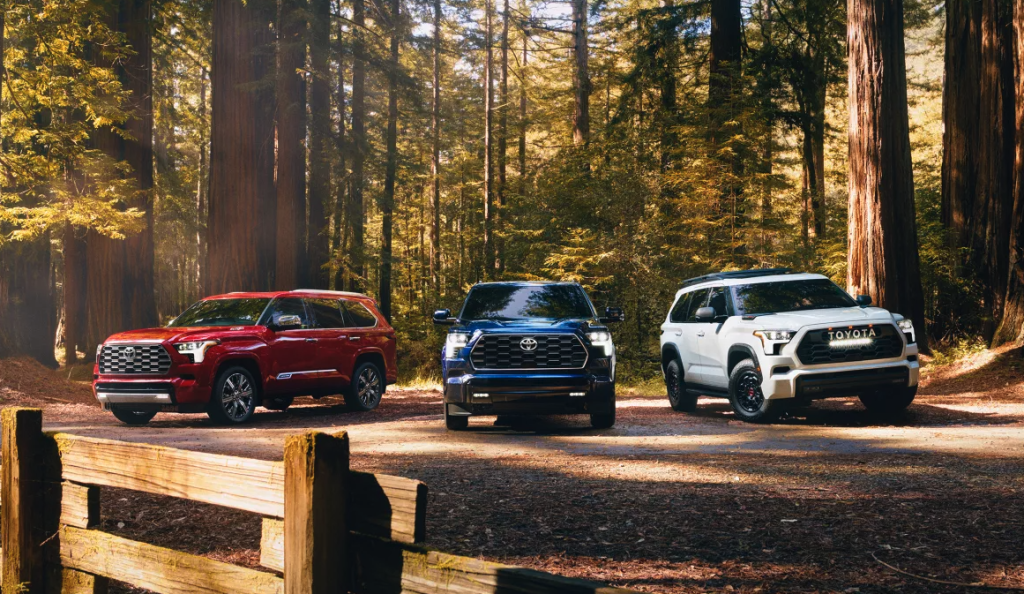
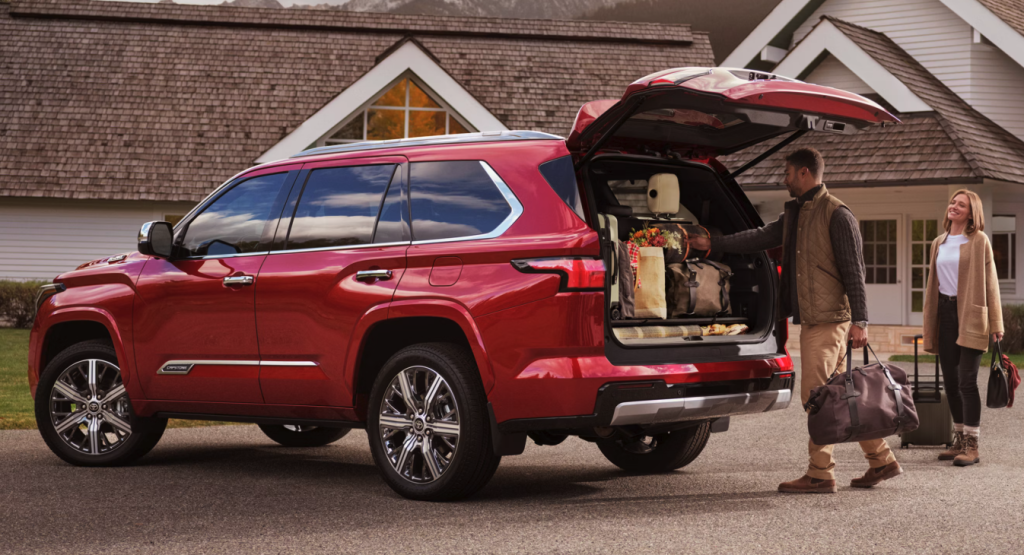
At Panama City Toyota, this is the first major dividing line between the 2026 4Runner and the 2026 Sequoia. The official Toyota 4Runner site says the SUV offers available third-row seating for up to seven people, while Toyota’s official Sequoia site says second-row bench seats make room for up to eight and captain’s chairs allow seating for up to seven. That sounds close on paper, but the daily experience is not especially close. The 4Runner gives you the option to carry more people in a midsize package. The Sequoia is built from the start to be Toyota’s full-size SUV, with more overall passenger space and a more natural fit for households that use the third row more often.
The 4Runner’s strength is that it does not feel bloated for buyers who still want rugged utility and occasional family flexibility. Toyota says the 2026 4Runner offers up to 90.2 cubic feet of cargo space with all seats folded down, which is strong for a midsize SUV and part of the reason the 4Runner keeps such a loyal following. It is big enough for camping gear, coolers, fishing equipment, luggage, and weekend cargo, but it is still sized for drivers who do not want a full-size SUV every day. That matters in Panama City, where buyers may want one vehicle that can handle a weekday commute, weekend gear, and back-road recreation without always feeling oversized in town.
The Sequoia takes a different approach. Toyota’s official site and e-brochure emphasize the power third-row seats, sliding third-row function, and durable cargo shelf system that lets owners customize interior space more easily. Toyota also notes that the Sequoia is its only full-size SUV and offers the most passenger and cargo space in the Toyota SUV family. At Panama City Toyota, that makes the Sequoia the clear recommendation for buyers who know their SUV needs to handle family trips, regular second- and third-row use, larger cargo loads, and bigger travel expectations from the start.
4Runner Packaging, Third-Row Flexibility, and Everyday Agility
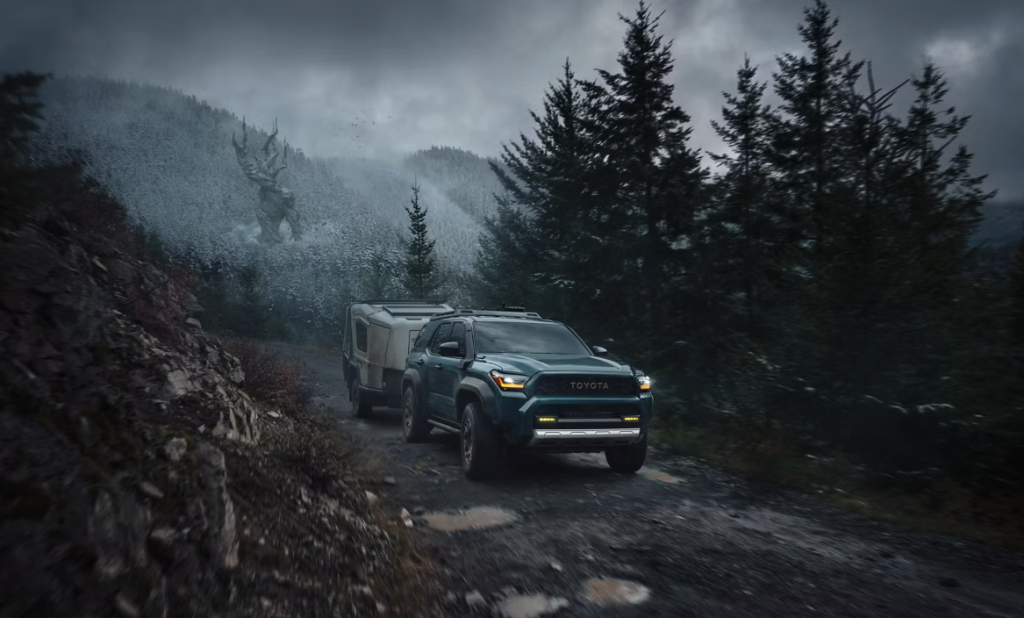
The 2026 4Runner remains the better fit for shoppers who want their SUV to feel capable and substantial without becoming large for the sake of being large. Toyota’s official 4Runner site highlights available third-row seating, a wide stance, up to 10.1 inches of ground clearance, and available features such as Stabilizer Disconnect Mechanism and Multi-Terrain Monitor on select models. Panama City Toyota’s local 4Runner research also calls out the available Tow Technology Package and the available 14-inch touchscreen tied to off-road viewing functions. The message is clear: the 4Runner is trying to blend utility, new tech, and rugged design in a package that still prioritizes maneuverability and adventure posture over maximum interior sprawl.
That is important because the 4Runner’s available third row should be seen as flexibility, not as a substitute for a true full-size family hauler. At Panama City Toyota, we would position the 4Runner’s third row as a useful advantage for growing families, occasional extra passengers, or buyers who want more options without moving out of the midsize class. The Sequoia still does the three-row job more naturally, but the 4Runner gives you more versatility than many midsize off-road SUVs offer. That matters for Panama City buyers who spend most of the year using the cargo area for gear, then occasionally need extra seats for family or friends.
The 4Runner also wins on psychological size. That sounds subjective, but it matters in real ownership. A midsize SUV that feels easier to park, easier to place on narrower roads, and less bulky during everyday errands can be the better long-term choice for a driver who values confidence and simplicity more than maximum cabin volume. That is part of why the 4Runner and Sequoia should never be treated as interchangeable. One gives you full-size benefits. The other gives you enough space while preserving a more direct, adventure-oriented feel. At Panama City Toyota, that tradeoff is often what decides the sale.
Sequoia Cabin Space, Family Seating, and Full-Size Utility
The Sequoia answers a different set of needs, and it does so with fewer compromises for larger households. Toyota’s official Sequoia site says bench seating supports up to eight passengers and captain’s chairs support up to seven, while the interior overview emphasizes heated front seats, available heated and ventilated first- and second-row seats, and a power-folding third row that slides for cargo flexibility. Panama City Toyota’s local Sequoia model overview reinforces the same family-first theme by highlighting seating flexibility and the SUV’s overall size advantage. This is not a truck substitute with an SUV body. It is a real full-size family SUV built to handle premium comfort and serious utility together.
There is also a value point that broad comparisons often miss. Sequoia buyers are not only paying for more sheet metal. They are paying for an SUV whose packaging is inherently more compatible with regular third-row use, broader shoulder room, larger cargo expectations, and family travel where comfort matters for multiple rows at once. Toyota’s 2026 Sequoia updates also include more premium interior features in upper trims, including massaging seats on 1794, Platinum, and Capstone grades, which Toyota highlighted in its 2026 Sequoia newsroom release. That moves the Sequoia farther into premium family territory than the 4Runner is trying to reach.
At Panama City Toyota, we recommend the Sequoia most often to buyers who already know their SUV will handle family road trips, towing, school-duty rotation, airport pickups, luggage, and a full cabin on a regular basis. The 4Runner can stretch into some of that work. The Sequoia is built for it. That difference matters far more than simply saying one is midsize and one is full-size, because the real buying question is not what segment they belong to. It is how often your passengers and cargo are going to test the limits of the vehicle.
Size and Practicality Comparison Tables
| Category | 2026 Toyota 4Runner | 2026 Toyota Sequoia |
| Vehicle class | Midsize body-on-frame SUV | Full-size body-on-frame SUV |
| Starting MSRP | $41,570 MSRP in Toyota newsroom; Toyota retail site shows $41,870 starting MSRP | $64,825 starting MSRP in Toyota configurator |
| Seating capacity | Available third row; seats up to 7 | Seats up to 8 with bench or up to 7 with captain’s chairs |
| Cargo highlight | Up to 90.2 cu. ft. with seats folded | Power third row and sliding cargo system for flexible family use |
| Best size fit | Buyers who want easier maneuverability and rugged utility | Buyers who need more room for people and gear |
Size table sources: Toyota official 4Runner and Sequoia materials.
| Buyer Question | Better Answer | Why |
| I want the easier daily-driver footprint | 4Runner | The midsize form is simpler to place and easier to live with every day. |
| I need a true family-sized third row | Sequoia | It is Toyota’s full-size SUV with more natural third-row and passenger-space logic. |
| I want occasional extra seating without jumping to full-size | 4Runner | Available third-row seating gives useful flexibility in a smaller package. |
| I carry more people and luggage regularly | Sequoia | More passenger room and a more flexible full-size cargo setup make it the stronger fit. |
Buyer-fit table sources: Toyota official model materials and comparison data.
i-FORCE MAX Hybrid Power and Towing Capability
Key Takeaway: The 2026 4Runner offers a broader powertrain range and a strong 6,000-pound tow rating for midsize buyers, while the 2026 Sequoia delivers standard i-FORCE MAX hybrid muscle and up to 9,500 pounds of towing for buyers who need more power and more margin.
Powertrain strategy is one of the biggest reasons these SUVs feel so different. Toyota’s 2026 4Runner newsroom release says the SUV offers a 2.4-liter turbocharged i-FORCE MAX hybrid powertrain that is standard on TRD Pro, Trailhunter, and Platinum grades and available on TRD Off-Road, TRD Off-Road Premium, and Limited models. That means the 4Runner uses i-FORCE MAX as an upgrade path tied to more premium or more capability-oriented trims, not as the default for every buyer. By contrast, Toyota’s 2026 Sequoia newsroom release says all 2026 Sequoias use the twin-turbo V6 hybrid i-FORCE MAX powertrain, producing 437 horsepower and 583 lb-ft of torque. That is a fundamentally different positioning strategy.
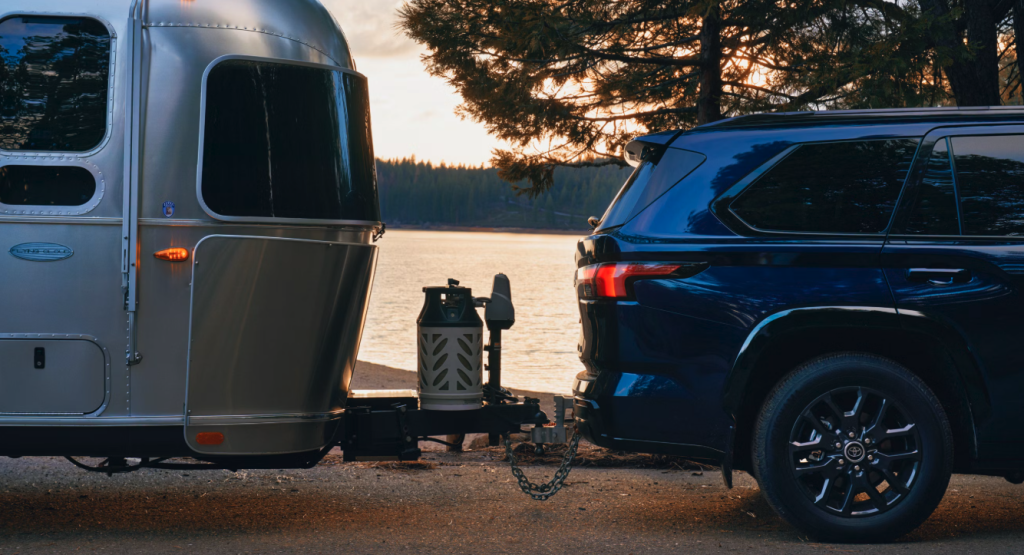
The towing numbers reinforce the split. Toyota’s towing hub and official materials list the 2026 4Runner at up to 6,000 pounds of towing, while the 2026 Sequoia reaches up to 9,500 pounds. For Panama City Toyota shoppers, that usually settles the towing side of the debate quickly. If towing is moderate and the SUV still needs to feel compact enough for adventure use, the 4Runner holds up very well. If towing is central to the ownership plan, especially for larger boats, heavier trailers, or more frequent hauling, the Sequoia is the more comfortable recommendation.
This is also where the competitive gap in other articles shows up again. A lot of head-to-head pieces mention horsepower and towing but spend less time on how the power is deployed. In the 4Runner, i-FORCE MAX is part of the adventure and off-road story, helping deliver stronger torque in trims where buyers are likely to care about trail performance and premium capability. In the Sequoia, i-FORCE MAX is the foundation of the whole model line, helping justify a higher price, a larger body, and more serious towing expectations. At Panama City Toyota, that is why we tell buyers not to treat “both have i-FORCE MAX” as the end of the story. The role of the system is different in each SUV.
4Runner Powertrains, Tow Ratings, and Adventure-Ready Balance
The 2026 4Runner is appealing because Toyota lets buyers choose how far up the performance ladder they want to go. The 4Runner comparison data surfaced by Cars.com lists a standard 278-horsepower engine in lower trims and shows the SUV towing 6,000 pounds, while Toyota’s official 2026 4Runner materials confirm that i-FORCE MAX is available or standard on multiple upper grades. Panama City Toyota’s local 4Runner research adds useful context by highlighting the available Tow Technology Package, available Tow Tech on higher trims, and tech such as Multi-Terrain Monitor that aligns the SUV’s towing and off-road story with its adventure identity.
That matters because the 4Runner is not trying to be a one-size-fits-all SUV. It is trying to let buyers choose between a more affordable turbo setup and a stronger hybrid-enhanced version depending on how much performance, towing, or premium equipment they want. At Panama City Toyota, that is a genuine advantage for shoppers who like the 4Runner’s size and personality but do not all need the same engine or the same trim cost. It also makes the 4Runner easier to fit to a budget than the Sequoia, which starts much higher and comes only with its stronger hybrid system.
There is another technical point that deserves more attention: the 4Runner is still built to feel like an adventure SUV first, even when it adds more technology and more comfort. Toyota’s 2026 4Runner materials highlight off-road hardware such as an electronically locking rear differential on TRD Off-Road, TRD Pro, and Trailhunter, Multi-Terrain Select functionality, and available Stabilizer Disconnect Mechanism. That means a buyer choosing a 4Runner is not only choosing a smaller Sequoia. They are choosing a different mission profile, where trail composure, articulation, and off-road feature depth are more central to the identity.
Sequoia Hybrid Muscle, 9,500-Pound Towing, and Long-Haul Comfort
The Sequoia makes its case by giving buyers less ambiguity. Every 2026 Sequoia gets the i-FORCE MAX hybrid, and Toyota says that system produces 437 horsepower and 583 lb-ft of torque. The official Sequoia site and e-brochure also point to up to 9,500 pounds of towing, available load-leveling rear height control air suspension, and features like Tow/Haul and Tow+ modes to optimize towing parameters. In other words, Sequoia buyers are not paying only for size. They are also paying for a powertrain and chassis setup meant to support heavier work while keeping the cabin premium and family-friendly.
That is why the Sequoia is so compelling for Panama City households that need both people-space and pulling power. Some shoppers know they need a third-row SUV but also tow a larger boat, camper, or equipment trailer. The Sequoia solves that combination more cleanly than the 4Runner can. It does not ask the buyer to choose between full-size family use and serious hybrid torque. It delivers both by design. Panama City Toyota’s local Sequoia overview reinforces that story by highlighting the same 437-horsepower, 583-lb-ft i-FORCE MAX output and emphasizing towing-ready strength.
The “missing link” point here is that Sequoia is often framed as simply the bigger 4Runner, and that undersells what Toyota is doing. Sequoia is closer to a family-capable hybrid tow platform with off-road options than to a stretched midsize SUV. That distinction matters if your Panama City lifestyle includes hauling people, towing heavier loads, and covering longer distances in comfort. In that scenario, the Sequoia’s higher price starts to make more sense because the whole vehicle is built around a larger job description.
Powertrain and Capability Comparison Tables
| Capability Category | 2026 Toyota 4Runner | 2026 Toyota Sequoia |
| Starting MSRP | $41,570 MSRP in Toyota newsroom | $64,825 starting MSRP in Toyota configurator |
| Powertrain strategy | Standard turbo engine in lower trims; i-FORCE MAX available or standard on several upper grades | Standard i-FORCE MAX twin-turbo V6 hybrid on all trims |
| Hybrid output | i-FORCE MAX available; Toyota positions it on upper trims | 437 hp and 583 lb-ft on every Sequoia |
| Max towing | Up to 6,000 lbs | Up to 9,500 lbs |
| Best capability fit | Buyers who want strong midsize towing and off-road focus | Buyers who need more towing margin and full-size family power |
Capability table sources: Toyota official 4Runner and Sequoia materials.
| Local Use Case | Better SUV | Why |
| Beach gear, camping, moderate trailer, easier daily driving | 4Runner | It balances rugged utility with a more manageable size. |
| Family road trips with heavier towing needs | Sequoia | More passenger room and much higher tow capacity make it the stronger answer. |
| Trail-focused buyer who still wants available hybrid power | 4Runner | i-FORCE MAX is tied directly to off-road and premium-capability trims. |
| Family buyer who wants standard hybrid torque in every trim | Sequoia | Every Sequoia gets the 437-hp i-FORCE MAX setup. |
Use-case table sources: Toyota official model materials and Panama City Toyota local model content.
| Spec Snapshot | 2026 4Runner | 2026 Sequoia |
| Seating capacity | Up to 7 | Up to 8 |
| Cargo highlight | Up to 90.2 cu. ft. folded | Sliding third row and cargo shelf system |
| Horsepower headline | 278 hp standard in comparison data; i-FORCE MAX on select trims | 437 hp standard |
| Torque headline | 317 lb-ft standard in comparison data; i-FORCE MAX adds much more | 583 lb-ft standard |
| Towing capacity | 6,000 lbs | 9,500 lbs |
Snapshot table sources: Toyota official materials and current comparison data.
TRD Pro Trims and Panama City Lifestyle Fit
Key Takeaway: The 4Runner TRD Pro is the sharper trail-first choice for buyers who prioritize compact off-road confidence, while the Sequoia TRD Pro is the better fit for drivers who want serious off-road hardware layered onto a larger, more powerful, family-capable SUV.
TRD Pro is where the 4Runner and Sequoia seem most alike, but this is another area where Panama City Toyota would urge buyers to slow down and look at mission. Toyota’s 2026 4Runner materials say the lineup includes TRD Pro and Trailhunter trims, and the 4Runner newsroom release notes that the i-FORCE MAX hybrid is standard on TRD Pro. Toyota’s press materials also say TRD Off-Road, TRD Pro, and Trailhunter grades get an electronically locking rear differential, while Multi-Terrain Select and other trail-focused controls are central to the off-road package. That makes the 4Runner TRD Pro feel purpose-built for the buyer who wants maximum trail identity without the size and expense jump into Sequoia territory.
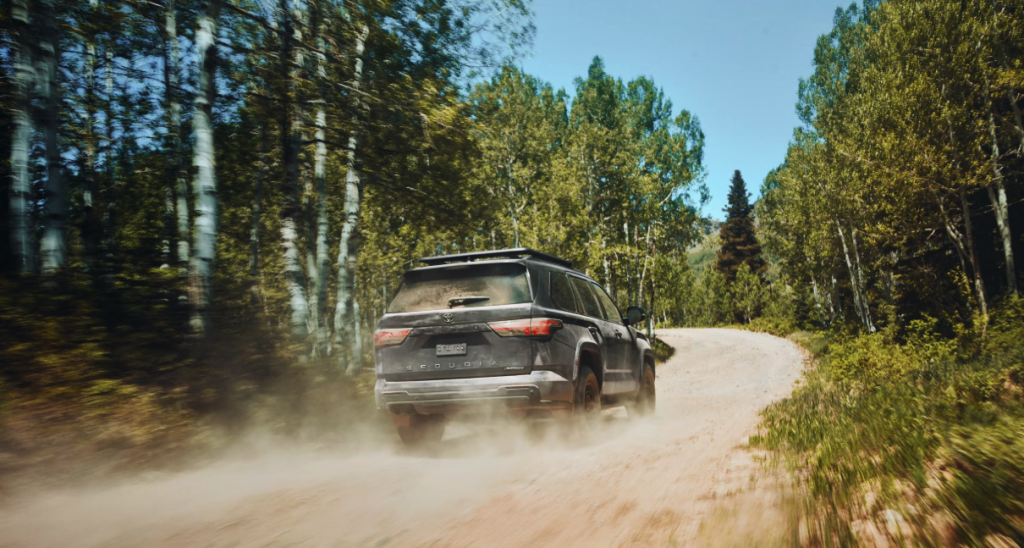
Toyota’s 2026 Sequoia newsroom release says TRD Pro and Sequoias equipped with the TRD Off-Road package come with an electronically locking rear differential, plus Crawl Control and Downhill Assist Control for low-speed trail situations. Sequoia TRD Pro also rides on the larger platform, with standard i-FORCE MAX power and the family-sized cabin still intact. That means Sequoia TRD Pro is not just a big SUV with black wheels. It is a full-size hybrid SUV that layers off-road credibility on top of serious towing and passenger capacity.
Trail Capability Head to Head
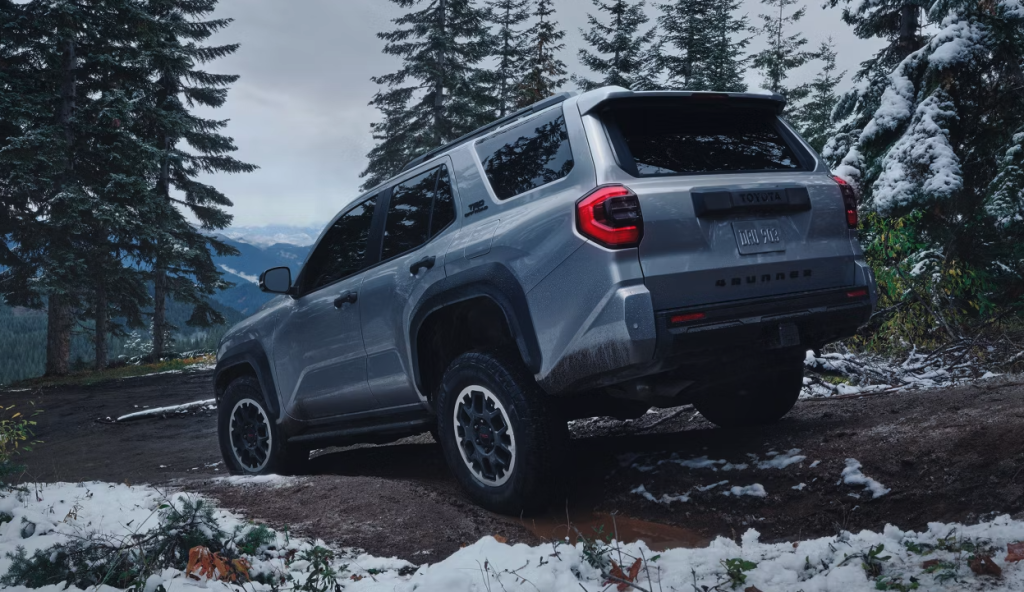
The 4Runner TRD Pro tends to make more sense for Panama City buyers who truly see trail capability as the center of the vehicle’s identity. Toyota says the 4Runner offers features such as Multi-Terrain Select, locking rear differential hardware on the right trims, and even an available onboard air compressor. Its smaller size and available stabilizer-disconnect hardware also support the idea that the 4Runner is designed to feel more nimble off pavement. At Panama City Toyota, that translates into a recommendation for buyers who want the SUV to feel special on a trail, a back road, or an adventure trip, not only in the driveway.
The Sequoia TRD Pro is the better answer if your life requires a bigger job description. Toyota gives it locking differential hardware, Crawl Control, and full hybrid muscle, but it does all of that while preserving a much more family-ready cabin and substantially greater towing strength. In other words, Sequoia TRD Pro is for the buyer who wants to bring a larger crew, haul more gear, tow more weight, and still have meaningful off-road hardware available. It is less of a compact trail tool and more of a broad-spectrum adventure SUV.
Around Panama City, that difference matters. Some buyers want an SUV that feels right for beach gear, rough access roads, fishing weekends, and trail-minded travel without becoming too large to enjoy every day. That is the 4Runner lane. Others want family comfort, road-trip composure, stronger towing, and off-road credibility in the same vehicle. That is where the Sequoia makes its case. At Panama City Toyota, we do not think one TRD Pro is “better” in the abstract. We think one is better for the job you actually plan to do.
Choose Your 2026 SUV at Panama City Toyota
Key Takeaway: Panama City Toyota is the right place to compare the 2026 4Runner and 2026 Sequoia because the decision gets much easier once you match the SUV to your seating needs, towing needs, and local driving routine.
At Panama City Toyota, our rule for this matchup is simple. If your decision starts with trail feel, maneuverability, and a lower entry price, begin with the 4Runner. If your decision starts with family space, premium comfort, and towing margin, begin with the Sequoia. Only after you settle that Toyota-versus-Toyota choice should you branch into outside-brand comparisons. Toyota already gives you two very different truck-based SUV answers here, and that internal clarity is one of the brand’s strengths in 2026.
If you want to compare the 2026 Toyota 4Runner and 2026 Toyota Sequoia the right way, visit Panama City Toyota and put both SUVs into the same real-world shopping session. Our dealership at 959 West 15th Street in Panama City gives you a local place to compare seating layouts, towing fit, off-road trim logic, and overall comfort instead of guessing from online specs alone. Our website also lets you search current inventory, review payment tools, and set up a test drive before you arrive, which makes the visit far more efficient. For a comparison this important, side-by-side seat time matters more than one more national ranking list. That is especially true when the choice comes down to how your family, gear, and lifestyle actually fit each SUV.
If you already know one of these SUVs is on your shortlist, Panama City Toyota’s site gives you the fastest path from research to action. You can browse 2026 inventory, value your trade, apply for financing, and connect with our team while also seeing the service and ownership resources that matter after delivery. Our Certified Service Technicians at Panama City Toyota are also part of that confidence equation, because long-term ownership support matters whether you choose the 4Runner for adventure use or the Sequoia for full-size family duty. The right SUV should fit your life on day one and still feel right after months of use, towing, travel, and routine service. That is why we treat this comparison as a local fit conversation, not just a spec-sheet exercise.
Here are the three questions we suggest answering before you choose:
- How often will you use the third row? Occasional use points toward 4Runner; regular use points toward Sequoia.
- How important is towing margin? If you need more than moderate towing, the Sequoia’s 9,500-pound ceiling changes the math quickly.
- Do you want an adventure-first midsize SUV or a bigger do-everything family SUV? That is the real identity split in this matchup.
2026 Toyota 4Runner vs Sequoia FAQs
Key Takeaway: Most Panama City shoppers asking about the 2026 4Runner vs Sequoia want help with size, towing, and whether the 4Runner is big enough or the Sequoia is more SUV than they really need.
Is the 2026 Toyota 4Runner or Sequoia better for families?
The better family choice depends on how often you use the third row and how much passenger room you really need. The 2026 4Runner offers available third-row seating for up to seven and works well for families who want more flexibility in a midsize package. The 2026 Sequoia, however, is Toyota’s full-size SUV and seats up to eight with a bench or up to seven with captain’s chairs, making it the stronger answer for larger families or regular multi-row use. At Panama City Toyota, we usually recommend the Sequoia for frequent family-hauling duty and the 4Runner for buyers who need more occasional flexibility.
Which SUV is better for towing near Panama City, the 2026 4Runner or 2026 Sequoia?
The 2026 Sequoia is the stronger towing choice by a wide margin. Toyota says the Sequoia can tow up to 9,500 pounds and uses a standard i-FORCE MAX hybrid powertrain with 437 horsepower and 583 lb-ft of torque. The 2026 4Runner can tow up to 6,000 pounds, which is still strong for a midsize SUV and often enough for moderate trailer needs. At Panama City Toyota, we tell buyers to choose the 4Runner if the towing job is moderate and the smaller footprint matters, and to choose the Sequoia if towing is a major part of ownership.
Is the 2026 Toyota 4Runner TRD Pro better off-road than the 2026 Sequoia TRD Pro?
For many off-road-focused buyers, yes, because the 4Runner TRD Pro is built around a smaller and more trail-centered platform with locking differential hardware, Multi-Terrain Select, and off-road-first trim logic. The Sequoia TRD Pro is still very capable and adds locking differential hardware, Crawl Control, and strong hybrid power, but it also carries the size and mission of a full-size family SUV. At Panama City Toyota, we usually describe the 4Runner TRD Pro as the sharper trail-first pick and the Sequoia TRD Pro as the bigger, broader, more family-capable adventure option.
Visit Panama City Toyota for Your SUV Comparison Test Drive
The 2026 Toyota 4Runner and 2026 Toyota Sequoia are both strong choices, but they are strong in different ways. The 4Runner is the more agile, more adventure-centered midsize SUV with available third-row seating, available i-FORCE MAX power, and a lower entry point. The Sequoia is the full-size answer with standard hybrid muscle, more passenger room, and far greater towing strength. At Panama City Toyota, we can help you compare both SUVs against your real needs so the decision feels obvious, not complicated. Visit us at 959 West 15th Street, Panama City, FL 32401, browse current 2026 inventory on our site, and let our team help you test drive the Toyota SUV that truly fits your Panama City lifestyle.


