
Toyota EV ownership can be practical in Panama City, FL when the driver has a clear charging plan, realistic range expectations, and a daily routine that fits electric driving. The 2026 Toyota bZ adds important EV ownership upgrades, including a NACS charging port, DC fast charging capability, an 11-kW onboard charger, charge scheduling, and battery preconditioning. Panama City Toyota recommends the bZ for drivers who can charge at home or at predictable public chargers, while Toyota hybrid models may still be the better fit for shoppers who need maximum road-trip flexibility without planning charging stops.
Here at our showroom, EV shoppers usually ask practical questions before they ask about styling. A Lynn Haven commuter with a home charging setup may be a strong bZ candidate because daily miles are predictable and overnight charging can be simple. A Callaway apartment resident without reliable charging may be better served by Camry Hybrid, RAV4 Hybrid, Prius, or Corolla Cross Hybrid. A Panama City Beach weekend driver may like the bZ if beach trips, errands, and work routes stay within a normal charging routine.
In this guide, we will explain Toyota EV ownership basics, 2026 Toyota bZ charging features, EV versus hybrid fit, Florida Panhandle driving use cases, ownership costs, and the first-time EV test-drive questions our team recommends asking before you buy.
Definition: Toyota EV ownership means driving a battery electric vehicle that uses stored electricity instead of gasoline for daily travel. The 2026 Toyota bZ is an all-electric Toyota SUV designed around battery range, home charging, public charging, and EV driving technology.
Toyota EV Ownership Basics for Panama City Drivers
Charging Types, Home Charging, Public Charging, and Route Planning
The first EV decision is not only which vehicle to buy. It is how you will charge it. Level 1 charging uses a standard household outlet and is best for slower overnight or backup charging. Level 2 charging is usually the better home setup for daily EV ownership because it can add range much faster. DC fast charging is designed for road trips and quicker public stops, not as the only charging method for every driver.
For a Lynn Haven home-charging commuter who drives a predictable route into Panama City, we recommend building the EV plan around Level 2 home charging if the home electrical setup allows it. That routine can make the bZ feel simple because the vehicle can start most mornings with a planned charge. For an apartment driver in Callaway, we recommend checking workplace, apartment, and nearby public charging access before choosing the bZ over a Toyota hybrid.
| Charging Type | Where Drivers Use It | Best Role | Ideal Use Case |
|---|---|---|---|
| Level 1 AC Charging | Standard household outlet | Backup or low-mileage charging | Driver with short daily trips and extra time |
| Level 2 AC Charging | Home charger, workplace, some public stations | Daily EV ownership foundation | Lynn Haven commuter with overnight charging |
| DC Fast Charging | Public fast-charging stations | Road-trip charging and quicker stops | Youngstown road-trip planner with public charger route |
| NACS Charging Port | Compatible public charging networks | Expanded charging access | Driver who wants broader public charging options |
| Charge Scheduling | Home or planned charging sessions | Charging around routine and timing | Panama City driver who charges overnight |
Charging speed and access can vary by equipment, charger type, network, temperature, and vehicle settings.
For Panama City EV shoppers, the right charging plan should answer three questions before the test drive: where will you charge most often, how many miles do you drive on a normal day, and what is your backup plan when your route changes? We recommend bZ shoppers start with Level 2 home charging if possible, then use public DC fast charging as a road-trip and backup tool.
Visit Our Toyota EV CenterRange, Battery Care, and Florida Heat Considerations
EV range depends on battery size, driving speed, weather, tire pressure, cabin climate use, cargo load, and route conditions. Florida heat can increase A/C use and affect tire pressure, so we recommend planning range with a margin rather than using the highest number as your only guide. The 2026 Toyota bZ adds battery preconditioning and charge scheduling, which can help drivers plan charging sessions more confidently.
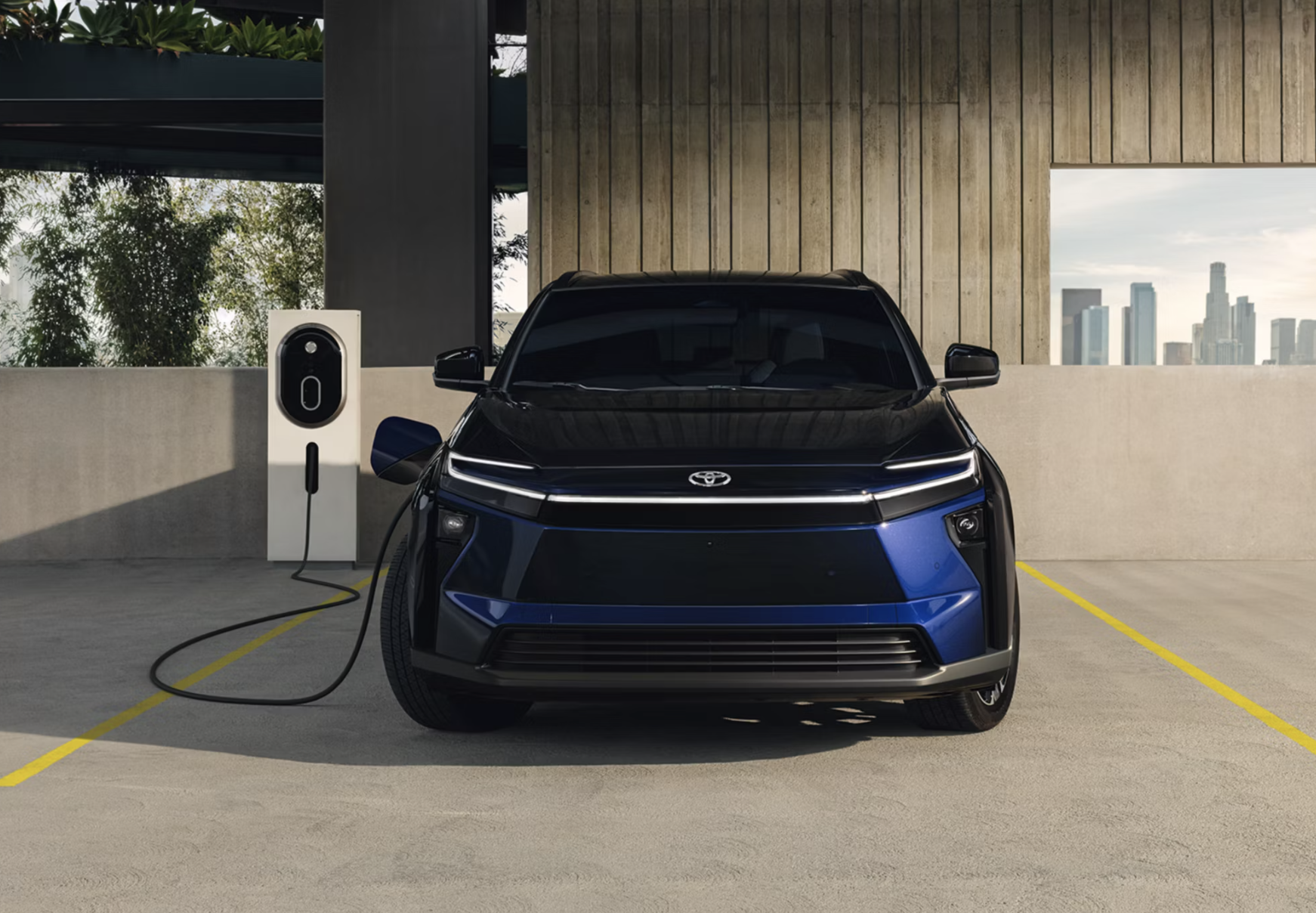
For a Panama City Beach weekend driver, the bZ can make sense if beach errands, work commutes, and local drives stay within a predictable routine. We recommend building a normal week on paper: commute miles, school or work trips, grocery stops, weekend beach drives, and any longer Bay County routes. If those miles fit comfortably with charging access, the bZ can feel easy to own.
Check EV and Hybrid SpecialsHow EV Ownership Compares With Toyota Hybrid Ownership
Toyota EV ownership removes gas station stops from the daily routine when charging is easy, while Toyota hybrid ownership keeps gasoline flexibility and adds better MPG without plug-in charging. That difference matters for Bay County drivers. EV shoppers need a charging plan. Hybrid shoppers need no new charging habit. Plug-in hybrid shoppers sit between those two worlds because they can use electric driving for shorter trips and gasoline for longer travel.
For a Callaway apartment resident without reliable charging, we recommend starting with Camry Hybrid, Prius, RAV4 Hybrid, or Corolla Cross Hybrid before committing to the bZ. For a Lynn Haven homeowner with a predictable commute and Level 2 charging access, we recommend testing the bZ because the daily routine may fit electric ownership well. For a Mexico Beach coastal driver who takes longer routes and wants maximum flexibility, we recommend comparing bZ and hybrid options side by side.
2026 Toyota bZ Range, Charging, and Daily Usability
Estimated Range, Charging Tools, and Battery Details to Verify
The 2026 Toyota bZ is designed to make EV ownership more convenient than earlier Toyota EV shoppers may remember. Toyota lists smart charging features such as battery preconditioning and charge scheduling, while Toyota confirms the 2026 bZ adopts a NACS charging port, DC fast charging capability, Level 1 and Level 2 AC charging, a higher-capacity 11-kW onboard AC charger, and a dual-voltage charging cable.
| 2026 bZ Ownership Item | What Toyota Confirms | Why It Matters | Ideal Use Case |
|---|---|---|---|
| NACS charging port | Equipped on 2026 bZ | Supports broader public charging access | Drivers who use fast-charging corridors |
| DC fast charging | Designed for quicker public charging stops | Helps with longer regional trips | Youngstown road-trip planner |
| 11-kW onboard AC charger | Higher-capacity AC charging equipment | Improves AC charging convenience | Home Level 2 charging driver |
| Battery preconditioning | Available to help prepare the battery for charging | Supports charging planning | Driver planning fast-charging stops |
| Charge scheduling | Available smart charging feature | Supports home charging routines | Lynn Haven overnight charger |
We recommend verifying the exact bZ trim, battery, range estimate, charging equipment, and available connected services before purchase because EV details can vary by configuration and final vehicle availability. That is especially important if you are comparing bZ with Toyota hybrid, plug-in hybrid, or gas models on the same visit.
NACS Charging Access, Plug & Charge, and Public Charging Basics
NACS access matters because it can expand where bZ drivers charge on longer routes. Broader public charging access can make EV ownership easier, but it still works best with planning. Charger location, station availability, charging speed, weather, battery temperature, and network conditions all matter.
If you are a Youngstown road-trip planner, we recommend building a DC fast-charging route before you rely on the bZ for longer regional travel. If you are a Lynn Haven homeowner, we recommend focusing first on Level 2 home charging because most EV comfort starts at home. If you are a Callaway apartment resident, we recommend checking public charging access near home, work, and weekly errands before choosing bZ over a Toyota hybrid.
Compare EV and Hybrid InventoryCompare EV and Hybrid Options With Our Team
If you are considering your first Toyota EV, we recommend comparing charging access and daily mileage before choosing the vehicle. We can help you review the 2026 Toyota bZ, compare it with Toyota hybrid models, check current EV and hybrid availability, and talk through home charging, public charging, range planning, and payment options.
Start an EV Finance PlanShould You Choose an EV or Hybrid Toyota?
The EV versus hybrid decision changes by community and routine. A Lynn Haven homeowner with garage charging and a steady commute may be a strong bZ candidate. A Panama City Beach driver who mostly runs local errands and weekend beach routes may also fit the bZ well with a charging plan. A Callaway apartment resident without charging access should compare Toyota hybrids first. A Tyndall AFB commuter should think about where charging fits during long workdays and changing schedules.
| Local Driver Profile | Primary Need | Best Toyota Direction | Reason |
|---|---|---|---|
| Lynn Haven home-charging commuter | Predictable weekday miles | 2026 Toyota bZ | Home charging can make EV ownership simple |
| Panama City Beach weekend driver | Beach errands and local routes | bZ or RAV4 Hybrid | EV works with charging; hybrid works with no planning |
| Callaway apartment resident | No dependable home charging | Camry Hybrid, Prius, or Corolla Cross Hybrid | Hybrid ownership avoids charging access stress |
| Tyndall AFB commuter | Long weekday routine | bZ if charging is reliable; hybrid if not | Charging certainty decides the recommendation |
| Youngstown road-trip planner | Regional flexibility | RAV4 Hybrid, RAV4 Plug-In Hybrid, or bZ with DC fast-charging plan | Trip frequency and charger access matter |
For Panama City, Panama City Beach, Callaway, Lynn Haven, Youngstown, and Mexico Beach drivers, we recommend choosing a Toyota EV if charging access is reliable and most driving is local or predictable. We recommend a Toyota hybrid if your schedule changes often, your home charging access is limited, or you want longer regional flexibility without planning charging stops.
Review Toyota Electrified ChoicesPlan Your EV or Hybrid Visit Locally
We are located at 959 West 15th Street, Panama City, FL 32401, and we help drivers from Panama City, Panama City Beach, Callaway, Lynn Haven, Youngstown, and Mexico Beach compare Toyota EV, hybrid, plug-in hybrid, and gas options. If you are still deciding between the 2026 Toyota bZ and a Toyota hybrid, our team can walk through your commute, home charging access, public charging backup, family schedule, and weekend travel patterns.
Value Your Trade Toward an EVOwnership Cost Analysis: Charging, Fuel Savings, Tires, and Home Setup
The biggest cost difference between a Toyota EV and a gas vehicle is the shift from gasoline to electricity. A bZ owner who charges mostly at home may see a more predictable daily energy routine than a driver who depends on public fast charging. Public charging costs can vary by network, location, speed, and time, so we recommend building a real charging plan instead of assuming one universal EV cost.
For a Bay County family that owns a home and drives predictable local miles, the bZ can make ownership sense if home charging is convenient. For a Callaway apartment resident who would rely on public chargers, a Toyota hybrid may be more consistent. For a Youngstown road-trip driver, DC fast charging access matters, but so does how often those longer trips happen.
We also recommend thinking about tires and service. EVs can feel quick because electric torque arrives smoothly, and that can make tire care important. Our service team advises EV and hybrid shoppers to stay ahead of tire pressure, rotations, cabin filters, brake checks, and software or connected-service questions.
Technology Walkthrough: What First-Time EV Buyers Should Test in the bZ
We recommend that first-time EV shoppers test the technology before they focus on color or trim. Sit in the bZ and check how the range display appears, where charging settings are located, how charge scheduling works, how regenerative braking feels, and how smartphone integration fits your daily routine. Ask our team to walk through battery preconditioning, public charging basics, Plug & Charge requirements, and the Toyota app features that support EV ownership.
- If you have never driven an EV, we recommend testing regenerative braking in normal traffic and at lower speeds.
- If you plan to charge at home, we recommend checking charge scheduling and asking how Level 2 charging would fit your routine.
- If you plan to road trip, we recommend reviewing DC fast charging, NACS access, and public charging steps before purchase.
- If you are comparing hybrids, we recommend driving the bZ and a hybrid Toyota on the same visit.
For a first-time EV shopper in Panama City, the best test drive answers one practical question: can you picture the bZ fitting your Monday morning, your Friday commute, and your weekend route? If the answer is clear and charging access is reliable, the bZ may be a strong fit. If the charging plan still feels uncertain, we recommend comparing Toyota hybrids before deciding.
Toyota EV and 2026 Toyota bZ FAQs for Panama City Drivers
Is a Toyota EV practical in Panama City FL?
A Toyota EV can be practical in Panama City when your daily mileage is predictable and you have dependable charging at home, work, or nearby public stations. We recommend the 2026 Toyota bZ for drivers who can charge consistently and use the vehicle mainly for commuting, errands, beach routes, and planned regional trips.
Can the 2026 Toyota bZ use Tesla Superchargers?
The 2026 Toyota bZ is equipped with a NACS charging port, which can support broader public charging access. We recommend confirming network access, adapter use, account setup, and station compatibility before a long trip because public charging details can depend on location, charger type, vehicle settings, and connected-service requirements.
Should I buy an EV or a Toyota hybrid?
We recommend a Toyota EV if you can charge predictably and most of your driving is local or planned. We recommend a Toyota hybrid if you want better MPG without changing fueling habits, or if your home charging access is limited. The best answer comes from your weekly mileage and charging access.
What should I ask before test driving the 2026 bZ?
Before test driving the 2026 Toyota bZ, we recommend asking about range by trim, NACS charging, Level 2 home charging, DC fast charging, Plug & Charge requirements, charge scheduling, battery preconditioning, Toyota app features, and warranty coverage.


