
The 2026 Toyota 4Runner can tow up to 6,000 pounds when properly equipped, giving Panama City drivers a stronger midsize SUV option for small boats, utility trailers, camping gear, weekend projects, and Gulf Coast adventures. The available i-FORCE MAX hybrid powertrain adds serious torque for drivers who want confident pulling power, while Toyota’s available towing technologies help make trailer setup and reversing feel more manageable.
For shoppers around Panama City, Panama City Beach, Callaway, Lynn Haven, Youngstown, and Mexico Beach, the real question is not only how much the 2026 4Runner can tow. It is which 4Runner trim, powertrain, and feature mix fits the way you plan to drive. A Lynn Haven commuter who occasionally tows a small trailer has different needs than a Panama City Beach driver hauling weekend gear or a Mexico Beach owner who wants a more adventure-ready setup.
In this guide, we will walk through 2026 Toyota 4Runner towing capacity, i-FORCE MAX power, tow-focused technology, trim considerations, local use cases, and the questions our team recommends asking before choosing your next 4Runner.
Definition: 2026 Toyota 4Runner towing capacity refers to the maximum trailer weight the SUV can pull when properly equipped and operated within Toyota guidelines. The i-FORCE MAX system is Toyota’s available turbocharged hybrid powertrain that adds strong torque for acceleration, trail driving, and confident towing support.
2026 Toyota 4Runner Towing Capacity at a Glance
The 2026 Toyota 4Runner is built on Toyota’s modern body-on-frame SUV architecture and brings a major capability update for drivers who want a daily SUV that can also handle weekend towing. Toyota confirms a maximum towing capacity of 6,000 pounds, which is a strong number for a midsize SUV used for local recreation, light utility work, small boats, and adventure gear.
That number should always be treated as a maximum, not a promise that every trailer, every load, and every driving condition will feel the same. Real towing confidence depends on the vehicle configuration, passengers, cargo, trailer weight, tongue weight, road conditions, braking setup, tire condition, and driver experience. Before towing, we recommend checking the owner’s manual, door-jamb labels, hitch equipment, trailer brake needs, and current vehicle condition.
| 2026 4Runner Item | What It Means | Why Panama City Drivers Should Care |
|---|---|---|
| Up to 6,000 lbs towing capacity | Maximum rating when properly equipped | Helpful for small boats, utility trailers, camping setups, and weekend gear |
| Body-on-frame SUV design | Truck-based construction for strength and durability | Fits drivers who want a rugged SUV instead of a softer crossover feel |
| Available i-FORCE MAX powertrain | Turbocharged hybrid system with strong torque | Useful for confident launch feel, hill work, gear, and mixed driving |
| Available towing technologies | Features can help with visibility, braking support, and trailer reversing | Good fit for newer towing drivers or busy boat-ramp weekends |
| Trim-specific equipment | Features vary by grade and configuration | Shoppers should compare capability, comfort, and technology before choosing |
Always confirm final towing limits, equipment, payload, and trailer setup with Toyota vehicle documentation before towing.
For a Panama City Beach driver with a light boat or trailer, the 2026 4Runner can be a strong fit when the trailer setup stays within Toyota limits. For a Lynn Haven owner who needs one SUV for commuting and occasional hauling, the 4Runner offers a nice balance of daily comfort and weekend capability. For a Youngstown or Mexico Beach driver carrying gear farther from town, trim and tire choice may matter as much as the headline tow rating.
View New Toyota ModelsHow i-FORCE MAX Changes the 4Runner Driving Experience
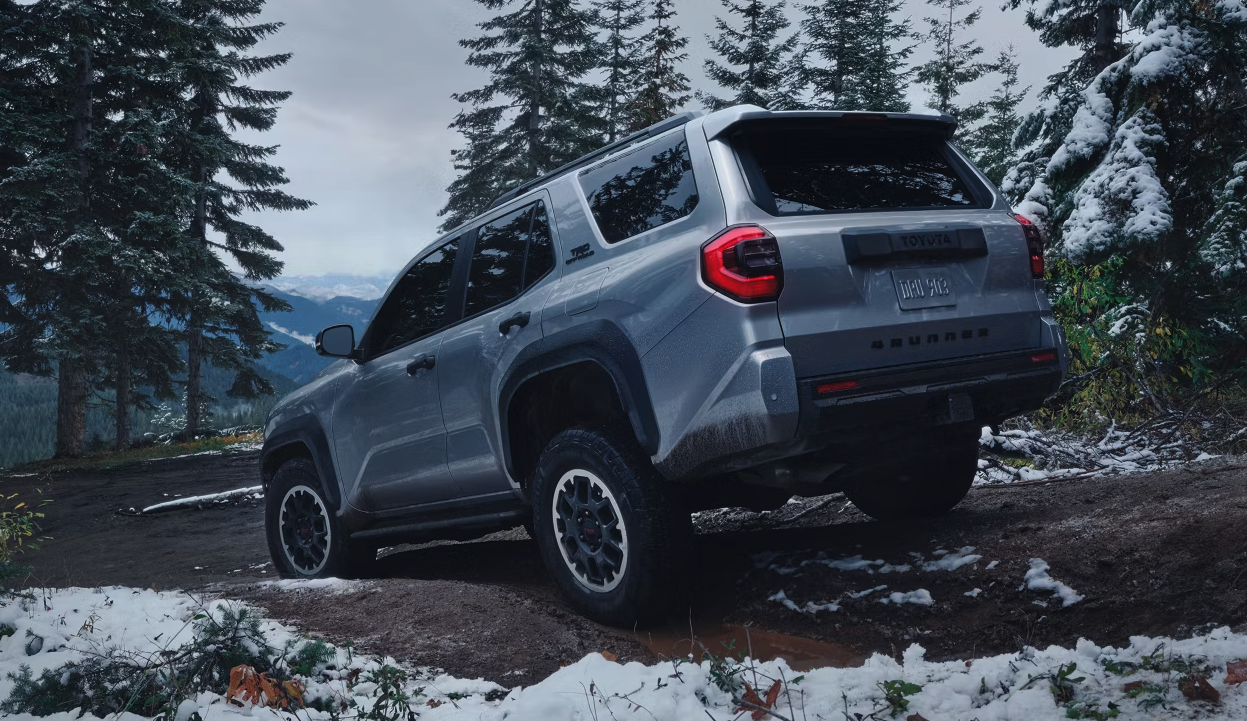
The available i-FORCE MAX powertrain is one of the biggest reasons shoppers are comparing the 2026 4Runner differently from older 4Runner models. Toyota’s 2.4-liter turbocharged i-FORCE MAX hybrid system is standard on select grades and available on others. It is designed to deliver strong horsepower and torque while keeping the 4Runner’s rugged SUV character intact.
For towing, torque matters because it helps the vehicle get moving confidently with weight behind it. That can be useful when leaving a boat ramp, merging onto a faster road, climbing a bridge, or moving through rolling terrain with passengers and cargo on board. The i-FORCE MAX setup is not only about fuel economy. In the 4Runner, it is a performance-focused powertrain that supports confident response.
| Powertrain Question | Gas 4Runner Direction | i-FORCE MAX Direction |
|---|---|---|
| Daily driving | Strong, familiar turbocharged performance | More torque-focused feel for confident response |
| Towing feel | Capable when properly equipped | Added torque can help with launch and loaded driving |
| Trail-focused shopping | Good fit depending on trim and equipment | Standard on rugged trims like Trailhunter and TRD Pro |
| Budget planning | May be the better fit for value-focused shoppers | May be worth it for drivers who want the strongest performance feel |
| Best local use case | Commuting, family driving, light towing | Towing, trail weekends, gear-heavy trips, premium capability |
For many Panama City Toyota shoppers, the decision comes down to how often the vehicle will work hard. A driver who mostly commutes and only tows lightly a few times per year may be satisfied with a gas-powered 4Runner. A driver who regularly loads cargo, tows, heads to the coast, or wants the most confident 4Runner feel may prefer i-FORCE MAX.
We recommend test driving both powertrain directions when possible. The numbers matter, but the way the 4Runner feels leaving a stop, merging, and carrying speed with passengers on board is what helps many shoppers make the final decision.
Start Your Finance PlanAvailable 4Runner Towing Technology
Towing is easier when the driver can see clearly, brake confidently, and line up the trailer with less stress. Toyota lists available 2026 4Runner towing technologies such as an available trailer brake controller, available digital rear-view mirror, and Trailer Back-Up Guide with Straight Path Assist. These features can be especially helpful for drivers who tow near busy ramps, campsites, narrow driveways, and crowded weekend parking areas.
Trailer Back-Up Guide with Straight Path Assist is designed to help keep a trailer moving in a straight line while reversing, letting the driver focus more on throttle and braking. That can be helpful for newer towing drivers, but it is still not a replacement for knowing your trailer, checking your surroundings, and using a spotter when needed.
| Available Feature | What It Helps With | Useful Local Scenario |
|---|---|---|
| Trailer brake controller | Helps manage trailer braking when properly configured | Boat, utility trailer, or camping trailer setup |
| Digital rear-view mirror | Supports rear visibility when cargo or passengers block the view | Family trips with gear loaded behind the second row |
| Trailer Back-Up Guide | Supports trailer reversing confidence | Driveways, ramps, campsites, and tight parking areas |
| Straight Path Assist | Helps keep a trailer tracking straighter while backing up | Drivers who want less stress while reversing a trailer |
| Tow/Haul mode | Optimizes throttle and transmission behavior for towing | Loaded trips, bridge routes, and trailer hauling |
For Panama City drivers, these features are worth comparing by trim because not every shopper needs the same setup. A driver who tows once or twice a year may care more about value and comfort. A driver who tows often may put towing tech much higher on the list. Our team can walk through which features are standard, available, or tied to specific 4Runner grades.
Compare 4Runner Towing Features With Our Team
If you are choosing a 2026 4Runner for towing, we can help you compare trim levels, available i-FORCE MAX models, towing technology, cargo needs, and local driving use. Tell us what you plan to tow, how often you tow, and where you drive most. We can help narrow the options before your test drive.
Contact Our Toyota TeamWhich 4Runner Setup Fits Panama City Drivers?
The 2026 Toyota 4Runner lineup is broad enough that two shoppers can both want a 4Runner and still need very different configurations. A Panama City Beach driver may care about towing a small boat and carrying beach gear. A Lynn Haven family may want a comfortable SUV with occasional towing ability. A Youngstown driver may want more trail capability. A Mexico Beach owner may want a stronger mix of towing, durability, and rugged styling.
| Driver Profile | Main Need | Recommended 4Runner Shopping Focus |
|---|---|---|
| Lynn Haven commuter | Daily comfort plus occasional trailer use | Compare gas and i-FORCE MAX options by value, comfort, and tow needs |
| Panama City Beach weekend driver | Small boat, beach gear, and family trips | Prioritize towing tech, cargo space, and easy-clean practicality |
| Callaway family SUV shopper | School runs, errands, and weekend utility | Focus on seating, safety tech, cargo space, and easy daily driving |
| Youngstown trail driver | Off-road gear, trails, and rugged weekends | Compare TRD Off-Road, Trailhunter, and TRD Pro equipment |
| Mexico Beach towing owner | Trailer use, cargo, coastal drives, and hot-weather trips | Look closely at i-FORCE MAX, towing tech, tires, and service planning |
We recommend building your 4Runner decision around real use instead of only choosing the trim that looks best online. If you tow, bring the trailer details into the conversation. If you travel with family, talk through seating and cargo needs. If you head off-road, compare tire, suspension, and drive-mode equipment. If you plan to keep the SUV long term, ask how service, tires, brakes, and warranty coverage fit your ownership plan.
Value Your TradeOwnership Cost Notes for Towing and i-FORCE MAX
A towing-capable SUV should be chosen with long-term ownership in mind. The 2026 4Runner can be a great fit for drivers who need real utility, but towing and gear-heavy driving can also make maintenance planning more important. Tires, brakes, fluids, hitch equipment, trailer wiring, and service intervals all matter when an SUV does more than commute.
For i-FORCE MAX shoppers, the powertrain may be especially appealing because of its strong torque and confident response. The right choice depends on how often you will use that capability. If the 4Runner will spend most days driving locally with occasional light towing, a gas model may be enough. If towing, trail trips, and loaded travel are part of your normal routine, i-FORCE MAX may feel more worthwhile.
We also recommend asking about ToyotaCare, available service plans, genuine Toyota accessories, and Panama City Toyota Lifetime Powertrain Warranty eligibility when you compare vehicles. A 4Runner is often a long-term purchase, so the ownership plan should feel as clear as the test drive.
Visit Our Service CenterBefore You Tow: Service and Setup Checklist
Even the right SUV needs the right setup. Before towing, we recommend confirming your trailer’s loaded weight, not only the empty trailer weight. Add the boat, fuel, tools, luggage, coolers, camping equipment, or work materials that will actually travel with you. That gives you a better picture of whether the trailer fits within Toyota’s guidelines.
Your tires and brakes should also be checked before towing. Tire pressure, tread depth, brake feel, fluid condition, and trailer lighting are all part of a safer setup. If you are towing before a road trip or a busy weekend, plan the inspection early so any needed service can be handled before the schedule gets tight.
- Confirm the exact 4Runner trim, drivetrain, powertrain, and equipment.
- Check the owner’s manual and vehicle labels before towing.
- Know the loaded trailer weight, not only the empty trailer weight.
- Inspect tire pressure, tread depth, brakes, lights, mirrors, and hitch setup.
- Use trailer brakes and towing equipment as required for the trailer and vehicle setup.
- Schedule service before towing if the vehicle has symptoms or unknown maintenance history.
Plan Your 4Runner Visit in Panama City
We are located at 959 West 15th Street, Panama City, FL 32401, and we help drivers from Panama City, Panama City Beach, Callaway, Lynn Haven, Youngstown, and Mexico Beach compare Toyota SUVs, towing needs, and long-term ownership plans. Bring your towing questions, trailer details, trade-in plans, and trim preferences so our team can help you make a practical choice.
Schedule Pre-Tow Service2026 Toyota 4Runner Towing FAQs
How much can the 2026 Toyota 4Runner tow?
The 2026 Toyota 4Runner can tow up to 6,000 pounds when properly equipped. Actual towing confidence depends on the vehicle configuration, trailer weight, passengers, cargo, hitch setup, trailer brakes, tires, road conditions, and Toyota documentation. We recommend checking the owner’s manual and vehicle labels before towing.
Is i-FORCE MAX better for towing?
The available i-FORCE MAX powertrain gives the 2026 4Runner strong torque, which can help with loaded acceleration, merging, bridge routes, trail driving, and towing confidence. It may be the better fit for drivers who tow often, carry gear, or want the strongest 4Runner performance feel.
Which 2026 4Runner trims offer i-FORCE MAX?
Toyota offers i-FORCE MAX as standard equipment on select rugged and premium 4Runner grades and available on certain other trims. Availability can vary by configuration, so we recommend comparing current models with our team before choosing a trim.
What should I check before towing with a 4Runner?
Before towing, check the trailer’s loaded weight, tongue weight, hitch setup, trailer lights, brakes, tire pressure, tread depth, mirrors, cargo load, and Toyota documentation. If the SUV is due for maintenance or the trailer setup is new, schedule a service check before towing.
Is the 2026 4Runner good for Panama City Beach towing?
The 2026 4Runner can be a strong fit for Panama City Beach drivers who tow small boats, utility trailers, camping gear, or weekend equipment within Toyota guidelines. We recommend choosing a trim and powertrain based on how often you tow, where you drive, and how much gear you carry.


