
Blog / Panama City Toyota Dealer

2026 Toyota 4Runner Towing Capacity and i-FORCE MAX Guide in Panama City, FL

2026 Toyota 4Runner Towing Capacity and i-FORCE MAX Guide in Panama City, FL
2026 Toyota 4Runner Towing & i-FORCE MAX

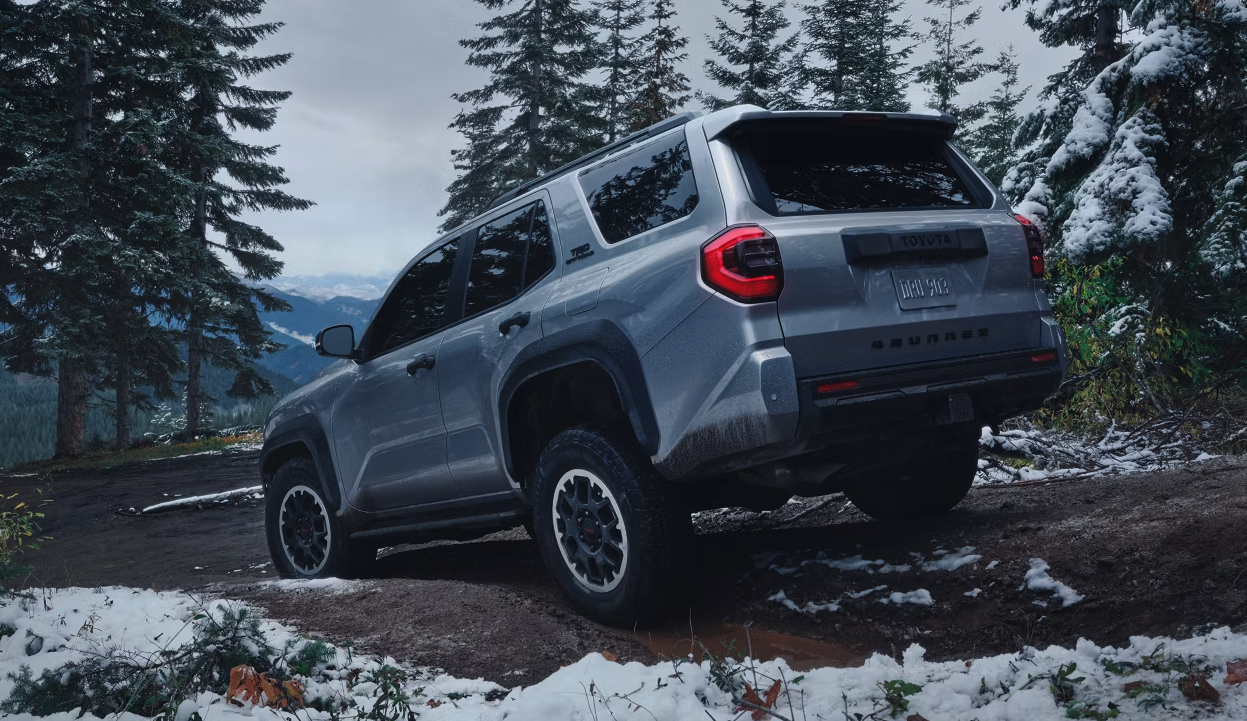
The 2026 Toyota 4Runner can tow up to 6,000 pounds when properly equipped, giving Panama City drivers a stronger midsize SUV option for small boats, utility trailers, camping gear, weekend projects, and Gulf Coast adventures. The available i-FORCE MAX hybrid powertrain adds serious torque for drivers who want confident pulling power, while Toyota’s available towing technologies help make trailer setup and reversing feel more manageable.

For shoppers around Panama City, Panama City Beach, Callaway, Lynn Haven, Youngstown, and Mexico Beach, the real question is not only how much the 2026 4Runner can tow. It is which 4Runner trim, powertrain, and feature mix fits the way you plan to drive. A Lynn Haven commuter who occasionally tows a small trailer has different needs than a Panama City Beach driver hauling weekend gear or a Mexico Beach owner who wants a more adventure-ready setup.

In this guide, we will walk through 2026 Toyota 4Runner towing capacity, i-FORCE MAX power, tow-focused technology, trim considerations, local use cases, and the questions our team recommends asking before choosing your next 4Runner.

Definition: 2026 Toyota 4Runner towing capacity refers to the maximum trailer weight the SUV can pull when properly equipped and operated within Toyota guidelines. The i-FORCE MAX system is Toyota’s available turbocharged hybrid powertrain that adds strong torque for acceleration, trail driving, and confident towing support.

2026 Toyota 4Runner Towing Capacity at a Glance

Key Takeaway: The 2026 Toyota 4Runner offers up to 6,000 pounds of maximum towing capacity when properly equipped, giving it more trailer capability than the previous-generation 4Runner.

The 2026 Toyota 4Runner is built on Toyota’s modern body-on-frame SUV architecture and brings a major capability update for drivers who want a daily SUV that can also handle weekend towing. Toyota confirms a maximum towing capacity of 6,000 pounds, which is a strong number for a midsize SUV used for local recreation, light utility work, small boats, and adventure gear.

That number should always be treated as a maximum, not a promise that every trailer, every load, and every driving condition will feel the same. Real towing confidence depends on the vehicle configuration, passengers, cargo, trailer weight, tongue weight, road conditions, braking setup, tire condition, and driver experience. Before towing, we recommend checking the owner’s manual, door-jamb labels, hitch equipment, trailer brake needs, and current vehicle condition.

2026 4Runner ItemWhat It MeansWhy Panama City Drivers Should Care
Up to 6,000 lbs towing capacityMaximum rating when properly equippedHelpful for small boats, utility trailers, camping setups, and weekend gear
Body-on-frame SUV designTruck-based construction for strength and durabilityFits drivers who want a rugged SUV instead of a softer crossover feel
Available i-FORCE MAX powertrainTurbocharged hybrid system with strong torqueUseful for confident launch feel, hill work, gear, and mixed driving
Available towing technologiesFeatures can help with visibility, braking support, and trailer reversingGood fit for newer towing drivers or busy boat-ramp weekends
Trim-specific equipmentFeatures vary by grade and configurationShoppers should compare capability, comfort, and technology before choosing

Always confirm final towing limits, equipment, payload, and trailer setup with Toyota vehicle documentation before towing.

For a Panama City Beach driver with a light boat or trailer, the 2026 4Runner can be a strong fit when the trailer setup stays within Toyota limits. For a Lynn Haven owner who needs one SUV for commuting and occasional hauling, the 4Runner offers a nice balance of daily comfort and weekend capability. For a Youngstown or Mexico Beach driver carrying gear farther from town, trim and tire choice may matter as much as the headline tow rating.

View New Toyota Models

How i-FORCE MAX Changes the 4Runner Driving Experience


Key Takeaway: The i-FORCE MAX powertrain gives the 2026 4Runner strong low-end torque, which can be especially useful for towing, passing, trail work, and loaded family driving.

The available i-FORCE MAX powertrain is one of the biggest reasons shoppers are comparing the 2026 4Runner differently from older 4Runner models. Toyota’s 2.4-liter turbocharged i-FORCE MAX hybrid system is standard on select grades and available on others. It is designed to deliver strong horsepower and torque while keeping the 4Runner’s rugged SUV character intact.

For towing, torque matters because it helps the vehicle get moving confidently with weight behind it. That can be useful when leaving a boat ramp, merging onto a faster road, climbing a bridge, or moving through rolling terrain with passengers and cargo on board. The i-FORCE MAX setup is not only about fuel economy. In the 4Runner, it is a performance-focused powertrain that supports confident response.

Powertrain QuestionGas 4Runner Directioni-FORCE MAX Direction
Daily drivingStrong, familiar turbocharged performanceMore torque-focused feel for confident response
Towing feelCapable when properly equippedAdded torque can help with launch and loaded driving
Trail-focused shoppingGood fit depending on trim and equipmentStandard on rugged trims like Trailhunter and TRD Pro
Budget planningMay be the better fit for value-focused shoppersMay be worth it for drivers who want the strongest performance feel
Best local use caseCommuting, family driving, light towingTowing, trail weekends, gear-heavy trips, premium capability

For many Panama City Toyota shoppers, the decision comes down to how often the vehicle will work hard. A driver who mostly commutes and only tows lightly a few times per year may be satisfied with a gas-powered 4Runner. A driver who regularly loads cargo, tows, heads to the coast, or wants the most confident 4Runner feel may prefer i-FORCE MAX.

We recommend test driving both powertrain directions when possible. The numbers matter, but the way the 4Runner feels leaving a stop, merging, and carrying speed with passengers on board is what helps many shoppers make the final decision.

Start Your Finance Plan

Available 4Runner Towing Technology

Key Takeaway: Available 2026 4Runner towing features can help with braking support, visibility, and reversing control when the vehicle is properly equipped.

Towing is easier when the driver can see clearly, brake confidently, and line up the trailer with less stress. Toyota lists available 2026 4Runner towing technologies such as an available trailer brake controller, available digital rear-view mirror, and Trailer Back-Up Guide with Straight Path Assist. These features can be especially helpful for drivers who tow near busy ramps, campsites, narrow driveways, and crowded weekend parking areas.

Trailer Back-Up Guide with Straight Path Assist is designed to help keep a trailer moving in a straight line while reversing, letting the driver focus more on throttle and braking. That can be helpful for newer towing drivers, but it is still not a replacement for knowing your trailer, checking your surroundings, and using a spotter when needed.

Available FeatureWhat It Helps WithUseful Local Scenario
Trailer brake controllerHelps manage trailer braking when properly configuredBoat, utility trailer, or camping trailer setup
Digital rear-view mirrorSupports rear visibility when cargo or passengers block the viewFamily trips with gear loaded behind the second row
Trailer Back-Up GuideSupports trailer reversing confidenceDriveways, ramps, campsites, and tight parking areas
Straight Path AssistHelps keep a trailer tracking straighter while backing upDrivers who want less stress while reversing a trailer
Tow/Haul modeOptimizes throttle and transmission behavior for towingLoaded trips, bridge routes, and trailer hauling

For Panama City drivers, these features are worth comparing by trim because not every shopper needs the same setup. A driver who tows once or twice a year may care more about value and comfort. A driver who tows often may put towing tech much higher on the list. Our team can walk through which features are standard, available, or tied to specific 4Runner grades.

Compare 4Runner Towing Features With Our Team

If you are choosing a 2026 4Runner for towing, we can help you compare trim levels, available i-FORCE MAX models, towing technology, cargo needs, and local driving use. Tell us what you plan to tow, how often you tow, and where you drive most. We can help narrow the options before your test drive.

Contact Our Toyota Team

Which 4Runner Setup Fits Panama City Drivers?

Key Takeaway: The best 2026 4Runner setup depends on whether your priority is towing, trails, family comfort, daily commuting, or a mix of all four.

The 2026 Toyota 4Runner lineup is broad enough that two shoppers can both want a 4Runner and still need very different configurations. A Panama City Beach driver may care about towing a small boat and carrying beach gear. A Lynn Haven family may want a comfortable SUV with occasional towing ability. A Youngstown driver may want more trail capability. A Mexico Beach owner may want a stronger mix of towing, durability, and rugged styling.

Driver ProfileMain NeedRecommended 4Runner Shopping Focus
Lynn Haven commuterDaily comfort plus occasional trailer useCompare gas and i-FORCE MAX options by value, comfort, and tow needs
Panama City Beach weekend driverSmall boat, beach gear, and family tripsPrioritize towing tech, cargo space, and easy-clean practicality
Callaway family SUV shopperSchool runs, errands, and weekend utilityFocus on seating, safety tech, cargo space, and easy daily driving
Youngstown trail driverOff-road gear, trails, and rugged weekendsCompare TRD Off-Road, Trailhunter, and TRD Pro equipment
Mexico Beach towing ownerTrailer use, cargo, coastal drives, and hot-weather tripsLook closely at i-FORCE MAX, towing tech, tires, and service planning

We recommend building your 4Runner decision around real use instead of only choosing the trim that looks best online. If you tow, bring the trailer details into the conversation. If you travel with family, talk through seating and cargo needs. If you head off-road, compare tire, suspension, and drive-mode equipment. If you plan to keep the SUV long term, ask how service, tires, brakes, and warranty coverage fit your ownership plan.

Value Your Trade

Ownership Cost Notes for Towing and i-FORCE MAX

Key Takeaway: Shoppers comparing 4Runner towing setups should think beyond the payment and include tires, brakes, fuel use, service timing, accessories, and trailer equipment.

A towing-capable SUV should be chosen with long-term ownership in mind. The 2026 4Runner can be a great fit for drivers who need real utility, but towing and gear-heavy driving can also make maintenance planning more important. Tires, brakes, fluids, hitch equipment, trailer wiring, and service intervals all matter when an SUV does more than commute.

For i-FORCE MAX shoppers, the powertrain may be especially appealing because of its strong torque and confident response. The right choice depends on how often you will use that capability. If the 4Runner will spend most days driving locally with occasional light towing, a gas model may be enough. If towing, trail trips, and loaded travel are part of your normal routine, i-FORCE MAX may feel more worthwhile.

We also recommend asking about ToyotaCare, available service plans, genuine Toyota accessories, and Panama City Toyota Lifetime Powertrain Warranty eligibility when you compare vehicles. A 4Runner is often a long-term purchase, so the ownership plan should feel as clear as the test drive.

Visit Our Service Center

Before You Tow: Service and Setup Checklist

Key Takeaway: Before towing with any 2026 4Runner, confirm the trailer weight, tongue weight, hitch setup, tires, brakes, lights, mirrors, and Toyota documentation.

Even the right SUV needs the right setup. Before towing, we recommend confirming your trailer’s loaded weight, not only the empty trailer weight. Add the boat, fuel, tools, luggage, coolers, camping equipment, or work materials that will actually travel with you. That gives you a better picture of whether the trailer fits within Toyota’s guidelines.

Your tires and brakes should also be checked before towing. Tire pressure, tread depth, brake feel, fluid condition, and trailer lighting are all part of a safer setup. If you are towing before a road trip or a busy weekend, plan the inspection early so any needed service can be handled before the schedule gets tight.

  • Confirm the exact 4Runner trim, drivetrain, powertrain, and equipment.
  • Check the owner’s manual and vehicle labels before towing.
  • Know the loaded trailer weight, not only the empty trailer weight.
  • Inspect tire pressure, tread depth, brakes, lights, mirrors, and hitch setup.
  • Use trailer brakes and towing equipment as required for the trailer and vehicle setup.
  • Schedule service before towing if the vehicle has symptoms or unknown maintenance history.

Plan Your 4Runner Visit in Panama City

We are located at 959 West 15th Street, Panama City, FL 32401, and we help drivers from Panama City, Panama City Beach, Callaway, Lynn Haven, Youngstown, and Mexico Beach compare Toyota SUVs, towing needs, and long-term ownership plans. Bring your towing questions, trailer details, trade-in plans, and trim preferences so our team can help you make a practical choice.

Schedule Pre-Tow Service

2026 Toyota 4Runner Towing FAQs

How much can the 2026 Toyota 4Runner tow?

The 2026 Toyota 4Runner can tow up to 6,000 pounds when properly equipped. Actual towing confidence depends on the vehicle configuration, trailer weight, passengers, cargo, hitch setup, trailer brakes, tires, road conditions, and Toyota documentation. We recommend checking the owner’s manual and vehicle labels before towing.

Is i-FORCE MAX better for towing?

The available i-FORCE MAX powertrain gives the 2026 4Runner strong torque, which can help with loaded acceleration, merging, bridge routes, trail driving, and towing confidence. It may be the better fit for drivers who tow often, carry gear, or want the strongest 4Runner performance feel.

Which 2026 4Runner trims offer i-FORCE MAX?

Toyota offers i-FORCE MAX as standard equipment on select rugged and premium 4Runner grades and available on certain other trims. Availability can vary by configuration, so we recommend comparing current models with our team before choosing a trim.

What should I check before towing with a 4Runner?

Before towing, check the trailer’s loaded weight, tongue weight, hitch setup, trailer lights, brakes, tire pressure, tread depth, mirrors, cargo load, and Toyota documentation. If the SUV is due for maintenance or the trailer setup is new, schedule a service check before towing.

Is the 2026 4Runner good for Panama City Beach towing?

The 2026 4Runner can be a strong fit for Panama City Beach drivers who tow small boats, utility trailers, camping gear, or weekend equipment within Toyota guidelines. We recommend choosing a trim and powertrain based on how often you tow, where you drive, and how much gear you carry.

Posted in:

Related Posts

Toyota Safety Sense: What the Current System Includes

If you have shopped for a new Toyota recently, you have probably seen "TSS" or "Toyota Safety Sense" listed as standard equipment and wondered exactly what that means for your day-to-day driving. Our sales team fields this question often, because the answer changes depending on the model, the model year, and sometimes the trim. This article breaks down what Toyota Safety Sense 3.0 actually includes, what it is designed to do, and where its limits are, so you know what to expect before you get behind the wheel. We will also cover how the system generation can vary across the Toyota lineup and how to confirm exactly what is equipped on a specific vehicle, along with what these features mean for the kind of driving common around Panama City, Panama City Beach, and the rest of Bay County. Toyota Safety Sense Features, Limitations, and Driving Guide What Is Toyota Safety Sense? Definition What Toyota Safety Sense 3.0 Includes What Toyota Safety Sense Does Not Do Why These Features Matter for Florida Panhandle Driving Real-World Use Cases for Panama City-Area Drivers Experience Toyota Safety Sense for Yourself Key Takeaways FAQ What Is Toyota Safety Sense? Toyota Safety Sense is a suite of driver-assistance technologies that Toyota builds into its vehicles to help drivers notice hazards, keep their lane, and manage following distance. Toyota Safety Sense 3.0 includes Pre-Collision System, Lane Departure Alert, Dynamic Radar Cruise Control, Lane Tracing Assist, Road Sign Assist, Automatic High Beams, and Proactive Driving Assist, according to Toyota's official Safety Sense 3.0 brochure. These are driver-assist features, not self-driving or autonomous systems, and they work alongside an attentive driver rather than in place of one. Ask About Toyota Safety Sense Visit Panama City Toyota Definition Definition: Toyota Safety Sense is Toyota's name for a bundled set of active safety and driver-assistance technologies that use cameras, radar, and other sensors to help detect road hazards, monitor lane position, and manage following distance. It is a driver-assist system, not an autonomous driving system, and it is intended to support an attentive driver rather than operate the vehicle independently. For Panama City-area drivers, the practical implication is that these features can add an extra layer of awareness on highways like US-98 and I-10, but they do not remove the driver's responsibility to watch the road. What Toyota Safety Sense 3.0 Includes Toyota Safety Sense 3.0 is one generation of the system, and according to Toyota's official Safety Sense 3.0 brochure, it includes seven core features. Here is what each one does and the conditions under which it operates. Pre-Collision System (PCS). This feature is designed to detect vehicles, pedestrians, bicyclists, or motorcyclists ahead of the vehicle and provide an audio and/or visual forward collision warning along with brake assist if the driver responds to the warning. In TSS 3.0, PCS has been enhanced to identify potential threats coming from multiple lanes and from lateral directions, not just straight ahead. This makes it more capable of flagging a vehicle merging from an adjacent lane or crossing into the vehicle's path, in addition to a vehicle stopped directly ahead. Lane Departure Alert (LDA). LDA detects when the vehicle drifts out of its lane without a turn signal at speeds above 30 mph and issues an audio and visual warning to the driver. If the driver does not respond, the system can apply gentle steering corrections to help guide the vehicle back toward its lane. TSS 3.0 includes improved 3D object recognition that helps the system better distinguish lane markings from roadside features like guardrails. Toyota Safety Sense 3.0 combines seven features with specific operating thresholds: Pre-Collision System with pedestrian, bicyclist, and motorcyclist detection; Lane Departure Alert with steering assist above 30 mph; Dynamic Radar Cruise Control active above 20 mph with four selectable following-distance settings; Lane Tracing Assist, which centers the vehicle in its lane while DRCC is engaged; Road Sign Assist, which reads speed limit, stop, yield, do-not-enter, and pedestrian-crossing signs; Automatic High Beams, which operate above 25 mph; and Proactive Driving Assist, which provides gentle braking in curves and steering support to help maintain lane position. These specifications come from Toyota's official Safety Sense 3.0 brochure. Dynamic Radar Cruise Control (DRCC). DRCC is an adaptive cruise control system that maintains a preset distance from the vehicle ahead at speeds over 20 mph. Drivers can choose from four distance settings depending on preference and traffic conditions, and TSS 3.0's enhanced vehicle detection allows for smoother speed adjustments as traffic ahead speeds up or slows down. Lane Tracing Assist (LTA). LTA works together with DRCC to help center the vehicle within its lane by reading lane markings and tracking the vehicle ahead. It can also offset the vehicle's path slightly within the lane to provide extra clearance when passing an adjacent vehicle, cyclist, or other object close to the lane line. Road Sign Assist (RSA). RSA recognizes speed limit signs, stop signs, do-not-enter signs, and yield signs, along with warning signs such as pedestrian crossings. It displays the relevant icon on the instrument cluster and can alert the driver if the vehicle's speed does not match a posted speed limit sign the system has read. Automatic High Beams (AHB). AHB operates above 25 mph and is designed to help the driver see farther down the road at night by keeping the high beams on when appropriate, while switching to low beams to reduce glare for oncoming or leading traffic. Proactive Driving Assist (PDA). PDA provides gentle braking support when approaching curves, works to detect obstacles such as parked vehicles and pedestrians, and offers steering support to help the driver maintain a centered position in the lane. Safety Sense 3.0 Features and Operating Thresholds Feature Function Operating Threshold Pre-Collision System (PCS) Forward collision warning with brake assist; detects vehicles, pedestrians, bicyclists, motorcyclists Active at applicable driving speeds Lane Departure Alert (LDA) Warns of unintended lane drift; can apply gentle steering correction Above 30 mph Dynamic Radar Cruise Control (DRCC) Adaptive cruise control with 4 selectable following-distance settings Above 20 mph Lane Tracing Assist (LTA) Centers vehicle in lane while DRCC is engaged Works with DRCC Road Sign Assist (RSA) Reads and displays speed limit, stop, yield, do-not-enter, pedestrian-crossing signs When operating and detection conditions are met Automatic High Beams (AHB) Switches between high and low beams automatically at night Above 25 mph Proactive Driving Assist (PDA) Gentle braking in curves; steering support to help maintain lane position When operating and detection conditions are met Every one of these features is designed to work with the driver, prompting a warning or offering light assistance rather than taking control of the vehicle on its own. Compare Toyota Safety Features What Toyota Safety Sense Does Not Do This is the part of the conversation we think matters most, because it is easy to see a long feature list and assume more than the system actually delivers. Toyota Safety Sense, including TSS 3.0, is a driver-assistance suite. It is not a self-driving system, and Toyota does not market it as one. None of the seven features described above are designed to replace an attentive driver who is watching the road, checking mirrors, and staying ready to brake or steer. Toyota Safety Sense features are driver-assistance technologies designed to support, not replace, an attentive driver, and no combination of these features makes a Toyota vehicle self-driving or capable of avoiding every collision. Because the exact TSS generation and feature set can vary by model and model year, the most reliable way to confirm what is equipped on a specific vehicle is to check that vehicle's window sticker or ask our sales team directly. This matters most for shoppers cross-shopping different Toyota models or comparing a current vehicle to a newer one, since assuming identical safety equipment across the lineup can lead to a mistaken understanding of what a specific car actually includes. A second point worth being direct about: Toyota Safety Sense 3.0 is confirmed as standard equipment on the 2027 Toyota Crown. Beyond that, the generation of Toyota Safety Sense equipped on a given model, whether that is TSS 4.0, TSS 3.0, or an earlier generation such as TSS 2.5 or 2.5+, varies by model and by model year. Toyota already offers TSS 4.0 on the 2026 RAV4. A Camry, a RAV4, a Tacoma, and a Highlander do not necessarily carry the same generation of the system, and the same model can carry a different generation from one model year to the next as Toyota updates its lineup. Contact Panama City Toyota for the exact Toyota Safety Sense generation and features equipped on the vehicle you are considering. That is why the most reliable way to know what is equipped on a specific vehicle is to check that vehicle's window sticker, which lists the standard safety equipment for that exact car, or to ask our sales team to confirm it before you buy. If you already own a Toyota and are unsure which generation of Toyota Safety Sense your vehicle has, your owner's manual and window sticker (or the original build sheet) are the most accurate sources, rather than assuming your vehicle matches a newer model you may have seen advertised. It is also worth understanding the practical limits of what these systems can do even when they are working as designed. A forward collision warning depends on the system's sensors detecting a hazard, and no system is described as working in every weather or visibility condition or as guaranteed to prevent a collision. Lane Tracing Assist provides steering support, not hands-free driving, and Toyota requires the driver to keep hands on the wheel and stay engaged. Treat every Toyota Safety Sense feature as a layer of support for a driver who is already paying attention, not a substitute for that attention. Toyota Safety Sense Does vs. Does Not Do Toyota Safety Sense Does Toyota Safety Sense Does Not Do Warns of a potential forward collision and can apply brake assist Guarantee collision avoidance in every situation Alerts the driver to unintended lane drift and can nudge steering Drive the vehicle hands-free or autonomously Maintains a preset following distance above 20 mph Replace the need for an attentive, engaged driver Reads and displays posted road signs Guarantee accurate detection in all weather or visibility conditions Helps manage high-beam use at night above 25 mph Adjust for every road or weather condition on its own Ask About a Specific Toyota Model Get Help With Your Toyota's Settings Why These Features Matter for Florida Panhandle Driving Driving conditions around Bay County give some practical context for why these features can be useful day to day, without needing to overstate what they do. US-98 and I-10 both see heavy seasonal traffic as visitors head toward Panama City Beach, and stop-and-go conditions on these corridors are exactly the kind of scenario where Dynamic Radar Cruise Control's ability to maintain a preset following distance can reduce some of the manual speed adjustments a driver would otherwise make constantly. Florida Panhandle summers also bring frequent heavy rain and afternoon thunderstorms. Pre-Collision System and Lane Departure Alert are designed to help flag hazards and lane drift, but sensor-based systems like these can be affected by heavy rain, fog, or road spray, so they should never be treated as a substitute for slowing down and increasing following distance in poor visibility. The same caution applies to glare, whether from a low afternoon sun over St. Andrews Bay or headlights on a dark stretch of US-231. Automatic High Beams is built to help with nighttime visibility above 25 mph, but the driver should still adjust speed and following distance for actual road and weather conditions rather than relying on the system to compensate. Local road sign variety is another place where Road Sign Assist can be a genuine convenience, particularly on routes through Lynn Haven, Callaway, and Springfield where speed limits change frequently near schools, intersections, and commercial corridors. Reading the posted sign and displaying it on the instrument cluster gives drivers one more reference point, though drivers should still watch for posted signage themselves rather than depending on the system alone. Florida Panhandle Driving Conditions and Relevant TSS Features Local Condition Relevant TSS 3.0 Feature What to Keep in Mind Heavy seasonal traffic on US-98/I-10 Dynamic Radar Cruise Control Still requires driver attention in stop-and-go conditions Summer thunderstorms and heavy rain Pre-Collision System, Lane Departure Alert Sensor performance can be affected by rain, fog, or road spray Low sun glare over St. Andrews Bay or night driving on US-231 Automatic High Beams Driver should still adjust speed and following distance for conditions Frequent speed-limit changes near schools/intersections in Lynn Haven, Callaway, Springfield Road Sign Assist Drivers should still watch posted signage directly Real-World Use Cases for Panama City-Area Drivers The following scenarios are hypothetical examples meant to illustrate how these features could be used in everyday driving around Bay County. They are not based on specific customer experiences. The daily I-10 commuter. Imagine a driver commuting from Marianna or Chipley into Panama City several days a week. With Dynamic Radar Cruise Control and Lane Tracing Assist active on the open highway stretches, that driver could let the system help maintain following distance and lane position during long, monotonous stretches, while still staying alert and ready to take full control in heavier traffic near the Panama City interchanges. A parent with a new teen driver. Consider a parent about to hand their teenager the keys for the first time. Understanding that Pre-Collision System is designed to warn of a potential forward collision and can apply brake assist if the driver responds to the alert might be one factor, among many, in choosing a particular Toyota for a new driver, alongside actual driver training and supervised practice. A tourist-season grocery run. Picture a Panama City Beach resident driving Front Beach Road during peak tourist season, where pedestrian traffic and sudden stops are common. Pre-Collision System's pedestrian detection and Automatic High Beams for nighttime visibility could both be relevant in that kind of congested, mixed-use corridor, alongside the driver's own attention to crosswalks and slowing traffic. Experience Toyota Safety Sense for Yourself Reading about these features only tells part of the story. If you want to see how Pre-Collision System, Lane Tracing Assist, Dynamic Radar Cruise Control, and the rest actually feel on the road, we invite you to schedule a test drive at our dealership at 959 West 15th Street in Panama City. Our sales team can walk you through exactly which Toyota Safety Sense generation is equipped on the specific vehicle you are considering, show you where to find that information on the window sticker, and answer any questions about how the system operates before you decide. Request a Toyota Test Drive Call 850-769-3377 Key Takeaways Toyota Safety Sense 3.0 includes seven features: Pre-Collision System, Lane Departure Alert, Dynamic Radar Cruise Control, Lane Tracing Assist, Road Sign Assist, Automatic High Beams, and Proactive Driving Assist. Toyota Safety Sense 3.0 is confirmed standard equipment on the 2027 Toyota Crown; the generation equipped on other models and model years varies, so confirm the exact system on any specific vehicle before assuming it matches another model. Several features have specific speed thresholds: Lane Departure Alert's steering assist activates above 30 mph, Dynamic Radar Cruise Control above 20 mph, and Automatic High Beams above 25 mph. Toyota Safety Sense is a driver-assistance suite, not a self-driving system, and it does not remove the driver's responsibility to stay attentive. Weather, glare, and road spray common in the Florida Panhandle can affect sensor-based systems, so drivers should not rely on these features as a substitute for slowing down in poor conditions. The most reliable way to confirm what is equipped on a specific vehicle is the window sticker or a conversation with our sales team. FAQ Can Toyota Safety Sense features be turned off? Some individual Toyota Safety Sense features can be adjusted or temporarily disabled through vehicle settings, and specific steps vary by model and model year. If you want to know how to adjust a specific feature on your vehicle, your owner's manual or our service team can walk you through the exact process for that model. Is Toyota Safety Sense the same on every current Toyota model? No. The generation of Toyota Safety Sense equipped on a vehicle, along with the exact feature set, varies by model and model year. Toyota Safety Sense 3.0 is confirmed standard on the 2027 Toyota Crown, while the 2026 RAV4 has TSS 4.0. Other models may carry TSS 3.0 or an earlier generation. Check the window sticker on a specific vehicle or ask our sales team to confirm. Does Toyota Safety Sense replace the need for safe driving habits? No. Every feature in the Toyota Safety Sense suite is designed to assist an attentive driver, not to operate the vehicle independently or guarantee collision avoidance. Drivers should keep their hands on the wheel, stay focused on the road, and treat these features as an added layer of support rather than a replacement for careful driving. Do Toyota Safety Sense features work in all weather conditions? Sensor-based systems like Pre-Collision System, Lane Departure Alert, and Automatic High Beams can be affected by heavy rain, fog, glare, or road spray, all of which are common in the Florida Panhandle. Drivers should reduce speed and increase following distance in poor visibility rather than relying on these systems to compensate for weather conditions. Toyota Safety Sense 3.0 brings together seven driver-assistance features, from Pre-Collision System and Lane Departure Alert to Dynamic Radar Cruise Control, Lane Tracing Assist, Road Sign Assist, Automatic High Beams, and Proactive Driving Assist. Each one is built to support an attentive driver rather than take over the driving task, and the exact generation equipped on a given Toyota depends on the model and model year, so the window sticker remains the most reliable place to confirm what a specific vehicle includes. If you are weighing which current Toyota fits your daily drive around Panama City, Lynn Haven, or the wider Bay County area, our team at 959 West 15th Street can show you exactly which safety features come standard on the vehicles you are considering. Call us at 850-769-3377 or stop by to schedule a test drive and see Toyota Safety Sense in action for yourself. Talk With Our Toyota Team Get Directions Related Articles Family SUV Safety Safest 2026 Toyota SUVs for Families With Kids in Panama City, FL Read More Crown & Crown Signia 2026 Toyota Crown and Crown Signia: Hybrid Luxury at Panama City Toyota Read More Toyota Hybrid Lineup Your Complete Guide to the 2026 Toyota Hybrid Lineup in Panama City Read More

ToyotaCare for 2027 Toyota Models: What Is Actually Covered?

If you're shopping a 2027 Toyota or you already own one, you're likely asking how long the included maintenance coverage lasts and exactly what it pays for. ToyotaCare is Toyota's no-cost factory-scheduled maintenance plan, and the coverage window changed with the 2027 model year. ToyotaCare Guide: Quick Navigation What ToyotaCare Covers (and Doesn't) by Model Year Roadside Assistance and What It Means for Ownership Planning Maintenance Timing for Panama City-Area Driving Real-World Use Cases for Panama City-Area Drivers Key Takeaways FAQ On 2027 Toyota models, ToyotaCare covers factory-scheduled maintenance, including engine oil and filter changes, tire rotation, fluid level inspection and adjustment, and a multi-point inspection, for 1 year or 10,000 miles, whichever comes first. On 2026 and earlier model years, that same coverage runs for 2 years or 25,000 miles, whichever comes first, and Toyota Mirai models carry 3 years or 35,000 miles regardless of model year. ToyotaCare does not cover wear items such as brake pads, rotors, replacement tires, wheel alignment, tire balancing, or wiper blades. Below, we walk through what's actually included in that maintenance coverage, why the shorter 2027 window matters for your ownership budget, what the separate roadside assistance benefit adds, and how this fits into a realistic maintenance plan if you drive around Panama City, Panama City Beach, Lynn Haven, Callaway, or the rest of Bay County. If you're comparing a 2027 model to a 2026 vehicle still in our inventory, the coverage difference is worth understanding before you sign. Definition: ToyotaCare is Toyota's complimentary factory-scheduled maintenance program included with the purchase or lease of a new Toyota. It pays for specific routine maintenance items performed according to Toyota's factory schedule, using genuine Toyota parts, for a set period of time or mileage that depends on the vehicle's model year. It is separate from Toyota's factory warranties and from any dealership-specific warranty program. Explore ToyotaCare Coverage Schedule Toyota Service What ToyotaCare Covers (and Doesn't) by Model Year ToyotaCare pays for the maintenance visits your Toyota needs to stay on Toyota's recommended schedule, not for repairs. Understanding exactly what falls into each category matters because assuming too much coverage can leave you with an unexpected bill, and assuming too little can mean skipping service you've actually already paid for. What's included. ToyotaCare covers factory-scheduled maintenance performed by Toyota-trained technicians using genuine Toyota parts. That specifically means: Engine oil and filter changes Tire rotation Fluid level inspection and adjustment Multi-point inspection These are the same core items Toyota's maintenance schedule calls for at each visit, and they're the foundation of keeping a vehicle's warranty coverage and resale condition intact over time. How often those visits happen depends on the vehicle and the oil it requires. Models that call for 0W-20 synthetic oil generally follow a 10,000-mile service interval, while other models generally follow something closer to a 5,000-mile interval. The exact interval varies by model and engine, so the owner's manual for your specific vehicle is the final word on when a service visit is due. ToyotaCare duration depends on model year, not on the vehicle type. For the 2027 model year, ToyotaCare runs 1 year or 10,000 miles, whichever comes first. For 2026 and earlier model years, ToyotaCare runs 2 years or 25,000 miles, whichever comes first. The Toyota Mirai is an exception across all model years, with ToyotaCare coverage of 3 years or 35,000 miles, whichever comes first. Model Year ToyotaCare Duration Mileage Limit 2027 model year 1 year 10,000 miles 2026 and earlier model years 2 years 25,000 miles Toyota Mirai (all model years) 3 years 35,000 miles What's not included. ToyotaCare is a maintenance program, not a repair or wear-item warranty. It does not cover brake pads, brake rotors, replacement tires, wheel alignment, tire balancing, or wiper blades. Those are considered normal wear items that get used up through everyday driving rather than items that fail from a manufacturing defect, so they fall outside a maintenance plan built around scheduled service visits. ToyotaCare Covers vs. What It Doesn't Covered by ToyotaCare Not Covered by ToyotaCare Engine oil and filter changes Brake pads and rotors Tire rotation Replacement tires Fluid level inspection and adjustment Wheel alignment Multi-point inspection Tire balancing Wiper blades Repairs of any kind It's also worth being clear about what ToyotaCare is not. ToyotaCare is not the same program as our Panama City Toyota Lifetime Warranty, and it's not the same as Toyota's factory powertrain or basic warranty, or any hybrid-system warranty that applies to your specific vehicle. Each of those is a distinct coverage with its own terms, and we'd rather point you to our service team for the exact details on any of them than guess at terms that vary by vehicle and program. ToyotaCare is generally honored at participating Toyota dealerships, and our service advisors can confirm specifics for your exact vehicle when you're ready to schedule. Contact Our Toyota Service Team Roadside Assistance and What It Means for Ownership Planning Separate from scheduled maintenance, ToyotaCare also includes roadside assistance, and this benefit runs on its own timeline that doesn't always match the maintenance coverage window. For most Toyota models, roadside assistance lasts 2 years with unlimited miles, starting from the vehicle's date of first use. Mirai, Prius, Toyota plug-in hybrid models, and Toyota battery-electric models get an extended 3 years of roadside assistance, also with unlimited miles. That's a longer window than the maintenance portion of ToyotaCare provides on a 2027 vehicle, so it's easy to assume both benefits expire together when they don't. Roadside assistance covers battery jump-starts, emergency fuel delivery, lockout protection, winching, tire service using your spare tire, and towing up to 25 miles to the nearest Toyota dealership. It's valid in the continental United States, Hawaii, and Canada, which matters if you're planning to drive out of state for a hurricane evacuation or a longer road trip. ToyotaCare Roadside Assistance Terms Detail Most Models Mirai, Prius, Toyota PHEV and BEV Models Duration 2 years 3 years Mileage limit Unlimited miles Unlimited miles Covered services Jump-starts, fuel delivery, lockout, winching, spare-tire service, towing up to 25 miles Jump-starts, fuel delivery, lockout, winching, spare-tire service, towing up to 25 miles Valid territory Continental US, Hawaii, Canada Continental US, Hawaii, Canada For Bay County shoppers weighing a 2027 model against a 2026 vehicle still in inventory, the practical difference comes down to how much scheduled maintenance is actually paid for before you start covering it yourself. A 2027 vehicle's 10,000-mile ToyotaCare allowance typically covers one to two maintenance visits depending on your vehicle's service interval, while a 2026-or-earlier vehicle's 25,000-mile allowance can stretch across three to five visits for the same driving pattern. That gap is worth factoring into your total ownership budget, particularly if you drive more than a typical commuter mileage. Mirai, Prius, Toyota plug-in hybrid, and Toyota battery-electric buyers get one benefit that doesn't change with the 2027 shift: their roadside assistance window stays at 3 years regardless of the shorter maintenance coverage. What this means in practical terms: if you're buying a 2027 model, plan on budgeting for out-of-pocket oil changes and tire rotations sooner than you might with a 2026 vehicle, since the maintenance coverage runs out after roughly a year or 10,000 miles rather than two years or 25,000 miles. It doesn't change how often your vehicle actually needs service. Toyota's recommended maintenance schedule for your specific model and engine stays the same either way; only the amount of it that ToyotaCare pays for changes. If you're cross-shopping model years, ask our sales team which model year a specific vehicle carries before you compare pricing or payments, since the ToyotaCare terms follow the vehicle's actual model year rather than the calendar year you buy it in. Review ToyotaCare Benefits Ask About Your Vehicle's Coverage Maintenance Timing for Panama City-Area Driving Where you drive affects how much your maintenance schedule matters, and Bay County's climate puts real demands on a vehicle that a mild, dry climate doesn't. Heat and humidity accelerate the breakdown of engine oil and other fluids, which is part of why Toyota's maintenance schedule specifies fluid checks at every visit rather than leaving them to guesswork. Salt air along the coast near Panama City Beach and St. Andrews Bay can also affect components over time, and a multi-point inspection is one of the more useful tools for catching early signs of that kind of wear before it becomes a bigger repair. Stop-and-go traffic on US-98 through Panama City and Panama City Beach, especially during tourist season, puts more wear on a vehicle than steady highway miles do. Frequent starting and stopping works the engine, transmission, and brakes harder per mile driven, which is one more reason to keep to the maintenance schedule rather than stretching intervals based on how the vehicle feels. None of that changes the ToyotaCare terms themselves, but it does make the maintenance schedule worth following closely rather than treating as optional. A 2027 buyer whose ToyotaCare coverage runs out at 10,000 miles or one year should expect that Panama City's driving conditions won't reduce how often service is actually needed. If anything, coastal humidity and heavy local traffic are reasons to stay current on the schedule Toyota built for your vehicle rather than falling behind after ToyotaCare coverage ends. Our service team can walk through your specific model's maintenance schedule and help you plan out what comes due and when, whether your ToyotaCare coverage is still active or has already run its course. Schedule Your Next Maintenance Visit Real-World Use Cases for Panama City-Area Drivers These scenarios are hypothetical examples meant to illustrate how the coverage differences play out, not descriptions of actual customers. A hypothetical 2027 RAV4 buyer. Say a Lynn Haven commuter buys a 2027 RAV4 and drives a typical mix of local roads and US-98. Their ToyotaCare coverage would run out at whichever comes first: their first vehicle anniversary or 10,000 miles. Depending on their exact mileage pace, that could mean one covered maintenance visit, or possibly two if their oil-change interval and driving pace line up well within that window. After that point, scheduled maintenance becomes an out-of-pocket cost following Toyota's recommended schedule for their specific RAV4 trim and powertrain. A hypothetical 2026 Camry buyer. Compare that to a Callaway driver who buys a 2026 Camry from current inventory instead. Their ToyotaCare coverage runs 2 years or 25,000 miles, whichever comes first, giving them roughly two to three times the coverage window of the 2027 buyer above in both time and mileage. For a similar annual driving pattern, this buyer could see several more covered maintenance visits before their ToyotaCare coverage expires. A hypothetical Prius Plug-in Hybrid buyer. A Niceville driver who buys a Prius Plug-in Hybrid, regardless of whether it's a 2027 or 2026 model, gets the extended 3-year roadside assistance benefit that applies to Mirai, Prius, Toyota plug-in hybrid, and Toyota battery-electric models. That roadside coverage would outlast their maintenance coverage window either way, which is worth remembering if a flat tire or dead battery happens well after their oil-change coverage has already run out. Have Questions About Your Specific Vehicle's Coverage? We know ToyotaCare terms can feel like a lot to track, especially when you're comparing model years or cross-shopping a hybrid against a gas model. If you'd like to confirm exactly what your 2027 or 2026 Toyota's ToyotaCare coverage includes, or you're ready to schedule your next maintenance visit, our service team can look up your specific vehicle and walk you through what's covered, what's due, and what comes next. Call us at 850-769-3377, or stop by our service department at 959 West 15th Street in Panama City, and we'll get you the exact answer for your vehicle rather than a general one. Visit Our Toyota Service Center Call 850-769-3377 Key Takeaways ToyotaCare duration depends on model year: 2027 models get 1 year or 10,000 miles, 2026-and-earlier models get 2 years or 25,000 miles, and Mirai gets 3 years or 35,000 miles regardless of model year. ToyotaCare covers factory-scheduled maintenance only: oil and filter changes, tire rotation, fluid inspection, and multi-point inspection. Wear items like brake pads, rotors, tires, alignment, and wiper blades are never covered under ToyotaCare. Roadside assistance runs on its own timeline: 2 years unlimited miles for most models, 3 years unlimited miles for Mirai, Prius, Toyota plug-in hybrid, and Toyota battery-electric models. ToyotaCare is a separate program from the Lifetime Warranty and from Toyota's factory powertrain or hybrid-system warranties, each with its own terms. A 2027 vehicle's shorter maintenance window means budgeting for out-of-pocket service sooner than a 2026-or-earlier vehicle would require. FAQ Does ToyotaCare cover repairs? No. ToyotaCare covers scheduled maintenance items only, including oil and filter changes, tire rotation, fluid inspection and adjustment, and multi-point inspection. Repairs, including anything related to a mechanical failure or wear-item replacement like brakes or tires, fall outside ToyotaCare and would be handled under whatever warranty coverage applies to your vehicle, or as a paid repair. Is ToyotaCare the same as the Panama City Toyota Lifetime Warranty? No, they're separate programs. ToyotaCare is a Toyota factory maintenance plan covering scheduled service visits for a set time or mileage. Our Lifetime Warranty is a distinct Panama City Toyota program with its own eligibility and terms. Ask our team for the exact current terms of either program, since they cover different things and shouldn't be assumed to overlap. What happens once my ToyotaCare coverage expires? Once your ToyotaCare period ends, whether by time or mileage, you're responsible for the cost of future scheduled maintenance visits. Your vehicle's maintenance schedule doesn't change: Toyota still recommends the same intervals for oil changes, tire rotations, and inspections. Our service department can continue performing that maintenance on a pay basis, and can help you plan ahead for what's coming due. Do I have to get my Toyota serviced at Panama City Toyota to keep ToyotaCare valid? ToyotaCare is generally honored at participating Toyota dealerships. Contact our service team for the current terms that apply to your vehicle and to confirm coverage at the participating Toyota dealership where you plan to schedule service. Knowing exactly what ToyotaCare covers, and for how long, makes it easier to plan your Toyota's maintenance budget rather than get surprised by it. The short version: 2027 models get 1 year or 10,000 miles of scheduled maintenance coverage, 2026-and-earlier models get 2 years or 25,000 miles, and roadside assistance runs separately at 2 years for most models or 3 years for Mirai, Prius, Toyota PHEVs, and Toyota BEVs. None of that tells you exactly what your specific vehicle qualifies for once trim, purchase date, and mileage come into play. If you're deciding between a 2027 model and a 2026 vehicle in our current inventory, or you just want to know where your existing Toyota stands on its ToyotaCare coverage, call our service department at 850-769-3377 or stop by 959 West 15th Street in Panama City. We'll pull up your vehicle's exact coverage and help you plan your next visit accordingly. Schedule Toyota Service Contact Panama City Toyota Related Articles Oil Change Service Oil Changes: DIY Or Professional? Read More Toyota Maintenance Toyota Brake Fluid Change Schedule in Panama City, FL Read More Toyota Hybrid Lineup Your Complete Guide to the 2026 Toyota Hybrid Lineup in Panama City Read More

2027 Toyota Crown: What's New for Panama City-Area Drivers

For Panama City-area drivers cross-shopping a Camry, an Avalon-replacement sedan, or a three-row Highlander alternative, the Crown sits in its own lane: a full-size sedan with standard AWD, hybrid efficiency, and a more upscale interior treatment than Toyota's mainstream sedans. This article walks through what changed for the 2027 model year, what each grade costs and includes, and where the Crown fits for drivers commuting along US-98, Highway 231, or I-10 in Bay County and the surrounding Florida Panhandle. Table of Contents What's New on the 2027 Toyota Crown Definition: What Is the Toyota Crown Powertrain and Pricing by Grade Technology, Safety, and Styling by Grade Fuel Economy and Commute Fit for Panama City and Bay County Real-World Use Cases for Panama City-Area Drivers Confirm Your 2027 Crown Options with Our Team Key Takeaways FAQ What's New on the 2027 Toyota Crown The 2027 Toyota Crown carries over its four-grade lineup (XLE, Nightshade, Limited, and Platinum) but updates the powertrain, styling, and technology across the range. XLE, Nightshade, and Limited now use the fifth-generation Toyota Hybrid System (THS 5) paired with a 2.5-liter engine, rated at an EPA-estimated 40 mpg combined, while the Platinum grade keeps its Hybrid MAX powertrain producing 340 horsepower and 400 lb-ft of torque. Every 2027 Crown grade includes standard all-wheel drive. Toyota also refreshed the rear bumper design, added a new "Inked" black paint option, and expanded standard driver-assistance and multimedia technology across the lineup. We'll cover confirmed pricing by grade, the powertrain differences between the standard hybrid grades and the Platinum's Hybrid MAX system, the technology and safety equipment that comes standard versus what's reserved for higher trims, and how the Crown's AWD and fuel economy figures apply to real Gulf Coast driving and weather conditions. Explore the 2027 Toyota Crown Ask About Crown Availability Definition Definition: The Toyota Crown is a full-size hybrid sedan built on Toyota's TNGA-K platform, positioned above the Camry as a more premium option with standard all-wheel drive on every grade. For the 2027 model year, it is offered in four grades: XLE, Nightshade, Limited, and Platinum, with the first three using a standard hybrid system and the Platinum grade exclusively offering a higher-output Hybrid MAX powertrain. Powertrain and Pricing by Grade The 2027 Toyota Crown lineup splits into two powertrain tiers, and understanding that split is the first step in choosing a grade. XLE, Nightshade, and Limited grades share the fifth-generation Toyota Hybrid System, known as THS 5, built around a 2.5-liter engine. Toyota rates this combination at an EPA-estimated 40 mpg combined, a figure that reflects the standard hybrid setup shared across three of the four grades rather than a Platinum-specific number. Because all three of these grades use the same core powertrain, the differences between XLE, Nightshade, and Limited come down to styling, technology, and standard features rather than how the car drives day to day. The Platinum grade breaks from that pattern entirely. It is the only 2027 Crown grade equipped with Toyota's Hybrid MAX powertrain, which trades some of the standard system's efficiency focus for stronger output: 340 horsepower and 400 lb-ft of torque. That torque figure changes how Platinum feels from a stop and when merging onto I-10, since torque determines how quickly the car responds to throttle input at low speeds. Toyota has not published a separate EPA combined mpg figure for Hybrid MAX in the confirmed 2027 Crown materials referenced here, so buyers weighing Platinum against the standard hybrid grades should contact Panama City Toyota for the latest fuel economy information before deciding between the two powertrain tiers. The 2027 Toyota Crown starts at $41,640 for the XLE grade, followed by $48,965 for Nightshade, $49,720 for Limited, and $55,190 for the range-topping Platinum grade. These figures are manufacturer's suggested retail prices (MSRP) and exclude a $1,295 dealer and destination fee, so the out-the-door starting price for each grade will run higher once that fee and any applicable taxes or dealer-installed accessories are added. Every 2027 Crown grade includes all-wheel drive as standard equipment, which is not the case on most competing full-size sedans, where AWD is often an optional add-on limited to certain trims. A few pricing patterns are worth noting. The jump from XLE to Nightshade is the largest single step in the lineup, roughly $7,300, reflecting added styling and equipment rather than a powertrain change, since Nightshade still uses the standard THS 5 hybrid system. Limited adds a comparatively modest amount over Nightshade, about $755, while Platinum's jump to $55,190 reflects both the Hybrid MAX powertrain and the additional technology and styling unique to that grade. Because these are MSRP figures subject to change, we recommend confirming current pricing with our team, and remember that dealer fees, taxes, tags, and registration costs apply on top of the vehicle price. 2027 Toyota Crown Pricing and Powertrain by Grade Grade Starting MSRP* Powertrain Output AWD XLE $41,640 THS 5 hybrid, 2.5L EPA-estimated 40 mpg combined Standard Nightshade $48,965 THS 5 hybrid, 2.5L EPA-estimated 40 mpg combined Standard Limited $49,720 THS 5 hybrid, 2.5L EPA-estimated 40 mpg combined Standard Platinum $55,190 Hybrid MAX 340 hp / 400 lb-ft torque Standard *MSRP excludes the $1,295 dealer and destination fee. Confirm current pricing with our team before purchase. For Panama City-area shoppers who are comparing the Crown against a loaded Camry XLE or Camry XSE, the price gap at the entry point is real but not enormous, and the standard AWD is often the deciding factor once a buyer starts pricing out AWD as an add-on elsewhere. Buyers focused purely on efficiency and lower upfront cost may find the XLE grade's 40 mpg combined rating and $41,640 starting MSRP the more straightforward value proposition, while buyers who want the strongest available powertrain will look toward Platinum, understanding that grade carries the highest price and a different power delivery than the other three grades. Request Current Crown Pricing Compare Grades With Our Team Technology, Safety, and Styling by Grade Standard technology on the 2027 Crown starts at a meaningfully high bar across every grade. All four grades come with a 12.3-inch touchscreen, Toyota Safety Sense 3.0 as standard equipment, and wireless Apple CarPlay and Android Auto, so buyers are not required to step up to a higher grade just to get a modern multimedia setup or current-generation driver-assistance technology. That matters for shoppers cross-referencing the Crown against the Camry or other Toyota sedans, since Toyota Safety Sense 3.0 being standard on every Crown grade removes one of the more common trim-level tradeoffs buyers run into on other vehicles. Limited and Platinum grades add capability beyond that baseline. Both include a Panoramic View Monitor, which gives a wider camera perspective around the vehicle useful for tighter parking situations, and Digital Key capability, which allows phone-based vehicle access and starting without a physical key fob present. Platinum goes a step further with a 10-inch Head-Up Display, projecting key driving information (such as speed) into the driver's line of sight on the windshield, a feature not offered on the other three grades according to the confirmed feature list for this model year. Styling changes for 2027 apply across the lineup in some cases and are grade-specific in others. Every Crown gets a newly sculpted rear bumper design for the model year, along with the option of a new "Inked" black paint color across the range. Grade-specific styling cues separate Platinum and Nightshade from the other two grades visually. Platinum adds red brake calipers and black window surrounds, giving it a more visually distinct stance than XLE or Limited. Nightshade, true to its name across the broader Toyota lineup, adds black badge overlays rather than the brighter chrome-style badging found elsewhere in the range. Standard vs. Grade-Exclusive Technology on the 2027 Crown Feature XLE Nightshade Limited Platinum 12.3-inch touchscreen Standard Standard Standard Standard Toyota Safety Sense 3.0 Standard Standard Standard Standard Wireless Apple CarPlay/Android Auto Standard Standard Standard Standard Panoramic View Monitor Not included Not included Standard Standard Digital Key Not included Not included Standard Standard 10-inch Head-Up Display Not included Not included Not included Standard Within Toyota's current sedan and crossover lineup, the Crown occupies a distinct position: it sits above the Camry with standard all-wheel drive, a more formal three-box sedan shape, and a Platinum grade that outputs more horsepower and torque than any Camry configuration, while the related Crown Signia is a separate model built as a crossover-styled hatchback rather than a traditional sedan. A Panama City-area buyer deciding between these should treat the Camry as the value-focused, front-wheel-drive-standard choice, the Crown sedan as the AWD-standard, more premium option with the Hybrid MAX power ceiling at Platinum, and the Crown Signia as the answer for buyers who want Crown-level styling and standard AWD but prefer a crossover's higher seating position and cargo flexibility over a traditional sedan trunk. That distinction is useful because these three models often get cross-shopped by the same buyer without a clear sense of how they differ. A shopper who assumes "Crown" and "Camry Hybrid" are simply different trim levels of the same car will miss that AWD is standard on every Crown grade but not on the Camry Hybrid lineup, and that the Crown's Platinum grade offers a torque figure the Camry lineup does not match. Similarly, a shopper set on a traditional sedan trunk rather than a hatchback profile should know the Crown Signia's body style before assuming it drives or loads like the Crown sedan. Sedan vs. Camry vs. Crown Signia Positioning Category Crown (sedan) Camry Crown Signia Body style Traditional three-box sedan Traditional sedan Crossover-styled hatchback AWD availability Standard on every grade Not standard across the lineup Standard on every grade Top output 340 hp / 400 lb-ft (Platinum, Hybrid MAX) Lower than Crown Platinum's Hybrid MAX figures Not equipped with Hybrid MAX Price position Above Camry Value-focused entry point Positioned near/above Crown sedan Best fit for Buyers wanting a sedan trunk and standard AWD Buyers prioritizing value and efficiency Buyers wanting Crown styling with crossover cargo flexibility Compare Crown, Camry, and Crown Signia Fuel Economy and Commute Fit for Panama City and Bay County The 40 mpg combined EPA-estimated rating on XLE, Nightshade, and Limited grades is relevant to the mixed driving common around Bay County. A commute combining stop-and-go traffic through Panama City with sustained highway stretches on US-98 toward Panama City Beach is close to the mixed-cycle conditions that figure represents. Drivers whose routine leans toward lower-speed in-town driving, such as within Lynn Haven or Callaway, may see results closer to the city-cycle side of that number, while drivers spending more time on I-10 or US-98 toward Destin may trend toward the highway side. Standard AWD on every 2027 Crown grade is worth understanding in the context of Gulf Coast weather rather than as a snow-and-ice feature, since the Panhandle rarely sees winter driving conditions requiring AWD for that reason. Where standard AWD is more relevant locally is wet-weather traction during the region's heavy rain events, including the fast-moving downpours common during hurricane season and summer thunderstorms. AWD distributes power to all four wheels, which can improve traction on a wet roadway, though it does not replace tire condition, following distance, or reduced speed as the primary factors in wet-weather safety, and it does not make a vehicle safe to drive through standing water. Drivers anywhere in Bay County should avoid driving through flooded areas regardless of drivetrain. For a household cross-shopping the Crown against other Toyota sedans and crossovers for a primarily Bay County commute, the practical takeaway is that the standard hybrid grades deliver an EPA-estimated 40 mpg combined figure well suited to a mixed local and highway routine, while the Platinum grade's Hybrid MAX powertrain prioritizes stronger torque and horsepower over a published efficiency figure matching that number. Neither choice is wrong; it depends on whether the higher priority for a given driver is fuel economy or power. Explore Toyota Hybrid Ownership Real-World Use Cases for Panama City-Area Drivers The scenarios below are illustrative examples meant to show how the 2027 Crown's confirmed specifications might apply to different driving situations. They are not real customer accounts or dealership sales data; they are hypothetical only. Consider a Panama City Beach commuter cross-shopping a Camry XLE against a Crown XLE. Both use a version of Toyota's hybrid technology and both include Toyota Safety Sense 3.0 as standard equipment, but the Crown XLE adds standard AWD and the 12.3-inch touchscreen at that entry grade, along with the more formal Crown styling. If that commuter regularly drives through heavy rain on US-98 during summer storm season, the standard AWD on the Crown XLE may be the deciding factor even though the Camry XLE carries a lower starting price. Consider a Lynn Haven household deciding between a Crown Limited and a Crown Platinum. The Limited grade includes the Panoramic View Monitor and Digital Key capability at a $49,720 starting MSRP with the standard THS 5 hybrid system's 40 mpg combined rating, while the Platinum grade adds the 10-inch Head-Up Display, unique styling cues like the red brake calipers, and the Hybrid MAX powertrain's 340 horsepower and 400 lb-ft of torque for a $55,190 starting MSRP. A household prioritizing stronger acceleration for merging onto I-10 or passing on Highway 77 might lean toward Platinum, while a household prioritizing the lower price and the standard hybrid's published efficiency figure might find Limited the better fit. Consider a buyer near Tyndall Air Force Base comparing the Crown sedan against the Crown Signia. Both share Crown styling cues and standard AWD, but the buyer who regularly hauls gear, equipment, or family cargo may prefer the Crown Signia's crossover-style body for its cargo flexibility, while a buyer who wants a traditional sedan trunk and the option of the Platinum grade's Hybrid MAX powertrain, which is exclusive to the Crown sedan lineup based on the confirmed grade structure, would stay with the Crown sedan. Confirm Your 2027 Crown Options with Our Team If the 2027 Crown's standard AWD, updated hybrid technology, or Platinum grade's Hybrid MAX powertrain fits what you're looking for, our team can walk through current grade availability, confirm final pricing including the dealer and destination fee, and set up a test drive. Because MSRP figures and inventory can change, we recommend reaching out before assuming any price or configuration listed here is locked in. You can reach us at 850-769-3377 or visit our showroom at 959 West 15th Street in Panama City to see the Crown lineup and current offers in person. Request a Toyota Crown Test Drive Call 850-769-3377 Key Takeaways The 2027 Toyota Crown keeps its four-grade lineup: XLE ($41,640), Nightshade ($48,965), Limited ($49,720), and Platinum ($55,190), all MSRP figures excluding a $1,295 dealer/destination fee. XLE, Nightshade, and Limited use the fifth-generation Toyota Hybrid System (THS 5) with a 2.5-liter engine, rated at an EPA-estimated 40 mpg combined. Platinum is the only grade with the Hybrid MAX powertrain, producing 340 horsepower and 400 lb-ft of torque. All-wheel drive is standard across every 2027 Crown grade, which is relevant to wet-weather traction during Bay County's heavy rain and storm season. Every grade includes a 12.3-inch touchscreen, Toyota Safety Sense 3.0, and wireless Apple CarPlay/Android Auto standard; Limited and Platinum add a Panoramic View Monitor and Digital Key, with Platinum alone adding a 10-inch Head-Up Display. Pricing and availability should be confirmed directly with our team, since MSRP figures can change and inventory varies by trim and configuration. FAQ Is the 2027 Toyota Crown available with front-wheel drive only, or is AWD required? Every 2027 Crown grade, from XLE through Platinum, includes all-wheel drive as standard equipment. There is no front-wheel-drive-only configuration in the confirmed 2027 grade lineup. What is the difference between the Crown's standard hybrid system and the Platinum grade's Hybrid MAX system? XLE, Nightshade, and Limited use the fifth-generation Toyota Hybrid System (THS 5) with a 2.5-liter engine, rated at an EPA-estimated 40 mpg combined. Platinum exclusively uses the Hybrid MAX powertrain, which produces 340 horsepower and 400 lb-ft of torque, prioritizing output over the published efficiency figure used for the other three grades. Does the 2027 Crown MSRP include the dealer and destination fee? No. The MSRP figures for each grade (XLE at $41,640, Nightshade at $48,965, Limited at $49,720, and Platinum at $55,190) exclude a $1,295 dealer and destination fee. Confirm the total out-the-door price with our team before finalizing a purchase. How is the Crown different from the Camry and the Crown Signia? The Crown sedan sits above the Camry with standard AWD on every grade and a more formal sedan body style, while the Camry does not include standard AWD across its lineup. The Crown Signia is a separate model built as a crossover-styled hatchback rather than a traditional sedan, sharing Crown styling cues but offering a different body style and cargo layout than the Crown sedan. The 2027 Toyota Crown updates its hybrid technology, adds standard AWD-friendly styling touches, and expands driver-assistance and multimedia technology across all four grades, while keeping the Platinum grade's Hybrid MAX powertrain as the lineup's performance option. For Panama City-area drivers weighing the Crown against a Camry, a Crown Signia, or another full-size sedan, the decision generally comes down to whether standard AWD, the THS 5 hybrid system's 40 mpg combined rating, or the Platinum grade's 340 horsepower and 400 lb-ft of torque matters most for your daily driving on US-98, I-10, or around Bay County. Our team can confirm current 2027 Crown availability, walk through the differences between grades in person, and help you schedule a test drive. Call us at 850-769-3377 or stop by our showroom at 959 West 15th Street in Panama City to see the current lineup and get final pricing on the grade that fits your needs. Contact Panama City Toyota Get Directions Related Articles Crown & Crown Signia 2026 Toyota Crown and Crown Signia: Hybrid Luxury at Panama City Toyota Read More Toyota Hybrid Lineup Your Complete Guide to the 2026 Toyota Hybrid Lineup in Panama City Read More Hybrid Ownership Is A Hybrid Car From Panama City Toyota Right For Me? Read More