
Blog / Panama City Toyota Dealer

Toyota Tundra i-FORCE MAX Towing and Payload: Start With Your Trailer

2027 toyota tundra towing capacity
Tundra i-FORCE MAX Towing & Payload | Panama City Toyota

Toyota truck guide

Towing Capacity vs. Payload: Understanding the Limits That Matter Most When Hauling

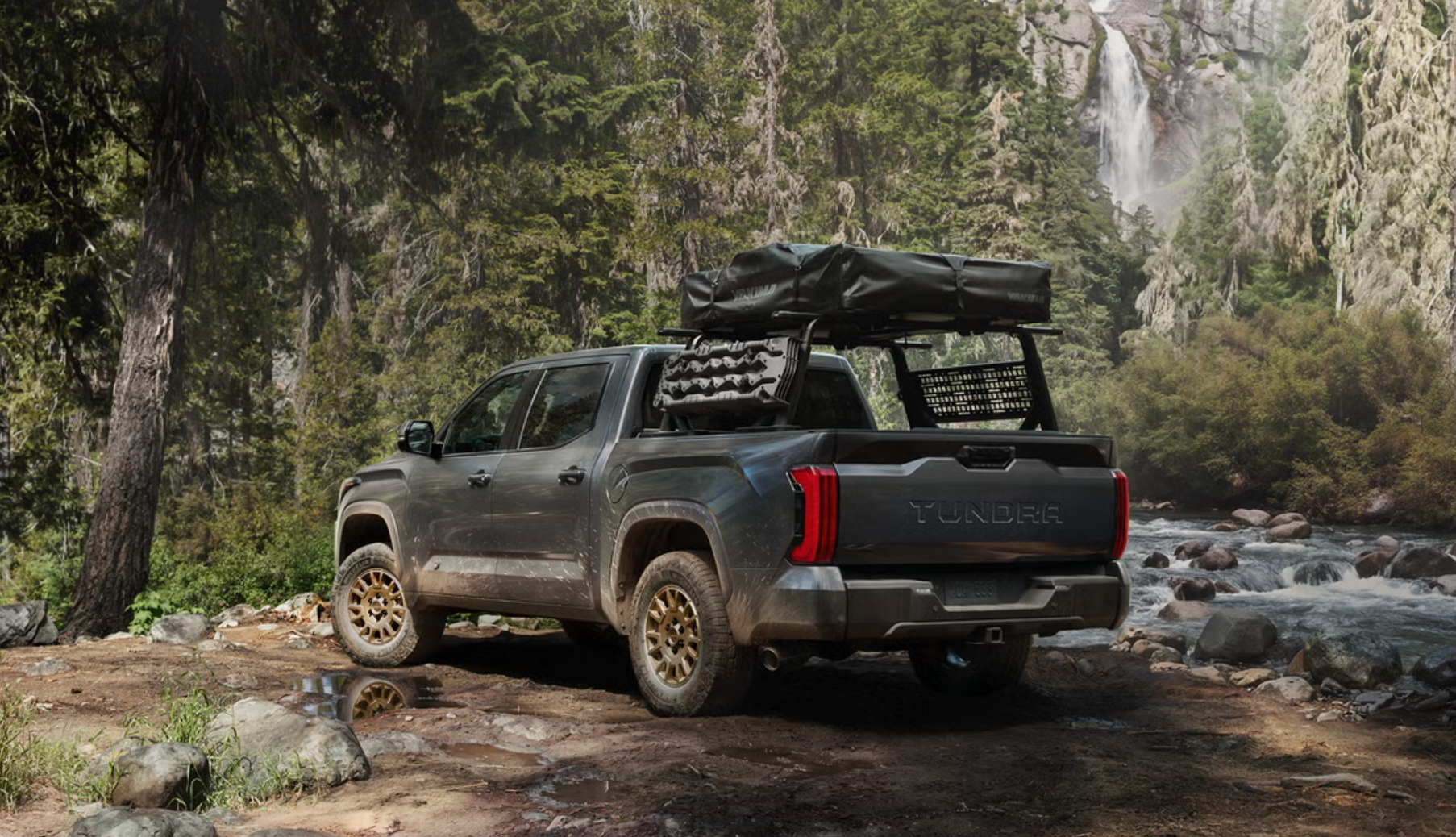
The Toyota Tundra i-FORCE MAX can give you strong hybrid power for towing, but its engine badge does not tell you how much a particular truck can tow or carry. Start with the loaded trailer weight, then check the truck's towing rating, payload, and hitch limits. Toyota's 12,000-pound Tundra lineup maximum does not apply to every hybrid configuration.

That distinction matters if you are choosing a truck for a boat, camper, or work trailer. It is possible to be below a trailer-weight limit and still run out of room for passengers and gear under the truck's load limits. A few numbers checked before you buy can prevent an expensive mismatch later.

What Does i-FORCE MAX Add to the Tundra?

The Tundra's i-FORCE MAX is a hybrid powertrain that pairs a twin-turbo V6 with an electric motor and a 10-speed automatic transmission. It uses gasoline and does not plug in. Toyota lists 437 horsepower and 583 lb-ft of torque for the 2026 hybrid and repeats those output figures in its 2027 announcement.

Extra output can be appealing when you want a truck that also handles everyday driving. It does not automatically make the hybrid the highest-rated tow configuration. The question is whether the specific truck has the capacity, equipment, and cabin you need for the way you will use it.

Towing Capacity vs Payload: Check Both

Truck and trailer limits in plain language
Number to checkWhat it meansWhy you need it
Towing capacityThe manufacturer trailer-weight limit for the exact configurationA model-line headline may belong to a different truck
Payload / occupant-and-cargo limitThe weight the truck can carry within its applicable limitsPeople, equipment, and hitch load use this capacity
Tongue weightThe downward load a conventional trailer applies at the hitchIt contributes to the load carried by the truck
GVWR and axle ratingsMaximum loaded vehicle weight and maximum load at each axlePassing one weight check does not mean all the others pass
GCWRMaximum combined weight of the loaded truck and trailerThe complete combination must remain within its rating

Payload and towing capacity describe different loads. Trailer tongue weight uses part of the Tundra's carrying capacity, alongside passengers, cargo, and added equipment. Check the Tire and Loading Information label, certification label, model-specific towing information, and owner's manual together; no single headline number replaces those checks.

A simple payload example

Suppose a truck has an occupant-and-cargo allowance of 1,600 pounds. If your passengers account for 550 pounds, cargo and added equipment account for 250 pounds, and the trailer applies 700 pounds at the hitch, you have used 1,500 pounds. That leaves 100 pounds under that particular allowance.

This is an illustrative calculation, not a Tundra rating or approval of a tow setup. A real combination must also meet its axle, hitch, trailer, vehicle, and combined-weight limits. Use measured weights and follow the vehicle and trailer instructions.

For a boat on St. Andrew Bay, do not start with the boat's dry weight alone. The trailer, fuel, batteries, and gear travel with it. The useful number is what the complete rig weighs when you are ready to leave.

Why Configuration and Model Year Matter

Two Tundras can share an i-FORCE MAX badge while differing in grade, bed length, drivetrain, installed equipment, and load limits. Compare those details on the exact vehicles you are considering. Choosing a more expensive grade is not a reliable way to choose more towing capacity.

Toyota's 2027 Tundra announcement lists a maximum towing capacity of up to 12,000 pounds across the lineup, but that release does not provide a hybrid configuration-by-configuration towing and payload table. It also announces new towing assistance features. Neither fact establishes that a 2026 truck's rating carries over to a 2027 truck.

If a specific 2027 rating is not yet available in the official information for the configuration you want, contact Panama City Toyota for the latest details. Make the final choice using the correct model-year documentation and the vehicle's own labels.

Should You Choose Hybrid or Gas for Towing?

Compare the actual trucks alongside the trailer you own or plan to buy. Put their towing and carrying limits next to their prices, equipment, and everyday usefulness. The hybrid's stronger published output is one part of that decision, rather than a substitute for the capacity checks.

For a Tundra that will tow and carry a family, payload deserves attention before you settle on a trim. A truck that accommodates the trailer but leaves too little carrying capacity for your passengers and equipment does not fit the trip. Compare complete setups, including hitch load and added accessories, rather than choosing from horsepower or maximum towing alone.

Fuel economy also needs context. An unladen MPG estimate is not a towing-MPG promise. If your budget depends on fuel use with a particular camper or boat, leave room for the difference rather than treating the published daily-driving estimate as the cost of every towing mile.

Build a Towing Worksheet Before You Shop

Start a single worksheet for your trailer and the truck you are considering. Use one row for each number and write where it came from. A measured trailer weight, a manufacturer rating, and an estimate serve different purposes; keeping their sources visible makes it easier to identify what still needs checking.

For the trailer, record its identification information, weight rating, actual loaded weight, and the load transferred through the hitch. Include the trailer's equipment and any manufacturer instructions relevant to the connection. For a boat, “loaded” means the trip-ready rig, not just the boat manufacturer's dry hull figure.

For the truck, record the model year, grade, cab, bed, drivetrain, and identification number. Then collect the applicable towing, vehicle, axle, combined-weight, and hitch ratings. Some information is on labels, while other information belongs in the model-specific documentation. Ask for help matching the documents to the exact configuration rather than copying the first Tundra chart you find.

Keep a final column for your usual passengers and equipment. If you tow alone during the week and take the family on weekends, make two loading plans. A setup that meets the limits in one arrangement may need another review when the cab and bed fill up. The worksheet should describe the trip, not an empty truck parked in the showroom.

Compare Two Loading Plans for the Same Truck

Consider an illustrative truck with a 1,600-pound occupant-and-cargo allowance. This is an invented number for explaining the method, not a rating assigned to any Tundra configuration. Suppose passengers account for 500 pounds, luggage and equipment for 200 pounds, hitch equipment for 100 pounds, and measured trailer tongue load for 650 pounds. The total is 1,450 pounds.

That leaves 150 pounds under this example's allowance, before anything else that must be counted. Add a 180-pound passenger without removing another load, and the total becomes 1,630 pounds. The trailer itself has not changed, yet the carrying allowance is exceeded by 30 pounds. This is why “the trailer is under the tow rating” is only one part of the check.

The example also shows why small additions deserve attention. A toolbox, bed cover, extra equipment, or a different hitch setup can change the actual load. Avoid counting a factory item twice if it is already reflected in the vehicle's stated allowance, and account for subsequent additions using the applicable instructions and actual vehicle information.

Passing that one arithmetic check still does not approve the combination. Axle loads, the hitch, the trailer, loaded vehicle weight, and combined weight must also meet their applicable limits. If a result is close, replace estimates with measurements. Do not try to solve a rating problem by guessing how much weight a particular driving route will allow.

What to Ask When Weighing Your Truck and Trailer

A scale visit is most useful when the vehicle is loaded as you intend to travel. Bring the normal occupants, fuel, supplies, and equipment into the planning process. Weighing a lightly loaded weekday setup does not establish the weights of a fully packed holiday trip.

Ask the scale operator or a qualified towing professional how to obtain the measurements needed for your configuration. You may need separate information for the truck's axles, the trailer, and the complete combination. Follow the appropriate procedure for your hitch and trailer rather than assuming that one total weight answers every question.

Keep the weight tickets with the worksheet and label the loading arrangement. Record changes such as a different trailer, more passengers, additional accessories, or equipment moved between the truck and trailer. Measurements are a snapshot of a setup. Significant changes can make the earlier snapshot less useful.

If a limit is exceeded, reassess the configuration and loading plan with qualified help. Moving cargo does not automatically fix the problem: it can change axle loads, trailer balance, and hitch load. Choose a combination that meets all applicable instructions and ratings instead of adjusting one number while overlooking another.

Check the Hitch and Trailer Equipment Separately

The truck's rating does not establish that every hitch component has the same capacity. Confirm the receiver, connection hardware, trailer coupler, and any other equipment required for your trailer. Match the combination using the vehicle, hitch, and trailer manufacturers' instructions, including any conditions attached to a rating.

Trailer braking also deserves its own conversation. Ask what the specific truck is equipped to control, what the trailer requires, and how the system should be checked before travel. A brake controller listed on a window sticker is not proof that a particular trailer is connected, adjusted, or operating correctly.

If a weight-distributing hitch is part of the proposed setup, confirm its requirements and installation with qualified help. Do not treat it as an accessory that increases Toyota's published vehicle or axle limits. The purpose of evaluating the complete setup is to make sure the equipment works within those limits, not to replace them.

For a used trailer, include its condition and documentation in the review. Lighting, tires, brakes, and the connection all belong to the trailer as well as the truck. A new tow vehicle cannot establish the condition of equipment that comes with a boat or camper purchased elsewhere.

Choose a Grade That Works When the Trailer Is Parked

A truck may spend much more time commuting than towing. After you identify configurations that meet your towing needs, compare how they work without the trailer. Check parking, rear-seat room, bed access, visibility, and the equipment you handle every day. A capacity calculation cannot tell you whether a particular cab-and-bed arrangement fits your driveway or family.

For a work truck, consider which equipment stays aboard permanently. Tools and storage systems should be part of the capacity discussion before they are installed. For a family truck, think about passengers and child restraints as well as bags. Evaluate approved seating positions and installation requirements using the vehicle and restraint instructions.

The highest equipment grade is not necessarily the best starting point if the purchase is driven by a defined towing job. Compare the actual allowances and installed options of two trucks at a similar level of usefulness. An option you value may be worth choosing, but its price or appearance does not establish a capability advantage.

Likewise, do not select 4x2 or 4x4 solely from a headline towing figure. Consider your intended use and the manufacturer's guidance for the drivetrain, then compare ratings for those exact trucks. The correct choice is the configuration that meets the job and your daily requirements, rather than a drivetrain label treated as universally better.

Plan Maintenance and Learn the Assistance Features

Tell the service team that the Tundra will tow, how often, and under what conditions. Use the Warranty & Maintenance Guide for the exact model year to establish the relevant schedule. Do not assume that every truck follows the same maintenance plan regardless of use, or invent a shorter interval because towing sounds demanding.

Before a trip, review the truck and trailer as a connected setup. Tires, lights, brakes, fluid-related service needs, and the hitch all deserve attention according to the applicable instructions. Ask a technician about unfamiliar checks rather than learning a procedure for the first time with a loaded trailer waiting in the driveway.

Toyota's towing assistance features can also differ by model year and equipment. Ask for a demonstration of the systems fitted to the vehicle you are considering, including any setup steps and limitations. Learn what a displayed camera view includes and what remains outside it. A convenient image is still only one source of information about your surroundings.

Practice handling the combination in an appropriate location and under suitable conditions before relying on it for a demanding trip. Technology does not increase a weight rating or remove the driver's responsibility to understand the trailer's movement. The useful benefit of a demonstration is knowing what assistance you actually have, rather than assuming all Tundras behave identically.

Bring the Trailer Decision Into the Purchase Conversation

If you already own the trailer, bring its documentation and measurements. If you plan to buy one later, identify a realistic candidate before committing to the truck. “A camper someday” leaves too much unresolved to confirm whether a specific Tundra will fit. Ask the trailer seller for the information needed to evaluate a loaded setup, not only an attractive empty-weight specification.

Compare purchase quotes after you have a viable configuration shortlist. Keep the truck's equipment, any hitch-related work, and added accessories itemized. If you are trading another tow vehicle, establish its payoff and allowance separately so the monthly payment does not obscure what the replacement truck and equipment actually cost.

For towing around Bay County, a short trip to a boat ramp still requires the correct setup. A longer drive adds route and stop planning, but distance does not change the manufacturer's limits. Decide with your real trailer and load in front of you, then choose the Tundra that fits both that job and the rest of your week.

Questions to Resolve Before Delivery

Before accepting the truck, review the configuration one last time against the worksheet. Confirm that any promised equipment is installed and that the vehicle identification matches the documents used for the capacity discussion. If a different truck replaces the original selection, repeat the check rather than assuming an identical badge establishes identical limits.

Ask where to find the correct manual and towing guidance, how to identify the load labels, and whom to contact if you change trailers later. Save that information with the trailer records. It is much easier to revisit a clearly documented setup than to reconstruct a conversation months after purchase.

If the trailer is not yet ready to connect, keep that step open. A dealership visit can establish information about the truck, but it cannot fully evaluate an absent trailer's condition or a loading arrangement that has not been measured. Finish the setup review before the first towing trip, including the trailer equipment and instructions, instead of treating delivery of the truck as approval of every future combination.

What to Bring When You Compare Trucks

  • Your loaded trailer weight: use a scale measurement when possible.
  • Your tongue or hitch load: measure the load transferred to the truck and follow the correct instructions for your trailer type.
  • Your passenger and cargo estimate: include the people, tools, coolers, and equipment that normally travel with you.
  • Your added accessories: account for equipment fitted after the truck was built.
  • Your model-year preference: keep the documentation for 2026 and 2027 trucks separate.

Towing cameras and backup assistance can help with visibility and positioning when equipped, but they do not increase the manufacturer's weight ratings. Confirm each truck's equipment and understand its operating limitations before relying on it.

You can compare current new Toyota trucks once you have those numbers. For a specific vehicle, ask about its towing configuration before making the trailer part of the purchase plan.

Key Takeaways

  • A Tundra lineup maximum is not the rating for every i-FORCE MAX truck.
  • Payload includes the carrying load from passengers, cargo, equipment, and trailer hitch load.
  • A higher trim or more torque does not guarantee a higher towing rating.
  • Use the correct model-year manual and configuration-specific manufacturer information.
  • Compare the complete loaded truck-and-trailer setup before buying.

Frequently Asked Questions

Can every Tundra i-FORCE MAX tow 12,000 pounds?

No. The 12,000-pound figure is a Tundra lineup maximum for a properly equipped configuration, not a rating for every i-FORCE MAX truck. Check the exact truck's model year, configuration, manufacturer towing information, and load limits.

Does trailer tongue weight count against payload?

Yes. The downward load transferred through the hitch uses part of the truck's carrying capacity. Account for it along with occupants, cargo, accessories, and hitch equipment.

Does more torque mean a higher towing rating?

No. Torque describes powertrain output. Towing ratings also depend on the vehicle configuration and other manufacturer limits. Choose using the exact truck's ratings, not engine output alone.

Can I apply 2026 Tundra towing figures to a 2027 truck?

No. Use the towing information and owner's manual for the model year and configuration you are buying. Shared powertrain names or output figures do not establish identical tow or payload ratings.

Find a Tundra That Fits Your Trailer

Bring your loaded trailer weight, hitch load, and usual passenger-and-gear estimate. Contact Panama City Toyota to review the configuration and manufacturer information for a truck you are considering.

Discuss Your Towing Needs Call 850-769-3377

Three-row SUVs

2026 Toyota Sequoia Capstone vs Platinum

Compare two Sequoia trims when a larger SUV is on your shopping list.

Read More

Safety & technology

Toyota Safety Sense: What the Current System Includes

Understand the features, model-year differences, and system limitations.

Read More

Buying & finance

How Much Can You Negotiate on a New Toyota?

See how selling price, trade-in value, and financing fit into a vehicle quote.

Read More
Posted in:

Related Posts

2027 toyota land cruiser trims

2027 Toyota Land Cruiser Trims: Should You Choose the 1958 or Land Cruiser?

Toyota SUV guide 2027 Toyota Land Cruiser Trim Comparison: Features, Tech, and Off-Road Gear Home / Blog / 2027 Toyota Land Cruiser Trims: Should You Choose the 1958 or Land Cruiser? The 2027 Toyota Land Cruiser gives you two trims to choose from, but you do not need to move up for more engine power. The Land Cruiser 1958 and Land Cruiser share a 326-hp i-FORCE MAX hybrid system, full-time four-wheel drive, and locking center and rear differentials. Choose between them by the comfort features and extra trail technology you will use. If you like the Land Cruiser but are unsure which version makes sense, start inside the cabin. Sit in both seats, try the screens, and consider what you want on a normal drive. The shared mechanical equipment makes that a more useful starting point than assuming the higher trim is necessary. 2027 Land Cruiser Trim Guide: Equipment, Towing, and Buying Advice What Both 2027 Land Cruiser Trims Give You Land Cruiser 1958 vs Land Cruiser: The Differences You Will Notice What the Off-Road Features Actually Do Check Your Boat, Cargo, and Passenger Count Sort Features by How Often You Will Use Them Check Seats, Controls, and Storage in Person Full-Time 4WD and Locking Differentials Answer Different Questions Decide Whether the Added Terrain Systems Matter to You Evaluate Towing With All Five Seats in Use When Another Toyota Belongs on Your Shortlist Plan Ownership Costs Alongside the Equipment Price What to Compare Before Your Test Drive Key Takeaways Frequently Asked Questions What Both 2027 Land Cruiser Trims Give You The Land Cruiser is a two-row, five-passenger SUV with a body-on-frame construction. Its i-FORCE MAX system combines a turbocharged 2.4-liter four-cylinder engine and an electric motor with an eight-speed automatic. It uses gasoline and does not plug in. Both grades include full-time 4WD, a two-speed transfer case, CRAWL Control, and locking center and rear differentials. Toyota rates the hybrid system at 326 net combined horsepower and 465 lb-ft of torque. That shared foundation means the 1958 is more than a styling package without the core off-road equipment. Land Cruiser 1958 vs Land Cruiser: The Differences You Will Notice 2027 Land Cruiser trim equipment Feature Land Cruiser 1958 Land Cruiser Headlights Heritage-inspired round LEDs Rectangular LEDs Front seats Heated fabric-trimmed seats Power heated and ventilated SofTex-trimmed seats Multimedia touchscreen 8-inch 12.3-inch Standard audio 6 speakers 10 speakers Power liftgate Not listed as standard in the release Included Additional trail technology Shared core 4WD, locking differentials, and CRAWL Control Adds Multi-Terrain Select and Multi-Terrain Monitor Premium Package Not offered on this grade in the release Available; review the specific vehicle for included equipment Equipment above follows Toyota's 2027 announcement. Check the vehicle's window sticker for its installed options and package content before making your final comparison. Why choose the 1958? The 1958 makes sense if you want the shared powertrain and 4WD hardware, prefer fabric seating, and do not need the larger screen or added cabin equipment. You may also simply prefer its round headlights. You are choosing a different equipment mix, rather than accepting less engine output. When does the Land Cruiser trim make sense? The Land Cruiser grade is worth a closer look if ventilated front seats, the larger display, a power liftgate, or additional terrain systems are features you would use regularly. For daily driving between Lynn Haven and Panama City, try the seat support and controls during a test drive rather than deciding only from the specification list. If you are considering the Premium Package, compare the exact optioned vehicle. Toyota lists upgrades including leather-trimmed seating, a JBL audio system, a head-up display, and a power moonroof. Those are package features, so do not assume every Land Cruiser-grade vehicle includes them. What the Off-Road Features Actually Do The 2027 Land Cruiser's two grades share their core 4WD and locking-differential hardware. The Land Cruiser grade adds Multi-Terrain Select and Multi-Terrain Monitor to help with terrain settings and visibility on equipped vehicles. Those features can influence your trim choice, but they do not replace correct operation, suitable tires, or judgment about whether a route is passable. CRAWL Control manages throttle and braking at selected low speeds in its intended operating conditions. Multi-Terrain Select adjusts vehicle responses for the selected terrain. The monitor provides camera views that can help you see around the vehicle. Learn the operating instructions and limitations before using any of them off pavement. Toyota also announces an available High Mounted Air Intake for 2027. That equipment should not be treated as permission to enter flooded roads. Four-wheel drive, extra ground clearance, and a raised intake do not establish a safe water-crossing depth. Check Your Boat, Cargo, and Passenger Count Toyota lists a maximum towing capacity of 6,000 pounds for a properly equipped Land Cruiser. For a boat, include the trailer, fuel, batteries, and gear in the weight you compare with the rating. The people and equipment carried in the SUV also matter to its load limits. If you regularly fill all five seats, check your towing setup with those passengers and their bags included. A tow rating by itself does not establish that every combination of trailer and cargo fits. Use the exact vehicle's labels and manual rather than relying on the model-line maximum. Before choosing a Land Cruiser trim, decide whether a five-seat SUV fits your household at all. If you need a third row or a different towing capability, compare another Toyota before spending time on Land Cruiser packages. If five seats and its rated capacity fit, the 1958-versus-Land Cruiser decision becomes a focused comparison of comfort, convenience, and trail equipment. The 4Runner and Sequoia may belong on your list, but compare their exact model years and configurations. Seating layouts, drivetrain equipment, and towing ratings vary. Do not assume a shared Toyota badge or hybrid name makes the vehicles interchangeable. Sort Features by How Often You Will Use Them A useful way to compare the two Land Cruiser grades is to place features in three groups: everyday use, regular recreation, and occasional interest. Seat comfort and controls may matter on every drive. Terrain systems may matter on certain weekends. A particular accessory may simply be something you like. None is an invalid reason to buy, but separating them makes the price difference easier to judge. For each feature on your list, describe a situation where you would use it. “A larger screen” becomes “I want to read the camera view comfortably while parking.” “More trail equipment” becomes “I use permitted unpaved access roads and want to understand which systems help there.” Specific situations reveal whether equipment addresses a need or only sounds appealing in a brochure. Then sit in both grades without letting one vehicle's optional package stand in for all examples of that trim. If the Land Cruiser you try has the Premium Package, identify which features are package additions. Otherwise, you might attribute an upgrade to the grade itself and be disappointed when a differently equipped vehicle lacks it. This method can also support choosing the 1958 confidently. If the shared powertrain and hardware meet your needs, and the extra equipment does not solve a recurring problem for you, the simpler configuration remains a legitimate choice. If you will appreciate the comfort upgrades daily, the higher grade may justify closer consideration without requiring an off-road story to explain it. Check Seats, Controls, and Storage in Person Start by setting the driver's seat and steering wheel for your normal posture. Check whether you can reach frequently used controls without stretching and whether the screen and instrument display are easy to read. A good fit for a taller passenger may not be a good fit for you, so evaluate the position personally. Move to the second row with the front seat still in that position. Check the room available to the people who would ride there and how easy it is to get in and out. If child restraints are part of your household, bring them and follow both the vehicle and restraint instructions when evaluating approved installations. Seat count alone does not establish how a particular combination will fit. For cargo, bring dimensions rather than relying on a photograph of an empty compartment. A dog crate, cooler, work case, or piece of camping equipment may depend on opening width and usable shape as much as a volume figure. Check loading access with the rear seats positioned the way you intend to use them. Look at smaller storage needs too. Where will phones, charging cables, drinks, and frequently used items go? Can a passenger reach what they need without unpacking the cargo area? These details do not create a specification-sheet winner, but they can determine which interior feels easier to live with over a normal week. Full-Time 4WD and Locking Differentials Answer Different Questions Full-time four-wheel drive and locking differentials are related parts of the Land Cruiser's capability, but the terms do not mean the same thing. The drivetrain describes how power is delivered, while the locking features address particular traction conditions. Knowing that both grades share the hardware does not remove the need to learn when and how each function should be used. Ask for an explanation using the owner's manual for the exact vehicle. Identify the controls, their operating conditions, and any restrictions. Do not experiment with differential locks or other off-road settings on a normal road simply to see whether the SUV feels more capable. These systems have intended uses and instructions. Think about the surfaces you actually encounter. Paved commuting, a maintained gravel road, and a demanding trail are different situations. You should be able to describe your use before deciding that a particular feature is necessary. More controls on the console do not automatically make a route suitable or remove the importance of driver preparation. The same distinction matters in rain around Panama City. A capable drivetrain does not make floodwater safe, establish braking performance on every surface, or replace suitable tires. Treat the Land Cruiser's equipment as tools with defined purposes. A clear demonstration and time with the manual are more useful than a broad promise that four-wheel drive can handle anything. Decide Whether the Added Terrain Systems Matter to You The Land Cruiser grade's Multi-Terrain Select and Multi-Terrain Monitor can be relevant if off-pavement use is a regular part of your plans. Before assigning them a value, ask what settings and camera views the specific vehicle provides, how the systems are operated, and what their limitations are. For the monitor, look at the view from the driver's seat rather than judging it from a demonstration image. Ask what is visible, what remains outside the view, and how the display changes with the selected function. A camera can assist awareness, but it does not make every obstacle or person visible in every situation. For terrain settings, focus on understanding the manufacturer's instructions. A mode name is not a guarantee of access to every road with that surface. Road permission, route condition, weather, equipment, and driving experience remain separate considerations. If beach access is your interest, check the rules for the location; vehicle capability does not grant permission to drive there. If your recreation mostly involves paved access and organized parking, you may give more weight to cabin comfort or cargo fit. If your plans involve more demanding permitted routes, consider training and suitable preparation alongside equipment. That provides a stronger basis for choosing a grade than adding every available feature on the assumption that you might need it someday. Evaluate Towing With All Five Seats in Use A trailer decision should include the people who will ride in the Land Cruiser. If the whole family goes to the boat ramp, the relevant setup is the loaded SUV with everyone aboard, not an empty vehicle paired with a trailer's dry weight. Make a simple list of passengers, luggage, equipment, and the trailer load transferred to the hitch. Compare the applicable carrying allowance and other limits with that arrangement. Separately, establish the trailer's complete loaded weight and required equipment. A maximum trailer rating is only one of the limits you must satisfy. If you are buying the boat or trailer later, ask the seller for the information needed to plan a realistic loaded combination. Fuel, equipment, and trailer hardware can make an empty specification less useful for your actual trip. Measurements and manufacturer instructions should guide the final review rather than estimates designed to make a preferred SUV fit. Consider cargo access while the trailer is connected as well. Where will the gear you need at a stop be stored, and can you reach it without creating an awkward loading routine? This is a convenience question rather than a rating calculation, but both matter when choosing a vehicle you expect to use repeatedly for recreation. When Another Toyota Belongs on Your Shortlist Start any comparison with the requirement that brought you to the Land Cruiser. If it is a five-seat SUV with the shared hybrid powertrain and standard drivetrain hardware, compare those attributes directly. If it is family transportation with occasional recreation, seating, cargo, parking, and daily comfort may deserve greater weight. The 4Runner and Sequoia can be worth considering for different needs, but compare specific configurations instead of treating either model name as a single specification. A third-row requirement, for example, should be checked against a vehicle that actually has the appropriate seating layout. Do not assume every grade offers the same arrangement. Keep model years visible on your worksheet. An update can change equipment or program terms even when a familiar powertrain name remains. If one vehicle is available now and another is being discussed from an announcement, distinguish confirmed configuration details from information still pending. A balanced comparison can conclude that the Land Cruiser is not the best fit for your household. That is a useful outcome if it saves you from choosing an SUV that lacks a necessary seat or cannot accommodate your loaded trailer. Capability is valuable when it matches the job, and a better match is more important than winning a comparison on paper. Plan Ownership Costs Alongside the Equipment Price Ask for an insurance quote for the configuration you are considering and include expected fuel, maintenance, registration, and financing in the budget. Use the vehicle's applicable efficiency information as a planning input rather than a guarantee of your results. A payment that seems manageable can feel different once the rest of ownership is included. Separate factory warranty coverage, scheduled maintenance, roadside assistance, and any additional protection product. Ask which documents establish each benefit and what time, mileage, eligibility, or service conditions apply. A feature on the vehicle and coverage for that feature are different questions; one does not establish the other. For accessories, ask whether they are already included in the quote or proposed for later installation. Identify what each item does, why you want it, and whether it affects the loading or operating instructions relevant to your use. A roof setup or additional equipment should be part of the planning conversation before it is fitted. Finally, compare a specific 1958 and Land Cruiser using the same price basis. Keep selling price, options, accessories, taxes, fees, trade information, and financing separate enough to understand. Once the vehicle fits your needs, a clear quote lets you decide whether the equipment difference is worth its actual cost to you. What to Compare Before Your Test Drive Ask for a current, itemized quote on the Land Cruiser you are considering. Compare the same model year and include options, accessories, delivery or processing charges, taxes, and other fees. A launch-announcement MSRP is not the final price of the vehicle in front of you. Seats: compare fabric with the available upgraded upholstery and ventilation. Screens: try the navigation and camera views on each display. Cargo: bring measurements for equipment you carry regularly. Towing: bring your fully loaded trailer weight and hitch-load information. Options: match the window sticker to the quote so package features are clear. You can browse current new Toyota inventory before visiting, then ask about the Land Cruiser configurations available. Toyota Safety Sense 3.0 is listed for both 2027 trims; it provides driver assistance and requires an attentive driver, rather than making the SUV self-driving. Key Takeaways The 2027 Land Cruiser has two trims: 1958 and Land Cruiser. Both share the 326-hp hybrid powertrain, full-time 4WD, and locking center and rear differentials. The Land Cruiser grade adds comfort equipment and terrain technology. It seats up to five and is rated for up to 6,000 pounds of towing when properly equipped. Choose from the exact vehicle equipment and a current itemized quote. Frequently Asked Questions What are the 2027 Toyota Land Cruiser trims? Toyota offers the 2027 Land Cruiser in two grades: Land Cruiser 1958 and Land Cruiser. Both share the i-FORCE MAX hybrid powertrain and full-time four-wheel drive. Is the Land Cruiser 1958 less powerful than the Land Cruiser trim? No. Both 2027 grades use the same hybrid system rated at 326 net combined horsepower and 465 lb-ft of torque. The trim differences are primarily equipment, comfort, and additional trail technology. Does the 2027 Land Cruiser have a third row? No. It is a two-row SUV with seating for up to five. If you regularly carry more than five people, compare a Toyota with the seating configuration your household needs. Can the 2027 Land Cruiser tow a boat? Toyota lists a maximum towing capacity of 6,000 pounds when properly equipped. Your complete loaded boat and trailer must fit the vehicle's towing, payload, hitch, and other applicable limits. Check the exact vehicle and its owner's manual before towing. Compare the Two Land Cruiser Trims Tell Panama City Toyota what you carry, whether you tow, and which cabin features matter most. Ask about the equipment and current price of the Land Cruiser you want to compare. Ask About a Land Cruiser Call 850-769-3377 Related Toyota Insights & Updates Three-row SUVs 2026 Toyota Sequoia Capstone vs Platinum Compare two Sequoia trims when a larger SUV is on your shopping list. Read More Safety & technology Toyota Safety Sense: What the Current System Includes Understand the features, model-year differences, and system limitations. Read More

Toyota Safety Sense: What the Current System Includes

If you have shopped for a new Toyota recently, you have probably seen "TSS" or "Toyota Safety Sense" listed as standard equipment and wondered exactly what that means for your day-to-day driving. Our sales team fields this question often, because the answer changes depending on the model, the model year, and sometimes the trim. This article breaks down what Toyota Safety Sense 3.0 actually includes, what it is designed to do, and where its limits are, so you know what to expect before you get behind the wheel. We will also cover how the system generation can vary across the Toyota lineup and how to confirm exactly what is equipped on a specific vehicle, along with what these features mean for the kind of driving common around Panama City, Panama City Beach, and the rest of Bay County. Toyota Safety Sense Features, Limitations, and Driving Guide What Is Toyota Safety Sense? Definition What Toyota Safety Sense 3.0 Includes What Toyota Safety Sense Does Not Do Why These Features Matter for Florida Panhandle Driving Real-World Use Cases for Panama City-Area Drivers Experience Toyota Safety Sense for Yourself Key Takeaways FAQ What Is Toyota Safety Sense? Toyota Safety Sense is a suite of driver-assistance technologies that Toyota builds into its vehicles to help drivers notice hazards, keep their lane, and manage following distance. Toyota Safety Sense 3.0 includes Pre-Collision System, Lane Departure Alert, Dynamic Radar Cruise Control, Lane Tracing Assist, Road Sign Assist, Automatic High Beams, and Proactive Driving Assist, according to Toyota's official Safety Sense 3.0 brochure. These are driver-assist features, not self-driving or autonomous systems, and they work alongside an attentive driver rather than in place of one. Ask About Toyota Safety Sense Visit Panama City Toyota Definition Definition: Toyota Safety Sense is Toyota's name for a bundled set of active safety and driver-assistance technologies that use cameras, radar, and other sensors to help detect road hazards, monitor lane position, and manage following distance. It is a driver-assist system, not an autonomous driving system, and it is intended to support an attentive driver rather than operate the vehicle independently. For Panama City-area drivers, the practical implication is that these features can add an extra layer of awareness on highways like US-98 and I-10, but they do not remove the driver's responsibility to watch the road. What Toyota Safety Sense 3.0 Includes Toyota Safety Sense 3.0 is one generation of the system, and according to Toyota's official Safety Sense 3.0 brochure, it includes seven core features. Here is what each one does and the conditions under which it operates. Pre-Collision System (PCS). This feature is designed to detect vehicles, pedestrians, bicyclists, or motorcyclists ahead of the vehicle and provide an audio and/or visual forward collision warning along with brake assist if the driver responds to the warning. In TSS 3.0, PCS has been enhanced to identify potential threats coming from multiple lanes and from lateral directions, not just straight ahead. This makes it more capable of flagging a vehicle merging from an adjacent lane or crossing into the vehicle's path, in addition to a vehicle stopped directly ahead. Lane Departure Alert (LDA). LDA detects when the vehicle drifts out of its lane without a turn signal at speeds above 30 mph and issues an audio and visual warning to the driver. If the driver does not respond, the system can apply gentle steering corrections to help guide the vehicle back toward its lane. TSS 3.0 includes improved 3D object recognition that helps the system better distinguish lane markings from roadside features like guardrails. Toyota Safety Sense 3.0 combines seven features with specific operating thresholds: Pre-Collision System with pedestrian, bicyclist, and motorcyclist detection; Lane Departure Alert with steering assist above 30 mph; Dynamic Radar Cruise Control active above 20 mph with four selectable following-distance settings; Lane Tracing Assist, which centers the vehicle in its lane while DRCC is engaged; Road Sign Assist, which reads speed limit, stop, yield, do-not-enter, and pedestrian-crossing signs; Automatic High Beams, which operate above 25 mph; and Proactive Driving Assist, which provides gentle braking in curves and steering support to help maintain lane position. These specifications come from Toyota's official Safety Sense 3.0 brochure. Dynamic Radar Cruise Control (DRCC). DRCC is an adaptive cruise control system that maintains a preset distance from the vehicle ahead at speeds over 20 mph. Drivers can choose from four distance settings depending on preference and traffic conditions, and TSS 3.0's enhanced vehicle detection allows for smoother speed adjustments as traffic ahead speeds up or slows down. Lane Tracing Assist (LTA). LTA works together with DRCC to help center the vehicle within its lane by reading lane markings and tracking the vehicle ahead. It can also offset the vehicle's path slightly within the lane to provide extra clearance when passing an adjacent vehicle, cyclist, or other object close to the lane line. Road Sign Assist (RSA). RSA recognizes speed limit signs, stop signs, do-not-enter signs, and yield signs, along with warning signs such as pedestrian crossings. It displays the relevant icon on the instrument cluster and can alert the driver if the vehicle's speed does not match a posted speed limit sign the system has read. Automatic High Beams (AHB). AHB operates above 25 mph and is designed to help the driver see farther down the road at night by keeping the high beams on when appropriate, while switching to low beams to reduce glare for oncoming or leading traffic. Proactive Driving Assist (PDA). PDA provides gentle braking support when approaching curves, works to detect obstacles such as parked vehicles and pedestrians, and offers steering support to help the driver maintain a centered position in the lane. Safety Sense 3.0 Features and Operating Thresholds Feature Function Operating Threshold Pre-Collision System (PCS) Forward collision warning with brake assist; detects vehicles, pedestrians, bicyclists, motorcyclists Active at applicable driving speeds Lane Departure Alert (LDA) Warns of unintended lane drift; can apply gentle steering correction Above 30 mph Dynamic Radar Cruise Control (DRCC) Adaptive cruise control with 4 selectable following-distance settings Above 20 mph Lane Tracing Assist (LTA) Centers vehicle in lane while DRCC is engaged Works with DRCC Road Sign Assist (RSA) Reads and displays speed limit, stop, yield, do-not-enter, pedestrian-crossing signs When operating and detection conditions are met Automatic High Beams (AHB) Switches between high and low beams automatically at night Above 25 mph Proactive Driving Assist (PDA) Gentle braking in curves; steering support to help maintain lane position When operating and detection conditions are met Every one of these features is designed to work with the driver, prompting a warning or offering light assistance rather than taking control of the vehicle on its own. Compare Toyota Safety Features What Toyota Safety Sense Does Not Do This is the part of the conversation we think matters most, because it is easy to see a long feature list and assume more than the system actually delivers. Toyota Safety Sense, including TSS 3.0, is a driver-assistance suite. It is not a self-driving system, and Toyota does not market it as one. None of the seven features described above are designed to replace an attentive driver who is watching the road, checking mirrors, and staying ready to brake or steer. Toyota Safety Sense features are driver-assistance technologies designed to support, not replace, an attentive driver, and no combination of these features makes a Toyota vehicle self-driving or capable of avoiding every collision. Because the exact TSS generation and feature set can vary by model and model year, the most reliable way to confirm what is equipped on a specific vehicle is to check that vehicle's window sticker or ask our sales team directly. This matters most for shoppers cross-shopping different Toyota models or comparing a current vehicle to a newer one, since assuming identical safety equipment across the lineup can lead to a mistaken understanding of what a specific car actually includes. A second point worth being direct about: Toyota Safety Sense 3.0 is confirmed as standard equipment on the 2027 Toyota Crown. Beyond that, the generation of Toyota Safety Sense equipped on a given model, whether that is TSS 4.0, TSS 3.0, or an earlier generation such as TSS 2.5 or 2.5+, varies by model and by model year. Toyota already offers TSS 4.0 on the 2026 RAV4. A Camry, a RAV4, a Tacoma, and a Highlander do not necessarily carry the same generation of the system, and the same model can carry a different generation from one model year to the next as Toyota updates its lineup. Contact Panama City Toyota for the exact Toyota Safety Sense generation and features equipped on the vehicle you are considering. That is why the most reliable way to know what is equipped on a specific vehicle is to check that vehicle's window sticker, which lists the standard safety equipment for that exact car, or to ask our sales team to confirm it before you buy. If you already own a Toyota and are unsure which generation of Toyota Safety Sense your vehicle has, your owner's manual and window sticker (or the original build sheet) are the most accurate sources, rather than assuming your vehicle matches a newer model you may have seen advertised. It is also worth understanding the practical limits of what these systems can do even when they are working as designed. A forward collision warning depends on the system's sensors detecting a hazard, and no system is described as working in every weather or visibility condition or as guaranteed to prevent a collision. Lane Tracing Assist provides steering support, not hands-free driving, and Toyota requires the driver to keep hands on the wheel and stay engaged. Treat every Toyota Safety Sense feature as a layer of support for a driver who is already paying attention, not a substitute for that attention. Toyota Safety Sense Does vs. Does Not Do Toyota Safety Sense Does Toyota Safety Sense Does Not Do Warns of a potential forward collision and can apply brake assist Guarantee collision avoidance in every situation Alerts the driver to unintended lane drift and can nudge steering Drive the vehicle hands-free or autonomously Maintains a preset following distance above 20 mph Replace the need for an attentive, engaged driver Reads and displays posted road signs Guarantee accurate detection in all weather or visibility conditions Helps manage high-beam use at night above 25 mph Adjust for every road or weather condition on its own Ask About a Specific Toyota Model Get Help With Your Toyota's Settings Why These Features Matter for Florida Panhandle Driving Driving conditions around Bay County give some practical context for why these features can be useful day to day, without needing to overstate what they do. US-98 and I-10 both see heavy seasonal traffic as visitors head toward Panama City Beach, and stop-and-go conditions on these corridors are exactly the kind of scenario where Dynamic Radar Cruise Control's ability to maintain a preset following distance can reduce some of the manual speed adjustments a driver would otherwise make constantly. Florida Panhandle summers also bring frequent heavy rain and afternoon thunderstorms. Pre-Collision System and Lane Departure Alert are designed to help flag hazards and lane drift, but sensor-based systems like these can be affected by heavy rain, fog, or road spray, so they should never be treated as a substitute for slowing down and increasing following distance in poor visibility. The same caution applies to glare, whether from a low afternoon sun over St. Andrews Bay or headlights on a dark stretch of US-231. Automatic High Beams is built to help with nighttime visibility above 25 mph, but the driver should still adjust speed and following distance for actual road and weather conditions rather than relying on the system to compensate. Local road sign variety is another place where Road Sign Assist can be a genuine convenience, particularly on routes through Lynn Haven, Callaway, and Springfield where speed limits change frequently near schools, intersections, and commercial corridors. Reading the posted sign and displaying it on the instrument cluster gives drivers one more reference point, though drivers should still watch for posted signage themselves rather than depending on the system alone. Florida Panhandle Driving Conditions and Relevant TSS Features Local Condition Relevant TSS 3.0 Feature What to Keep in Mind Heavy seasonal traffic on US-98/I-10 Dynamic Radar Cruise Control Still requires driver attention in stop-and-go conditions Summer thunderstorms and heavy rain Pre-Collision System, Lane Departure Alert Sensor performance can be affected by rain, fog, or road spray Low sun glare over St. Andrews Bay or night driving on US-231 Automatic High Beams Driver should still adjust speed and following distance for conditions Frequent speed-limit changes near schools/intersections in Lynn Haven, Callaway, Springfield Road Sign Assist Drivers should still watch posted signage directly Real-World Use Cases for Panama City-Area Drivers The following scenarios are hypothetical examples meant to illustrate how these features could be used in everyday driving around Bay County. They are not based on specific customer experiences. The daily I-10 commuter. Imagine a driver commuting from Marianna or Chipley into Panama City several days a week. With Dynamic Radar Cruise Control and Lane Tracing Assist active on the open highway stretches, that driver could let the system help maintain following distance and lane position during long, monotonous stretches, while still staying alert and ready to take full control in heavier traffic near the Panama City interchanges. A parent with a new teen driver. Consider a parent about to hand their teenager the keys for the first time. Understanding that Pre-Collision System is designed to warn of a potential forward collision and can apply brake assist if the driver responds to the alert might be one factor, among many, in choosing a particular Toyota for a new driver, alongside actual driver training and supervised practice. A tourist-season grocery run. Picture a Panama City Beach resident driving Front Beach Road during peak tourist season, where pedestrian traffic and sudden stops are common. Pre-Collision System's pedestrian detection and Automatic High Beams for nighttime visibility could both be relevant in that kind of congested, mixed-use corridor, alongside the driver's own attention to crosswalks and slowing traffic. Experience Toyota Safety Sense for Yourself Reading about these features only tells part of the story. If you want to see how Pre-Collision System, Lane Tracing Assist, Dynamic Radar Cruise Control, and the rest actually feel on the road, we invite you to schedule a test drive at our dealership at 959 West 15th Street in Panama City. Our sales team can walk you through exactly which Toyota Safety Sense generation is equipped on the specific vehicle you are considering, show you where to find that information on the window sticker, and answer any questions about how the system operates before you decide. Request a Toyota Test Drive Call 850-769-3377 Key Takeaways Toyota Safety Sense 3.0 includes seven features: Pre-Collision System, Lane Departure Alert, Dynamic Radar Cruise Control, Lane Tracing Assist, Road Sign Assist, Automatic High Beams, and Proactive Driving Assist. Toyota Safety Sense 3.0 is confirmed standard equipment on the 2027 Toyota Crown; the generation equipped on other models and model years varies, so confirm the exact system on any specific vehicle before assuming it matches another model. Several features have specific speed thresholds: Lane Departure Alert's steering assist activates above 30 mph, Dynamic Radar Cruise Control above 20 mph, and Automatic High Beams above 25 mph. Toyota Safety Sense is a driver-assistance suite, not a self-driving system, and it does not remove the driver's responsibility to stay attentive. Weather, glare, and road spray common in the Florida Panhandle can affect sensor-based systems, so drivers should not rely on these features as a substitute for slowing down in poor conditions. The most reliable way to confirm what is equipped on a specific vehicle is the window sticker or a conversation with our sales team. FAQ Can Toyota Safety Sense features be turned off? Some individual Toyota Safety Sense features can be adjusted or temporarily disabled through vehicle settings, and specific steps vary by model and model year. If you want to know how to adjust a specific feature on your vehicle, your owner's manual or our service team can walk you through the exact process for that model. Is Toyota Safety Sense the same on every current Toyota model? No. The generation of Toyota Safety Sense equipped on a vehicle, along with the exact feature set, varies by model and model year. Toyota Safety Sense 3.0 is confirmed standard on the 2027 Toyota Crown, while the 2026 RAV4 has TSS 4.0. Other models may carry TSS 3.0 or an earlier generation. Check the window sticker on a specific vehicle or ask our sales team to confirm. Does Toyota Safety Sense replace the need for safe driving habits? No. Every feature in the Toyota Safety Sense suite is designed to assist an attentive driver, not to operate the vehicle independently or guarantee collision avoidance. Drivers should keep their hands on the wheel, stay focused on the road, and treat these features as an added layer of support rather than a replacement for careful driving. Do Toyota Safety Sense features work in all weather conditions? Sensor-based systems like Pre-Collision System, Lane Departure Alert, and Automatic High Beams can be affected by heavy rain, fog, glare, or road spray, all of which are common in the Florida Panhandle. Drivers should reduce speed and increase following distance in poor visibility rather than relying on these systems to compensate for weather conditions. Toyota Safety Sense 3.0 brings together seven driver-assistance features, from Pre-Collision System and Lane Departure Alert to Dynamic Radar Cruise Control, Lane Tracing Assist, Road Sign Assist, Automatic High Beams, and Proactive Driving Assist. Each one is built to support an attentive driver rather than take over the driving task, and the exact generation equipped on a given Toyota depends on the model and model year, so the window sticker remains the most reliable place to confirm what a specific vehicle includes. If you are weighing which current Toyota fits your daily drive around Panama City, Lynn Haven, or the wider Bay County area, our team at 959 West 15th Street can show you exactly which safety features come standard on the vehicles you are considering. Call us at 850-769-3377 or stop by to schedule a test drive and see Toyota Safety Sense in action for yourself. Talk With Our Toyota Team Get Directions Related Articles Family SUV Safety Safest 2026 Toyota SUVs for Families With Kids in Panama City, FL Read More Crown & Crown Signia 2026 Toyota Crown and Crown Signia: Hybrid Luxury at Panama City Toyota Read More Toyota Hybrid Lineup Your Complete Guide to the 2026 Toyota Hybrid Lineup in Panama City Read More

ToyotaCare for 2027 Toyota Models: What Is Actually Covered?

If you're shopping a 2027 Toyota or you already own one, you're likely asking how long the included maintenance coverage lasts and exactly what it pays for. ToyotaCare is Toyota's no-cost factory-scheduled maintenance plan, and the coverage window changed with the 2027 model year. ToyotaCare Guide: Quick Navigation What ToyotaCare Covers (and Doesn't) by Model Year Roadside Assistance and What It Means for Ownership Planning Maintenance Timing for Panama City-Area Driving Real-World Use Cases for Panama City-Area Drivers Key Takeaways FAQ On 2027 Toyota models, ToyotaCare covers factory-scheduled maintenance, including engine oil and filter changes, tire rotation, fluid level inspection and adjustment, and a multi-point inspection, for 1 year or 10,000 miles, whichever comes first. On 2026 and earlier model years, that same coverage runs for 2 years or 25,000 miles, whichever comes first, and Toyota Mirai models carry 3 years or 35,000 miles regardless of model year. ToyotaCare does not cover wear items such as brake pads, rotors, replacement tires, wheel alignment, tire balancing, or wiper blades. Below, we walk through what's actually included in that maintenance coverage, why the shorter 2027 window matters for your ownership budget, what the separate roadside assistance benefit adds, and how this fits into a realistic maintenance plan if you drive around Panama City, Panama City Beach, Lynn Haven, Callaway, or the rest of Bay County. If you're comparing a 2027 model to a 2026 vehicle still in our inventory, the coverage difference is worth understanding before you sign. Definition: ToyotaCare is Toyota's complimentary factory-scheduled maintenance program included with the purchase or lease of a new Toyota. It pays for specific routine maintenance items performed according to Toyota's factory schedule, using genuine Toyota parts, for a set period of time or mileage that depends on the vehicle's model year. It is separate from Toyota's factory warranties and from any dealership-specific warranty program. Explore ToyotaCare Coverage Schedule Toyota Service What ToyotaCare Covers (and Doesn't) by Model Year ToyotaCare pays for the maintenance visits your Toyota needs to stay on Toyota's recommended schedule, not for repairs. Understanding exactly what falls into each category matters because assuming too much coverage can leave you with an unexpected bill, and assuming too little can mean skipping service you've actually already paid for. What's included. ToyotaCare covers factory-scheduled maintenance performed by Toyota-trained technicians using genuine Toyota parts. That specifically means: Engine oil and filter changes Tire rotation Fluid level inspection and adjustment Multi-point inspection These are the same core items Toyota's maintenance schedule calls for at each visit, and they're the foundation of keeping a vehicle's warranty coverage and resale condition intact over time. How often those visits happen depends on the vehicle and the oil it requires. Models that call for 0W-20 synthetic oil generally follow a 10,000-mile service interval, while other models generally follow something closer to a 5,000-mile interval. The exact interval varies by model and engine, so the owner's manual for your specific vehicle is the final word on when a service visit is due. ToyotaCare duration depends on model year, not on the vehicle type. For the 2027 model year, ToyotaCare runs 1 year or 10,000 miles, whichever comes first. For 2026 and earlier model years, ToyotaCare runs 2 years or 25,000 miles, whichever comes first. The Toyota Mirai is an exception across all model years, with ToyotaCare coverage of 3 years or 35,000 miles, whichever comes first. Model Year ToyotaCare Duration Mileage Limit 2027 model year 1 year 10,000 miles 2026 and earlier model years 2 years 25,000 miles Toyota Mirai (all model years) 3 years 35,000 miles What's not included. ToyotaCare is a maintenance program, not a repair or wear-item warranty. It does not cover brake pads, brake rotors, replacement tires, wheel alignment, tire balancing, or wiper blades. Those are considered normal wear items that get used up through everyday driving rather than items that fail from a manufacturing defect, so they fall outside a maintenance plan built around scheduled service visits. ToyotaCare Covers vs. What It Doesn't Covered by ToyotaCare Not Covered by ToyotaCare Engine oil and filter changes Brake pads and rotors Tire rotation Replacement tires Fluid level inspection and adjustment Wheel alignment Multi-point inspection Tire balancing Wiper blades Repairs of any kind It's also worth being clear about what ToyotaCare is not. ToyotaCare is not the same program as our Panama City Toyota Lifetime Warranty, and it's not the same as Toyota's factory powertrain or basic warranty, or any hybrid-system warranty that applies to your specific vehicle. Each of those is a distinct coverage with its own terms, and we'd rather point you to our service team for the exact details on any of them than guess at terms that vary by vehicle and program. ToyotaCare is generally honored at participating Toyota dealerships, and our service advisors can confirm specifics for your exact vehicle when you're ready to schedule. Contact Our Toyota Service Team Roadside Assistance and What It Means for Ownership Planning Separate from scheduled maintenance, ToyotaCare also includes roadside assistance, and this benefit runs on its own timeline that doesn't always match the maintenance coverage window. For most Toyota models, roadside assistance lasts 2 years with unlimited miles, starting from the vehicle's date of first use. Mirai, Prius, Toyota plug-in hybrid models, and Toyota battery-electric models get an extended 3 years of roadside assistance, also with unlimited miles. That's a longer window than the maintenance portion of ToyotaCare provides on a 2027 vehicle, so it's easy to assume both benefits expire together when they don't. Roadside assistance covers battery jump-starts, emergency fuel delivery, lockout protection, winching, tire service using your spare tire, and towing up to 25 miles to the nearest Toyota dealership. It's valid in the continental United States, Hawaii, and Canada, which matters if you're planning to drive out of state for a hurricane evacuation or a longer road trip. ToyotaCare Roadside Assistance Terms Detail Most Models Mirai, Prius, Toyota PHEV and BEV Models Duration 2 years 3 years Mileage limit Unlimited miles Unlimited miles Covered services Jump-starts, fuel delivery, lockout, winching, spare-tire service, towing up to 25 miles Jump-starts, fuel delivery, lockout, winching, spare-tire service, towing up to 25 miles Valid territory Continental US, Hawaii, Canada Continental US, Hawaii, Canada For Bay County shoppers weighing a 2027 model against a 2026 vehicle still in inventory, the practical difference comes down to how much scheduled maintenance is actually paid for before you start covering it yourself. A 2027 vehicle's 10,000-mile ToyotaCare allowance typically covers one to two maintenance visits depending on your vehicle's service interval, while a 2026-or-earlier vehicle's 25,000-mile allowance can stretch across three to five visits for the same driving pattern. That gap is worth factoring into your total ownership budget, particularly if you drive more than a typical commuter mileage. Mirai, Prius, Toyota plug-in hybrid, and Toyota battery-electric buyers get one benefit that doesn't change with the 2027 shift: their roadside assistance window stays at 3 years regardless of the shorter maintenance coverage. What this means in practical terms: if you're buying a 2027 model, plan on budgeting for out-of-pocket oil changes and tire rotations sooner than you might with a 2026 vehicle, since the maintenance coverage runs out after roughly a year or 10,000 miles rather than two years or 25,000 miles. It doesn't change how often your vehicle actually needs service. Toyota's recommended maintenance schedule for your specific model and engine stays the same either way; only the amount of it that ToyotaCare pays for changes. If you're cross-shopping model years, ask our sales team which model year a specific vehicle carries before you compare pricing or payments, since the ToyotaCare terms follow the vehicle's actual model year rather than the calendar year you buy it in. Review ToyotaCare Benefits Ask About Your Vehicle's Coverage Maintenance Timing for Panama City-Area Driving Where you drive affects how much your maintenance schedule matters, and Bay County's climate puts real demands on a vehicle that a mild, dry climate doesn't. Heat and humidity accelerate the breakdown of engine oil and other fluids, which is part of why Toyota's maintenance schedule specifies fluid checks at every visit rather than leaving them to guesswork. Salt air along the coast near Panama City Beach and St. Andrews Bay can also affect components over time, and a multi-point inspection is one of the more useful tools for catching early signs of that kind of wear before it becomes a bigger repair. Stop-and-go traffic on US-98 through Panama City and Panama City Beach, especially during tourist season, puts more wear on a vehicle than steady highway miles do. Frequent starting and stopping works the engine, transmission, and brakes harder per mile driven, which is one more reason to keep to the maintenance schedule rather than stretching intervals based on how the vehicle feels. None of that changes the ToyotaCare terms themselves, but it does make the maintenance schedule worth following closely rather than treating as optional. A 2027 buyer whose ToyotaCare coverage runs out at 10,000 miles or one year should expect that Panama City's driving conditions won't reduce how often service is actually needed. If anything, coastal humidity and heavy local traffic are reasons to stay current on the schedule Toyota built for your vehicle rather than falling behind after ToyotaCare coverage ends. Our service team can walk through your specific model's maintenance schedule and help you plan out what comes due and when, whether your ToyotaCare coverage is still active or has already run its course. Schedule Your Next Maintenance Visit Real-World Use Cases for Panama City-Area Drivers These scenarios are hypothetical examples meant to illustrate how the coverage differences play out, not descriptions of actual customers. A hypothetical 2027 RAV4 buyer. Say a Lynn Haven commuter buys a 2027 RAV4 and drives a typical mix of local roads and US-98. Their ToyotaCare coverage would run out at whichever comes first: their first vehicle anniversary or 10,000 miles. Depending on their exact mileage pace, that could mean one covered maintenance visit, or possibly two if their oil-change interval and driving pace line up well within that window. After that point, scheduled maintenance becomes an out-of-pocket cost following Toyota's recommended schedule for their specific RAV4 trim and powertrain. A hypothetical 2026 Camry buyer. Compare that to a Callaway driver who buys a 2026 Camry from current inventory instead. Their ToyotaCare coverage runs 2 years or 25,000 miles, whichever comes first, giving them roughly two to three times the coverage window of the 2027 buyer above in both time and mileage. For a similar annual driving pattern, this buyer could see several more covered maintenance visits before their ToyotaCare coverage expires. A hypothetical Prius Plug-in Hybrid buyer. A Niceville driver who buys a Prius Plug-in Hybrid, regardless of whether it's a 2027 or 2026 model, gets the extended 3-year roadside assistance benefit that applies to Mirai, Prius, Toyota plug-in hybrid, and Toyota battery-electric models. That roadside coverage would outlast their maintenance coverage window either way, which is worth remembering if a flat tire or dead battery happens well after their oil-change coverage has already run out. Have Questions About Your Specific Vehicle's Coverage? We know ToyotaCare terms can feel like a lot to track, especially when you're comparing model years or cross-shopping a hybrid against a gas model. If you'd like to confirm exactly what your 2027 or 2026 Toyota's ToyotaCare coverage includes, or you're ready to schedule your next maintenance visit, our service team can look up your specific vehicle and walk you through what's covered, what's due, and what comes next. Call us at 850-769-3377, or stop by our service department at 959 West 15th Street in Panama City, and we'll get you the exact answer for your vehicle rather than a general one. Visit Our Toyota Service Center Call 850-769-3377 Key Takeaways ToyotaCare duration depends on model year: 2027 models get 1 year or 10,000 miles, 2026-and-earlier models get 2 years or 25,000 miles, and Mirai gets 3 years or 35,000 miles regardless of model year. ToyotaCare covers factory-scheduled maintenance only: oil and filter changes, tire rotation, fluid inspection, and multi-point inspection. Wear items like brake pads, rotors, tires, alignment, and wiper blades are never covered under ToyotaCare. Roadside assistance runs on its own timeline: 2 years unlimited miles for most models, 3 years unlimited miles for Mirai, Prius, Toyota plug-in hybrid, and Toyota battery-electric models. ToyotaCare is a separate program from the Lifetime Warranty and from Toyota's factory powertrain or hybrid-system warranties, each with its own terms. A 2027 vehicle's shorter maintenance window means budgeting for out-of-pocket service sooner than a 2026-or-earlier vehicle would require. FAQ Does ToyotaCare cover repairs? No. ToyotaCare covers scheduled maintenance items only, including oil and filter changes, tire rotation, fluid inspection and adjustment, and multi-point inspection. Repairs, including anything related to a mechanical failure or wear-item replacement like brakes or tires, fall outside ToyotaCare and would be handled under whatever warranty coverage applies to your vehicle, or as a paid repair. Is ToyotaCare the same as the Panama City Toyota Lifetime Warranty? No, they're separate programs. ToyotaCare is a Toyota factory maintenance plan covering scheduled service visits for a set time or mileage. Our Lifetime Warranty is a distinct Panama City Toyota program with its own eligibility and terms. Ask our team for the exact current terms of either program, since they cover different things and shouldn't be assumed to overlap. What happens once my ToyotaCare coverage expires? Once your ToyotaCare period ends, whether by time or mileage, you're responsible for the cost of future scheduled maintenance visits. Your vehicle's maintenance schedule doesn't change: Toyota still recommends the same intervals for oil changes, tire rotations, and inspections. Our service department can continue performing that maintenance on a pay basis, and can help you plan ahead for what's coming due. Do I have to get my Toyota serviced at Panama City Toyota to keep ToyotaCare valid? ToyotaCare is generally honored at participating Toyota dealerships. Contact our service team for the current terms that apply to your vehicle and to confirm coverage at the participating Toyota dealership where you plan to schedule service. Knowing exactly what ToyotaCare covers, and for how long, makes it easier to plan your Toyota's maintenance budget rather than get surprised by it. The short version: 2027 models get 1 year or 10,000 miles of scheduled maintenance coverage, 2026-and-earlier models get 2 years or 25,000 miles, and roadside assistance runs separately at 2 years for most models or 3 years for Mirai, Prius, Toyota PHEVs, and Toyota BEVs. None of that tells you exactly what your specific vehicle qualifies for once trim, purchase date, and mileage come into play. If you're deciding between a 2027 model and a 2026 vehicle in our current inventory, or you just want to know where your existing Toyota stands on its ToyotaCare coverage, call our service department at 850-769-3377 or stop by 959 West 15th Street in Panama City. We'll pull up your vehicle's exact coverage and help you plan your next visit accordingly. Schedule Toyota Service Contact Panama City Toyota Related Articles Oil Change Service Oil Changes: DIY Or Professional? Read More Toyota Maintenance Toyota Brake Fluid Change Schedule in Panama City, FL Read More Toyota Hybrid Lineup Your Complete Guide to the 2026 Toyota Hybrid Lineup in Panama City Read More