Where Are Nearby Travel Destinations In Panama City?
If you’re planning a trip to Panama City, Florida, you want to make sure you have an opportunity to enjoy everything the area has to offer. That includes checking out some of the best nearby travel destinations. To get the most out of your Panama City beach vacation, be sure to include some of these top places to enjoy outdoor recreation in the area.
St. Andrews State Park

Image via Flickr by chrismccorkle2
You don’t have to go far to enjoy some of the best outdoor recreation on your trip to Panama City Beach. In fact, you just have to head southwest to St. Andrews State Park. This 1,200-acre park has St. Andrews Bay on one side and the Gulf of Mexico on the other. Not only does the park boast 1.5 miles of pristine beaches that are ideal for fishing, swimming, and relaxing in the sun, but you’ll also find a variety of other activities available.
Bicycling the two miles of paved roads is one of the more popular pastimes in the park. If you like to hike, the park has two trails. The Gator Lake trail offers scenic views of the lake, and the Heron Pond Trail takes you through the flatwood pine forest before heading out toward Sandy Point. Other activities in the park include paddling, boating, snorkeling, diving, surfing, and picnicking.
Grayton Beach State Park
Grayton Beach State Park is another fantastic park that’s just a short drive from Panama City. Situated about 38 miles northwest, this 2,200-acre state park offers white sand beaches, interesting nature trails, and a unique coastal dune lake. While the beach is consistently ranked as one of the most beautiful in the country, it’s not the only activity worth enjoying at the park.
You can use a canoe or kayak to explore Western Lake, which is a 100-acre coastal dune lake. The hiking opportunities range from a 1-mile nature trail to a 9-mile round-trip hiking and biking trail that goes through the forest and around Western Lake. The park is also a good place for biking, swimming, fishing, and birdwatching.
When you’re done at the park, consider heading to the small, neighboring community of Grayton Beach. This charming destination has art galleries, boutiques, and restaurants nestled among its colorful cottages and Hemingway-style wooden houses.
Shell Island
Shell Island is a favorite destination for both visitors and locals. This 7-mile stretch of undeveloped barrier island beach running between the Gulf of Mexico and St. Andrews Bay is the perfect place to reconnect with nature. The island has numerous ecosystems worth exploring, including rolling sand dunes, pine hammocks, coastal scrub forests, and an inland lake. If you’re interested in looking for seashells, this island lives up to its name. As you’re strolling along the seashore, you might discover sand dollars, conch shells, whelks, olive shells, moon snails, and more.
Since Shell Island is indeed an island, part of the adventure is getting there. One of the most convenient ways to get to the island is to take a ride on the Shell Island Shuttle or the PCB Shell Island Express Ferry. If you want to enjoy the island at your own pace, you can also rent a boat to travel there on your own.
Capt. Anderson’s Marina
Are you looking to get out on the water near Panama City? Then pack up your vehicle and head to Capt. Anderson’s Marina. This marina has something for everyone in the family to enjoy. If you’re interested in doing some fishing, book one of the fishing trips. Whether you’re a beginner or an experienced angler, you’ll have a great time aboard one of the large, comfortable fishing boats. Your trip options range from a five-hour day trip to a 10-hour excursion.
All of the boats are equipped to serve breakfast and lunch sandwiches, coffee, sodas, beer, and snacks. Once you get back to the dock, you can head over to the fish market to get your catch cleaned and filleted while you wait.
The dolphin tours are another popular option at Capt. Anderson’s Marina. These tours take place on the Capt. Anderson III, which has a covered open upper deck seating area and a climate-controlled lower deck with viewing windows. To make your trip even more comfortable, the boat also has restrooms and a snack bar. Another great tour option is the Sunset Dolphin Encounter, which lets you watch the dolphins play while also taking in the gorgeous sunset.
Rosemary Beach
Rosemary Beach is a charming community located just 25 miles up the coast from Panama City. This peaceful community was developed to help preserve the soft dunes, crystal clear water, and local plants. The result is an almost untouched paradise known for its pristine beach and charming town center. If you’re looking for outdoor activities to enjoy around Rosemary Beach, you’ll discover plenty of exciting options.
Consider renting a paddleboard to explore the area by water. You can also rent a bike to cruise around the community. If you’re interested in getting in a game of golf, you’ll be pleased to know that the community has several celebrated courses surrounding it. Or you can choose to spend some time on the water by booking a dolphin sightseeing tour, snorkeling trip, or fishing excursion.
Another good option is taking a hike or bike ride on the Timpoochee Trail. Named for Euchee Chief Timpoochee Kinnard, this 19-mile trail starts near Rosemary Beach and travels to just beyond Topsail Hill Preserve State Park. Along the way, you’ll pass by several other state parks, quaint beach towns, and numerous beach access points. If you decide to go all the way to Topsail Hill Preserve State Park, you’ll find more hiking trails, kayak and paddleboard rentals, and 3.2 miles of beaches that are ideal for swimming, fishing, or just relaxing.
At Panama City Toyota, these are our favorite nearby travel destinations. Did we miss one of your favorite places to go when you visit Panama City Beach? Then be sure to contact Panama City Toyota and let us know!
Highlights Of Panama City Center For The Arts
If you’re looking for a fun family activity in downtown Panama City, Florida, take an afternoon trip to the Panama City Center for the Arts. This is more than just an art exhibition — the Center provides a range of activities that change on a frequent basis, making it worthwhile to visit more than just once. The Center is in the heart of the historic district, and it’s only a seven-minute drive from Panama City Toyota. If you’re looking for an engaging and enlightening experience, head to the Panama City Center for the Arts today.
What Is The Panama City Center For The Arts?

Image via Pixabay by Hermann
The Panama City Center for the Arts is an active facility that hosts fine art shows, events, and classes. The Center sits in the historic district of downtown Panama City, Florida, and it’s in what once was the city’s first city hall.
The Panama City Center for the Arts aims to provide an up-close and personal look at art in all of its forms — from paintings, drawings, and photography to film, music, and writing. The Center’s goal is to connect visitors from all over the nation with artistic expression, and best of all, admission is free. When you visit the Panama City Center for the Arts, you’ll enjoy amazing learning opportunities along with some exciting events.
The Center is also home to a variety of different amenities, including a cafe, classrooms, four separate art galleries, and a theater. With so many unique features to explore, you’ll need a whole day devoted to enjoying everything the Center has to offer.
What Makes The Panama City Center For The Arts So Unique?
The Panama City Center for the Arts is more than just an art museum in Panama City, Florida. It’s a place where art comes to life through innovative exploration, group events, and classes that focus on development, skills, and art appreciation. Some of the Center’s most unique aspects include four galleries within the Main, Higby, Miller, and Cafe halls, where the staff changes out each gallery nearly every month. This means you’ll get to explore more than 30 distinct exhibitions throughout the year, making the Center the perfect place to return to again and again.
In addition to the continuously changing exhibitions, there are plenty of events, educational opportunities, and fun group activities that you can enjoy all year. The Center strives to provide a unique experience through its exhibitions and activities, so there’s something here for everyone in the family to enjoy.
Events, Classes, And Group Offerings
The Panama City Center for the Arts holds frequent events, and just like the exhibitions, they change from month to month. Some of the most exciting events include openings and introductions to new exhibits at the Center, book talks and discussions, music concerts, and walking tours of historic downtown Panama City.
The Center hosts a variety of art classes for painting, drawing, pottery, writing, and more. The schedule changes throughout the year, so if you’re interested in learning a new art technique and developing your skills, check with the Center to get an idea of what’s going on and when. If you’re planning to enjoy all of the classes the Center provides, you can always opt for a full membership, which gives you discounts on classes and different events.
If you’re looking for events for your kids to enjoy, there are a lot of great activities to choose from, including cupcake decorating, daisy painting, papercraft creations, and more. The Center also hosts live streaming events and educational opportunities.
The Panama City Center for the Arts is also available to rent out for special occasions. It’s perfect for birthday parties, work gatherings, weddings and receptions, and other fun events. They have two floors, three galleries, a kids’ art studio, and a paint room all available to rent for whatever activities you want to plan.
Seasonal Attractions And Up-And-Coming Artists
One of the Panama City Center for the Arts’ most popular seasonal offerings is its summer art camp, where kids can spend a week participating in a variety of art projects, learning opportunities, and social events. The summer program is designed to give kids a more in-depth look into some of the fundamentals of art, including painting techniques, sketching, and constructing and sculpting. Since the summer program hosts two separate time slots per day, you can choose between morning and afternoon sessions to find a time that will fit into your schedule.
Other seasonal events occur throughout the year as well, including fall and winter-themed exhibitions and activities, like the Center’s Haunted Walking Tour. This exciting event takes visitors on a haunted tour throughout the historic district of Panama City to learn about the history of the area, including its ghostly inhabitants. This makes a great family activity in the fall.
Up-and-coming artists also make time to stop into the Center to showcase their artwork, participate in speaking events, and educate patrons on the elements of their work. You can also come by for an insightful discussion and talking series to hear from authors and writers of diverse backgrounds. These authors visit the Center to educate, inform, and entertain visitors about their books and the process of writing. So, if you’re looking for some inspiration from a best-seller, the Panama City Center for the Arts provides a well-rounded list of speaking events.
The Panama City Center for the Arts is truly a unique destination for art enthusiasts and aspiring artists alike. With available classes and educational opportunities that are great for people of all ages, the Center has become a beacon of artistic expression not just in the local area but in the South as a whole. Patrons from all over the country visit the Center, even just for a concert and a cup of coffee in the cafe.
If you’ve visited the Panama City Center for the Arts and have a unique event or experience you’d like to share, contact Panama City Toyota so we can add it to the Center’s list of highlights!
What’s A Good Interest Rate For A Car Loan?
If you’re interested in financing your vehicle, it’s important to understand what to expect when it comes to auto loan interest rates. After all, it’s not just a monthly payment you’re responsible for. Read on to learn more about car loan interest rates and the best car loan interest rates you can expect based on your financial circumstances.
What Is An Auto Loan Interest Rate?

Image via Unsplash by Scott Graham
An auto loan interest rate is the additional cost you pay for borrowing money from an auto lender. Expressed as a percentage, it’s dependent on several factors relevant to a lender’s risk in offering consumers a loan.
What Is The Average Interest Rate For A Car Loan?
With a median credit score of 711 for all auto loan consumers, the national average interest rate is 5.27% on a 60-month car loan. For reference, the annual percentage rate (APR) ranges from 3% to 10% for auto loans.
Since this figure is an average, it’s important to remember that your own rate depends on a variety of factors such as your credit score, the auto loan term length, the auto loan lender, and the age of your vehicle. Here’s a look at how each of these factors plays a role in the average interest rate:
Average Auto Loan Rates by Credit Score
Your auto loan rate is highly dependent on whether you have good or bad credit. If you have a high credit score, you often qualify for a lower interest rate, whereas a lower credit score makes you susceptible to a higher interest rate. This is because a high credit score indicates you have a solid financial history and that you’ve made your payments on time. In contrast, a lower credit score reflects poor financial history, a trend of late payments, and potential debt defaults and bankruptcy. When auto lenders determine interest rates, they reward individuals with high credit scores because it’s safer to work with them based on their financial history.
More often than not, a high credit score such as 760 and above qualifies you for an interest rate as low as 3%. On average, though, excellent credit qualifies you for 4.78% on a new car loan and 5.03% on a used car loan. Though you can apply for a loan with a lower credit score, it’s a riskier investment for lenders. Because of this, low credit scores often lead to higher interest rates as high as 20%. On average, bad credit gets you an average of 18.77% on a new car loan and 19.02% on a used car loan.
Average Auto Loan Rates by Term Length
Along with your credit score, the length of your loan plays a significant factor in determining your auto loan rate. Most payment plans offer terms ranging from 24 to 72 months. Typically, the shorter your loan, the lower your interest rate. To give you an idea of what to expect, the average interest rate for a 36-month loan is 4.21%, whereas the average interest rate for a 72-month loan is 4.45%.
Keep in mind that with a higher APR on a longer-term auto loan, you may end up paying more on the auto loan than the actual value of your vehicle. For example, let’s say you have a longer-term loan with a lower monthly payment. Under these circumstances, you’re accumulating interest over several months that may outweigh the benefits of a lower monthly payment. In addition, if you have an older car that depreciates quickly, it may not be worth it.
Average Auto Loan Rates by Lender
Your auto loan lender also influences the rate you receive. Whether you go through a bank, a credit union, or a dealership, your rate significantly changes. Here’s a look at each of these options:
- Bank: Though you can get you a rate as low as 3% with a bank, the top rates they offer vary widely. Banks also have specific eligibility requirements for their loans, so keep that in mind.
- Credit union: Credit unions tend to have more flexible payment schedules and offer consumers lower interest rates compared to banks. They may also require lower loan minimums. On the downside, they may only offer their lending services to members.
- Dealerships: If you’re interested in a new car, dealerships offer baseline APRs as low as 0%. As expected, lower rates tend to go to qualified customers with optimal financial profiles. However, here at Panama City Toyota, we’re committed to offering you the best rate for your individual circumstances.
Average Auto Loan Rates by Vehicle Age
Whether you’re purchasing a new or used vehicle also impacts your auto loan interest rate. Typically, used cars come with an interest rate that’s higher than those you see on new models. This is because older vehicles come with higher risk since they’re not as reliable.
Can You Haggle An Auto Loan Interest Rate?
Yes. While there are several factors that affect your auto loan interest rate, you can often negotiate the rate to your liking. Consider doing this if you believe the first rate the dealer offers you isn’t the lowest you qualify for. If you proceed, compare the rate you receive from other lenders and negotiate accordingly.
Tips For Getting A Good Interest Rate
If you’re unhappy with the interest rate you receive, there are several things you can do to turn the odds in your favor. Here are some tips to help you get some of the best car loan interest rates:
- Improve your credit score. Your credit score is dependent on several factors, including your credit payment history, outstanding debt, and the length of time you’ve maintained a credit line. To improve your credit score, work on lowering your debt and paying all of your bills on time.
- Try another lender. Once you improve your credit score, research various auto lenders and get a quote from each. Compare these quotes and choose the one that gets you the best deal.
- Estimate your auto loan interest rate. Before you start the financing process, consider the potential interest rates you may get. This helps you determine whether or not you’re getting a good financing deal from the loan lender you choose. If you get a rate that doesn’t align with your estimate, look for another lender that may offer you a better deal.
Now that you know what to expect when it comes to auto loan interest rates, start your own research based on your financial situation. Contact us today for more information on the best new car interest rates and the best interest rates for used cars.
How Much Can You Negotiate On A New Car?
Buying a new car is an exciting time, but what may be much less exciting is the entire car-buying process. While we at Panama City Toyota aim to make your time with us as pleasant as possible, we know that buying a car takes time, costs money, and can be a lot of effort. One thing that a lot of people want to do is negotiate the price of a brand new model. If you want to know how to negotiate a new car price, keep reading for some really helpful tips.
How To Negotiate A Car Deal

Image via Flickr by Moto@Club4AG
The goal of negotiating a car deal is to get as close as possible to your desired price. Follow these tips to give yourself the best chance of having a healthy negotiation experience.
- Know your absolutes. It’s best to enter any negotiation process already knowing what your absolute limits are. Decide the maximum you’re willing to pay for your new vehicle, including tax, title, dealership fees, and anything else that’s calculated into the cost. You’ll also be better off knowing what you’re willing to compromise on. For example, you may be okay foregoing the three years of free oil changes in exchange for a certain amount of money off of the price. Or, think about how much APR factors into cost and see if there is anything you can negotiate there.
- Do your research. The more you understand about the vehicle you’re interested in, the market value, the current APR offers, and what other dealerships are selling the car for, the more serious your negotiations can be. While dealerships are definitely willing to hear you out and haggle on the price, they are better able to do so when you know what you’re talking about. Plus, you can approach the situation with confidence.
- Get comfortable. The best way to negotiate with a dealership is by interacting with a salesperson you feel comfortable with. If you don’t feel confident in and comfortable with the salesperson you’ve been assigned, ask for the sales manager or to be reassigned to someone new. Comfort is important because you’ll likely spend a bit of time at the dealership, and it’ll make it a good experience to have someone that you enjoy.
- Don’t forget the details. There is more than just the car’s price to consider and negotiate. You’ll also want to make notes to discuss the extended warranty, interest rate, loan and lease offers, your trade-in value, vehicle rebates, and any bonus add-ons that a dealership is offering, like free maintenance for five years or an audio package. Visit the dealership already knowing what you want on the car, the offers you’re willing to take, and how important each of these things is to you.
- Take your time. No matter how badly you want or need a vehicle, being in a hurry at the dealership can impact your focus and affect your negotiation skills. Inform your salesperson of your ideal purchasing timeline as well as your price range and needs so that they can help you set a good pace for getting the car you need.
- Get quotes from other dealerships. Contact multiple dealerships to get a quote on both the purchase of a new vehicle and the amount each dealership is willing to pay for your trade-in. If you have details on extended warranty and other items, even better. You can then use this information to determine which dealership offers the best value. Plus, if you really enjoy your experience at a quality dealership like Panama City Toyota, you can use this information to get a good value and a great shopping experience.
- Be prepared to walk away. Sometimes, negotiations simply don’t work out, and that’s okay. If the most you’re willing to pay for your new car, truck, or SUV doesn’t align with the dealership’s bottom dollar, or how much of a hit they are willing to take on the vehicle, then be prepared to walk away. Unless you truly need a car right away, it’s better to walk away than to enter into a deal you aren’t happy with.
- Ask for what you want. There’s no need to shy away from directness. If it’s a new vehicle you’re after at a certain price point, communicate that to the sales team. Everyone’s ultimate goal is to get you into a vehicle you’ll love. It’s just a matter of the cost at which everyone can make it happen.
- Start with the purchase price. It may be natural to discuss how much you’re willing to spend each month, but there are a lot of things that sales and financing teams can do to get you to your monthly payment while making sure that you pay their price for the car. For example, if you only want to spend $250 per month for your loan, the dealership can extend your loan terms so you only pay that amount, but meanwhile, you’re adding six more months to your loan and, therefore, paying more for the car overall.
What You Can Negotiate At A Dealership
There are many items you can negotiate when you’re purchasing a new car. Some of them include:
- Total vehicle cost.
- Extended warranty.
- Loan or lease offers.
- Extra service deals or packages, like free oil changes for life or an interior lighting package.
- Your trade-in.
- Interest rate for a new vehicle loan.
How To Determine The Market Value Of A Vehicle
The vehicle’s market value is something you’ll want to know before you start negotiations, and it’s easy to determine. Use an online tool from a trusted source like Edmunds.com, and enter the year, make, model, trim level, and vehicle options. Market value is calculated by looking at average figures across supply and demand, sales at dealerships in your area, incentives, and more. Take the resulting true market value to the dealership and compare it to the vehicle’s listed MSRP and invoice amount to see how close you are already.
Knowing the market value is helpful because then you’ll have an idea of how much you should pay for a vehicle before taxes compared to similar deals in your area. It’s a leveraging power that’ll help in your negotiations.
Now that you know how to negotiate buying a car, come on into Panama City Toyota. We are committed to getting you into a vehicle you’ll love. Contact us to get started in the negotiation process. We’d love to be able to work with you!
Toyota RAV4 Versus Toyota Highlander
An SUV is a versatile vehicle that’s perfect for your daily commute or a weekend getaway with the family. If you like the reliability and quality of Toyotas, the good news is you have options when choosing your next SUV. While both the RAV4 and Highlander are excellent selections, they both have their own unique benefits that probably make one more suited for your needs than the other.
If you’re unsure which of Toyota’s outstanding SUVs is the right one for you, don’t worry. This guide has everything you need to know to determine which SUV is your best match.
Size
One of the biggest differences between these two Toyota SUVs is size, with the Highlander being the bigger vehicle. Both options have their benefits, so it comes down to what you need from your SUV.
If you have a smaller family or you need a more compact SUV to fit in tight spaces, consider the RAV4. It is just over a foot shorter than the Highlander and also 2.5 inches narrower. When trying to fit into tight spaces, those reduced inches can make a world of difference. The RAV4 is also a little easier to maneuver. Two rows of seating fit up to five passengers comfortably.
If you need a little bit more room in your SUV, you may prefer the Highlander. With that extra space comes some additional functionality inside the car. Not only does it offer more storage space, but it also features a third row of seats, fitting up to eight passengers. If you have a large family or transport a lot of gear, the Highlander is a good choice.
Interior Design & Systems

Image via Flickr by Janitors
Although both the Highlander and RAV4 have lovely designs, they offer their own unique perks. Both vehicles are ready to keep you warm when the temperatures dip with heated front seats and steering wheels. The RAV4 comes standard with fabric- and SoftTex-trimmed seats that look great and can withstand years of everyday wear and tear while maintaining their lovely appearance. The climate control system also comes with a dust and pollen filter, keeping the air inside the cabin clean.
As a larger vehicle, the Highlander also includes some more powerful systems in order to keep your time in the SUV comfortable and enjoyable. You’ll notice a stronger air conditioning system that keeps all three rows comfortable, with individual climate zones that each row can control for optimal temperatures. The Highlander also offers some premium design choices to spruce up the interior, should you be so inclined, such as leather trim options for your seats. Captain’s chairs are also available for the second row.
Engine And Fuel Economy
Fuel efficiency is probably one of your main considerations when it comes to finding the right SUV. The more time you’ll be spending behind the wheel, the more stops at gas stations you’ll need to make. It should come as no surprise that, when compared side by side, the smaller RAV4 offers fuel efficiency than the Highlander.
If you’re torn between the two options, you may be surprised to learn that there’s little difference in fuel mileage between the two on the open road. While the RAV4 does perform better on highways, getting 35 mpg, the Highlander comes in just behind it with 33 mpg.
Where you can find more disparity is in city driving. While the Highlander gets an estimated 25 mpg in the city, the RAV4 impressively maintains its 35 mpg rating. Combined with the smaller frame, the RAV4 is a good option if you live in the city.
Both the RAV4 and Highlander have hybrid options, too. When you go with a hybrid option, you can expect even better fuel efficiency, with the RAV4 hybrid getting up to 41 mpg in the city and the Highlander hybrid getting up to 36 mpg.
While the Highlander’s fuel efficiency isn’t as optimal as the RAV4’s, it does has a more powerful engine. Standard on non-hybrid Highlander is a 3.5-liter V-6 engine that gets 295 horsepower and 263 pound-feet of torque, and the RAV4 features a 2.5-liter engine that gets 203 horsepower and 184 pound-feet of torque.
Technology
One area where you truly can’t go wrong with either the RAV4 or the Highlander is in the assortment of technological amenities at your disposal. From touch screens to help you easily navigate around your car’s various systems to voice commands that allow you to stay in control without needing to look away from the road, you get a blend of safety and functionality.
Built-in USB ports make it easier to grab just one cable for charging, and both SUVs can integrate with your smartphone via Android Auto or Apple CarPlay. That way, you can easily make phone calls, send texts, and listen to your favorite music without getting distracted.
Safety
Toyota is renowned for producing cars with safety as a priority, often earning some of the best safety ratings in the industry. No matter whether you opt for a RAV4 or a Highlander, the good news is that you can count on this tradition to continue with your new SUV.
Standard safety features available in both models include the Toyota Sense P safety system, and you can select plenty of add-ons. Safety measures like lane departure alerts, steering assist, and dynamic radar cruise control help to protect you and your passengers every time you head out on the road.
For enhanced safety options, the Highlander offers some unique options, including parking sonar for both the front and rear. If you’re going to be towing with the Highlander, trailer sway control keeps your cargo safe and secure.
If you still can’t decide between the Toyota RAV4 and the Toyota Highlander, there’s one simple way to determine which is right for you: get in touch or visit Panama City Toyota today to test drive both. Our fantastic sales associates will get you behind the wheel of the Toyota of your choice today.
Toyota RAV4 Interior
If you’re looking for an SUV with superior cabin amenities and features, look no further than the 2020 Toyota RAV4. Not only does the latest RAV4 offer plenty of power under the hood, but it also delivers a roomy and comfortable cabin. From advanced technology to quality materials, the 2020 Toyota RAV4 has everything you and your family needs for your next adventure.
The latest RAV4 comes in six different trim levels, allowing you to select the model that best suits you and your family’s needs. While a variety of trim levels means some exterior differences when it comes to the body style, it also means there are some changes within the cabin that further sets each trim level apart. Read on to learn more about the interior offerings of the Toyota RAV4 and what makes this a quality SUV.
Comfort And Quality

Image via Unsplash by tinatelep
The five-seater Toyota RAV4 comes standard with cloth upholstery, though you can upgrade to synthetic leather upholstery for a more modern and sleek look. In addition, you can opt for heated and ventilated front and rear seats, a leather-wrapped steering wheel and shift knob, and a heated steering wheel, which can provide your hands with much-needed warmth during the colder months.
The RAV4 comes standard with a six-way adjustable front driver’s seat and a four-way adjustable front passenger seat with a seatback pocket. As you move your way up the RAV4 lineup, you get upgrades such as seats embossed polygon-design seat inserts, an eight-way power-adjustable front driver’s seat with lumbar support, and more.
Overall, the RAV4’s seats are quite comfortable, making the SUV a great choice for long road trips, no matter your destination. The SUV also comes with plenty of space for adult passengers in the second row, in particular.
Depending on the trim level, you can even get orange, blue, dark brown, ash-gray, and black accents throughout the vehicle’s interior. This can add an extra level of customization that helps make the RAV4 all your own. When it comes to the interior door handles, the RAV4 comes standard with black interior door handles for the LE trims, though there’s the option of silver interior door handles on trim levels like the Toyota RAV4 XLE.
Other standard interior features include sun visors with illuminated vanity mirrors, a passenger-side glove compartment, front reading lights, an overhead dome light, and a rear cargo area light to help you see in the back at night. In addition, the Toyota RAV4 features four cup holders and four bottle holders for you and your passengers to store beverages.
When it comes to the cabin’s temperature, the SUV comes standard with a climate control system that features a dust and pollen filter. If you want to upgrade the vehicle even further, opt for dual-zone climate control to help get the cabin to an even more optimal temperature. This system comes standard in models such as the XLE and LE Hybrid.
Cargo Space
If you’re planning a road trip or your next adventure, it’s important to have enough space for not only your passengers but also your luggage, supplies, outdoor gear, and other cargo. The 2020 Toyota RAV4 features 37.6 cubic feet of space behind the rear seat and 69.8 cubic feet of space when you fold down the back seats. This means the 2020 Toyota RAV4 gives you more space than many other compact SUVs.
The large amount of space this SUV provides is optimal for all sorts of cargo such as luggage, groceries, or your child’s sports equipment. In addition to this cargo space, you also get additional pockets of space throughout the rest of the cabin to store your other belongings. For example, the RAV4 comes standard with black in-dash storage trays, a height-adjustable rear cargo area deck board, and a center console with a covered storage compartment to keep your belongings secure on your next drive. You can also get a rear cargo area cover, all-weather cargo liner, and a cargo net for added protection.
Entertainment And Connectivity
The Toyota RAV4 comes with plenty of features to keep you and your passengers entertained on the way to your next destination. Standard features include a 7-inch touch screen, a satellite radio, a USB port, Bluetooth, and a six-speaker stereo that you can turn up and change the channel on with voice recognition. Not only is the touch screen easy to use, but it also features sharp graphics and quick response times. You also get a Wi-Fi hotspot, which allows you and your passengers to stay connected to the web on the go.
In addition, the RAV4 features Amazon Alexa integration, Android Auto, and Apple CarPlay. With the Toyota+Alexa app, you can have Alexa play music and audiobooks, control smart-home devices, and help you find your destination. Android Auto and Apple CarPlay allow you to connect your smartphone to the SUV and get access to a variety of available applications. They also let you send and receive phone calls and text messages through voice recognition (similar to Apple’s Siri). Not only are these features convenient and technologically savvy, but they also encourage you to keep your hands on the wheel and your eyes on the road.
You can opt for four more USB ports, an 8-inch touch screen (instead of the standard 7-inch), an HD radio, an 11-speaker JBL premium stereo (instead of the standard six-speaker sound system), wireless device charging, a power outlet, a 7-inch digital gauge cluster, and a moonroof for beautiful skylight views.
Overall, the 2020 Toyota RAV4 comes with everything you and your family needs for an enjoyable drive. If you want to take the latest RAV4 for a test drive, stop by Panama City Toyota today! Any one of our knowledgeable sales staff members is happy to answer your automotive questions about this modern SUV. You can also contact us via our website and we’ll get back to you as soon as possible. We’re here to help and look forward to seeing you drive off the lot in the latest Toyota RAV4 in no time.
What Do Cars Say About Their Owners?
For many people, their car isn’t just a way to get around. It’s also a reflection of who they are as a person. People who take pride in their vehicles have a personal attachment to how it impacts their lifestyle and image. When you take your car on the road or invite a guest to ride with you, you give others a peek into your personality, values and style. Learn about what your car could be saying about you by browsing this guide so that you can hit the streets with pride.
Bright Colors Exude Excitement
A car with bright colors immediately lets others know that you’re not afraid to be the center of attention. Bright colors evoke a sports-car mentality regardless of the actual kind of car your drive. While some bright colors, like cherry red, are more common among floor models, opting for a flashy, uncommon color like canary yellow, hot pink, bright cobalt blue, or lime green makes you stand out on the road and screams confidence or even cockiness.
Custom Paint Jobs Show Your Obsession
When people commit to a custom paint job or full-body car decal, you know they are serious about their vehicle and love customization. Whether you’re outfitting your hippie van with groovy, swirling colors or painting flames on the side of your truck, a custom paint job shows that you’re not the type of person who hops from car to car. If you have a custom paint job, you’re likely passionate and highly committed, with plans to drive your vehicle for years to come.
Free Image by Pixabay, no attribution needed
Bumper Stickers Tell A Story
Peppering your car with bumper stickers indicates that you’re outgoing and excited to start up a conversation. Instead of letting people make assumptions about you based on your car, you tell them directly about your interests and beliefs. People with bumper stickers want to make a statement and stand out but aren’t as extreme as those who opt for a full-body paint job.
Older Cars Show Consistent Care
If you drive an older car, others will likely see you as a reliable person with old-school sensibilities. You don’t care about what other people think and believe that if something ain’t broke, you don’t fix it. People who drive older cars are passionate about quality and want their stuff to be built to last. Of course, a meticulously maintained classic car may have more sophistication than an old beater car with 300,000 miles, but both vehicles show an appreciation for classic craftsmanship and the value of maintenance.
Trucks Boast Toughness
Whether you like it or not, truck drivers have a reputation for being aggressive. The presence of a massive truck on the road is automatically assertive and may be intimidating to others. However, driving a truck also has positive connotations of being hardworking and versatile, especially if you live in the country. People who drive trucks work hard and play hard, and they want their vehicle to be able to keep up with their adventures.
Minivans Are Friendly And Reliable
If trucks are associated with rolling down dirt roads in the countryside, minivans are a symbol of suburbia. While minivan drivers aren’t as imposing as truck owners, they know how to keep to a schedule and get things done. They might be seen as friendly and unassuming, and people expect to see a handful of children spill out of the doors, sports equipment in hand, when you pull up to the park. If you have a minivan, you’re likely the ‘mom ‘ of your friend group even if you don’t have kids: the first person to offer help in a pinch and always prepared with snacks, Band-Aids and bottles of water.
Luxury Vehicles Scream Superiority
Luxury cars are a symbol of wealth, showing others on the road that you have the money and status to splurge on a high-end daily driver. People assume that luxury car drivers are classy and high-powered. Another stereotype about luxury cars is that their drivers can be stuck-up, but luxury car drivers are also self-assured and confident enough not to care what others think. The privacy, comfort, and discretion of their top-tier vehicle block out the judgment from outside the cabin and help these drivers enjoy the smooth ride.
Messy Cars Are For Multitaskers
If your passenger seat, back seat, and trunk are all filled to the brim, you’re probably busy and always on the go. Messy cars can indicate that you’re a daydreamer who isn’t concerned with practical upkeep. Driving a messy car shows that you don’t sweat the small stuff, evoking a relaxed and laid-back impression despite your jam-packed schedule. Your messy car can also indicate that you’re a bit of a lone wolf, since people who drive alone are probably less worried about making passengers comfortable with a pristine interior.
Dings And Dents Show Tenacity
We’ve all seen the type of car that makes you wonder how it’s still on the road: plastic bags duct-taped over open windows, a side door that won’t shut, a front bumper zip-tied on or a crumpled trunk door that tells the story of a gnarly rear-end collision. Despite the challenges this car has been through, it’s somehow still trucking, and so is the driver. People who drive clunkers are no stranger to overcoming adversity and have the DIY skills to squeeze out the last few miles out of any car.
Does The Car You Drive Reflect Your Personality?
Some of these stereotypes may ring true for you, but not everyone’s car is an accurate window to their soul. Remember that what other people think doesn’t really matter, and enjoying the experience of owning your car is what is truly important. If you want your car to better reflect your personality but don’t want to switch cars, you can add small touches to make your vehicle your own through stickers, seat covers, tech upgrades and more.
If you’re ready to find a car that truly expresses who you are, get started by browsing our extensive online inventory. You can also come see us in person and try out the cars in our showroom so that you’re able to visualize your dream car. We have a range of models in exciting colors with tons of custom features that you can personally select to create a curated, customized experience inside and out.
Camry Vs. Corolla
The 2020 Toyota Camry and 2020 Toyota Corolla are both outstanding sedans that offer a comfortable interior, smooth ride, and excellent safety ratings. If you’re in the market for a new Toyota, you may find it challenging to settle on one of these options. Learn about the similarities and differences between the Camry and the Corolla to help you decide between these models.
Engine Specs

Image via Flickr by ae_works
The Camry boasts a larger engine, a 2.5-liter four-cylinder engine that offers 203 horsepower. This is available in either front-wheel drive or all-wheel drive. You can upgrade to a 3.4-liter V-6 engine with 301 horsepower and front-wheel drive. Both options have an eight-speed automatic transmission.
The Corolla offers a smaller 1.8-liter four-cylinder engine with 208 horsepower. It comes standard with a CVT-style automatic transmission and front-wheel drive. You can upgrade to a 2.0-liter four-cylinder engine that offers 169 horsepower. This comes with either a CVT-style or six-speed manual transmission and front-wheel drive. The Corolla hatchback comes standard with the 2.0-liter four-cylinder engine.
The Camry Hybrid offers a larger engine than the Corolla Hybrid. In the Camry Hybrid, you’ll find a 2.5-liter four-cylinder engine and electric motor for 203 total horsepower. Meanwhile, the Corolla Hybrid has a 1.8-liter four-cylinder engine and electric motor that offers 121 horsepower. Both hybrids have a CVT-style transmission and front-wheel drive. To really feel the difference in these options, we recommend coming in to Panama City Toyota for a test drive.
Fuel Economy
The Corolla wins out in terms of fuel economy. Its numbers are higher than the Camry’s across the board:
- Corolla: 32-34 mpg combined.
- Corolla Hybrid: 52 mpg combined.
- Corolla Hatchback: 31-35 mpg combined.
- Camry Four-Cylinder: 28-34 mpg combined.
- Camry V-6: 25-26 mpg combined.
- Camry Hybrid: 46-52 mpg combined.
Exterior
The base level Camry is slightly larger than the base level Corolla. The height is comparable at 56.9 inches for the Camry and 56.5 for the Corolla. However, the Camry is 72.4 inches wide to the Corolla’s 70.1, and 192.1 inches long compared to the Corolla’s 182.3 inches.
While the Corolla has LED highlights, the Camry has Bi-LED combination headlights with an auto on/off feature. The 2020 Camry comes standard with a dark gray front grille, while the Corolla’s is black with a sport mesh insert. Both have color-keyed power outside mirrors and outside door handles.
The Camry features 16-inch steel wheels and P205/65R16 tires. The 2020 Corolla comes standard with 15-inch styled steel wheels and P195/65R15 tires.
Seating And Storage Capacity
Both the Camry and the Corolla seat five passengers, but the Camry is roomier with 100.4 cubic feet of space compared to the Corolla’s 88.6 cubic feet. Inside the Camry this includes:
- Front head room: 38.3 inches.
- Front leg room: 42.1 inches.
- Front shoulder room: 57.7 inches.
- Front hip room: 55.4 inches.
- Rear head room: 38 inches.
- Read leg room: 38 inches.
- Rear shoulder room: 55.7 inches.
- Rear hip room: 54.7 inches.
Inside the Corolla, you’ll have:
- Front head room: 38.1 inches.
- Front leg room: 42.0 inches.
- Front shoulder room: 54.0 inches.
- Front hip room: 53.9 inches.
- Rear head room: 37.1 inches.
- Read leg room: 34.8 inches.
- Rear shoulder room: 51.7 inches.
- Rear hip room: 51.3 inches.
The Camry comes standard with a height-adjustable passenger seat, which the Corolla lacks. The Camry also offers ventilated front seats and a power front passenger seat at certain trim levels.
The Corolla and Camry are both midsize cars, but you’ll get more storage space out of the Camry. It features 15.1 cubic feet of trunk space, and the Corolla has 13.1 cubic feet of space in the trunk.
Technology
The 2020 Camry and Corolla both come with 7-inch touch screens that are compatible with Apple CarPlay and Amazon Alexa. The Camry is also compatible with Android Auto, which the Corolla is not. You can upgrade the touch screen to 8 inches in either vehicle. Both the Camry and Corolla come standard with:
- Six speakers.
- AM/FM stereo.
- USB connection.
- Hands-free phone capability.
- Advanced voice recognition.
- Music streaming via Bluetooth.
The Corolla is compatible with Scout GPS Link and Safety Connect, both of which come with three-year trials. You’ll also get a six-month trial to Wi-Fi Connect powered by Verizon with up to 2 GB.
Your trial periods with the Camry’s technology are much shorter. The Camry offers Sirius XM with a three-month All Access trial and Safety Connect with a one-year trial. You can get Wi-Fi Connect with a three-month trial with up to 2 GB.
Safety
The 2020 Toyota Camry was a Top Safety Pick+ with the IIHS, and the 2020 Toyota Corolla was a Top Safety Pick. Both ranked Good in all measures of crashworthiness. The Corolla’s headlights were only ranked Acceptable and Marginal, while the Camry’s were Good and Acceptable. However, the vehicle-to-pedestrian front crash prevention in the Corolla was rated Superior while the Camry was a level below, at the Advanced rank.
The Camry and Corolla have several safety features in common. Both vehicles come with the Star Safety System, which includes:
- Vehicle Stability Control (VSC).
- Traction Control (TRAC).
- Anti-lock Brake System (ABS).
- Electronic Brake-force Distribution (EBD).
- Brake Assist (BA).
- Smart Stop Technology (SST).
The Corolla also has Vehicle Dynamics Integrated Management (VDIM), which the Camry does not. This helps maintain stability and maneuverability.
The Corolla comes standard with Toyota Safety Sense 2.0 (TSS 2.0), while the Camry has the less robust Toyota Safety Sense P (TSS-P). Both provide:
- Pre-Collision System with Pedestrian Detection.
- Lane Departure Alert with Steering Assist.
- Automatic High Beams.
- Dynamic Radar Cruise Control.
However, TSS 2.0 also adds:
- Low Light Pedestrian Detection.
- Daytime Cyclist Detection.
- Road Edge Detection with Sway Warning System.
- Road Sign Assist.
- Lane Tracing Assist.
The 2020 Corolla offers eight air bags, but the Camry has ten. The Camry has a front passenger knee air bag while the Camry has a passenger seat cushion air bag. The Camry also has rear seat-mounted side air bags that are absent in the Corolla.
If you’re in the market for a new Toyota, contact our team at Panama City Toyota to set up a test drive and feel the difference for yourself. We have plenty of choices for you to explore.
You depend on your vehicle’s brakes to function correctly each time you get behind the wheel and take to the road. To stay in good shape, your brakes need regular maintenance. Failing to maintain the brakes can lead to permanent damage to your car and may put you in a dangerous situation if the brakes fail while you’re on the road. Pay attention to the following four warning signs that signal your vehicle needs a brake tuneup.
Your Vehicle Pulls To One Side When Braking

Image via Unsplash by shahzin_2903
If your car pulls to one side each time you apply the brakes, this problem could be the result of foreign materials present in the brake fluid, faulty brake calipers, or improperly aligned tires.
When debris enters your vehicle’s hydraulic system, unwanted particles can affect the braking pressure and result in uneven braking. In general, foreign matter in the brake fluid can damage your car if it isn’t removed.
If your vehicle pulls to one side when you brake, your brake calipers may also be to blame. They could be stuck or adding extra pressure to one of the brakes, and this uneven pressure distribution can affect the balance when your vehicle comes to a stop.
Improperly aligned tires may also contribute to this issue. Brake pads on vehicles with improperly aligned tires wear unevenly. The brake pad on a misaligned tire will wear down more rapidly than the brake pad on a correctly aligned tire. Over time, this reduced braking efficiency will result in one side of your vehicle slowing down more quickly than the other. This effect leads to the pulling feeling you experience when you apply the brakes.
You Hear Grinding Or Squealing Sounds When Operating The Vehicle
Grinding, squeaking, and squealing sounds can all indicate different problems with your vehicle’s brakes. When you detect these sounds, schedule an appointment to have your brakes inspected so that you can avoid potentially expensive vehicle repairs down the line.
Do you hear a high-pitched, metallic squeaking noise while your vehicle is in motion? Does the sound stop once you apply the brakes? The noise that you hear is likely the brake pad wear indicators coming into contact with the brake pad rotor. This squeaking sound signals that your car’s brake pads are worn out. Replace the brake pads as soon as you can so that they don’t cause damage to the rotors.
If you hear a grinding sound when you apply the brakes, this noise could indicate that your vehicle’s brake pads have worn through. The metal coming into contact with metal can cause grooves to develop in the brake rotor.
Grinding sounds could also mean that your rear brake drums if you have them are not properly lubricated. The brake shoe, the device that presses on the brake rotor to slow down the vehicle, could be scraping against metal contact components such as the backing plate.
Your Car Responds Poorly When Applying The Brakes
Does your car fail to respond well when you apply the brakes? Poor responsiveness could indicate a leak in your vehicle’s hydraulic system, which may lead to a decline in your car’s braking performance. As a result, the brake pedal will feel ‘soft’ when you apply the brakes, and you may not be able to fully control your vehicle.
A ‘soft’ brake pedal or a pedal that sinks to the floor may be caused by air or water that’s present in the brake fluid, a fluid leak in the system, or a malfunctioning master brake cylinder. Puddles of liquid on the ground underneath your parked vehicle can clue you into a potential problem with your car’s braking system.
If you believe that your brakes are performing poorly, it’s safer to have your vehicle towed rather than attempting to drive it. Driving a car with impaired brake responsiveness can be dangerous, particularly at high speeds.
Your Vehicle Shakes Or Vibrates When You Press The Brakes
If your vehicle vibrates excessively when you apply the brakes, you might have warped brake rotors. Your rotors may warp when your car experiences significant periods of continuous braking. The heat that builds up when you apply the brakes could cause uneven wear in the rotors, which can warp them permanently.
The resulting vibration you feel from your vehicle comes from the brake pads bumping against the surface of the rotors. This effect occurs when the brake pads can’t grip the metal on the rotors properly. Uneven brake pad contact reduces the overall efficiency of your car’s braking system. If you believe that your vehicle may have warped brake motors, get them inspected immediately to avoid future issues.
How Often Should You Have Your Car’s Brakes Inspected?
To make sure that your car comes to a safe stop when you apply the brakes, you’ll want to have your brake pads changed before they present problems like the ones mentioned above. In general, plan to have the brakes inspected at every oil change.
Your driving style and the typical driving environment, such as dense traffic or rough mountain terrain, both impact the life span of your vehicle’s brake pads. In general, replace the brake pads when they reach a service limit of about 0.1 inch.
We can’t emphasize this point enough: Don’t wait weeks or months to replace your vehicle’s brake pads after you observe the initial warning signs described above. Poorly maintained brakes are more than an expensive vehicle repair waiting to happen. They could contribute to a life-threatening accident. By paying attention to your car’s brakes now, you can ensure that they will operate efficiently and keep you and your family members safe.
At Panama City Toyota, we invite Toyota drivers like you to count on our Toyota service center for top-quality vehicle servicing. Our dedicated team of service specialists is here to help you enjoy years of reliable performance from your Toyota vehicle. Call us today at 850-769-3377. We look forward to seeing you soon!
Toyota 4Runner Towing Capacity
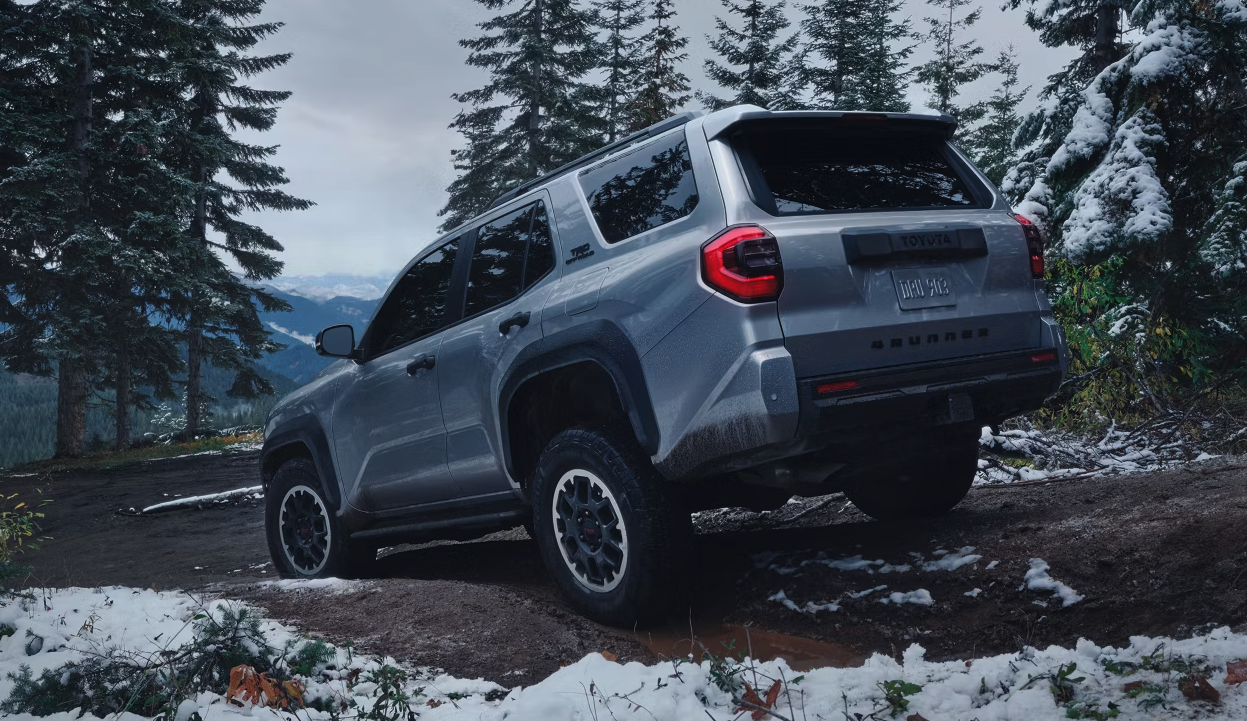
If you’ve got a heavy load to move, you want to be sure that your vehicle has the towing power to do the job. The 2020 Toyota 4Runner has a long pedigree to live up to as it has been a popular choice since it first hit the market in 1984. The most recent model has seen a number of updates to the engine, bodywork, and extras making this one of the most impressive vehicles of its size.
Here at Panama City Toyota, we make it our business to know the specifications of the vehicles we carry so that we can help you find the perfect car for your needs.
Toyota 4Runner Towing Capacity

Image via Flickr by Jacob Frey 4A
There are three versions of the Toyota 4 Runner available, and each model has a five-speed automatic gearbox and a towing capacity of 5,000lbs. They all have an integrated towing hitch receiver and a wiring harness that has both 4- and 7-pin connectors fitted as standard. It’s easy to use, so you can be on the road in no time with everything hitched up securely.
The Toyota 4Runner can easily manage lighter loads like motorcycles, jet skis, or canoes, but it can also tow a more substantial load, such as a large, well-equipped camping trailer, complete with everything you need for a fantastic trip in the great outdoors.
The 4Runner’s towing capacity puts it in pole position over similar vehicles:
- 2020 Honda Pilot LX FWD has a towing capacity of 3,500lbs.
- 2020 Jeep Wrangler 4-Door Sport has 3,500-lb towing capacity.
- 2020 Jeep Wrangler 2-Door model tops out at 2,000lbs.
Engine Features
Each trim level of the 2020 Toyota 4Runner comes standard with a 4.0-liter V-6 engine and an array of other features that make it a great drive.
Multi-Terrain Select and Crawl Control
Wheelspin can be a problem for those traveling on loose surfaces or uneven terrain. The Multi-Terrain Select system has five different modes to give you the control you need. The system automatically adjusts the brakes and engine throttle to improve traction and regulate wheelspin.
Crawl Control uses automatic acceleration and braking to enable you to focus on steering. This makes it ideal for anyone who needs to navigate through tricky terrain or likes to put their vehicle to the test on different surfaces. Towing is much easier when you can focus on steering and keeping your load steady while the 4Runner regulates the throttle for you.
Hill Assist Controls
The Toyota 4Runner comes with both uphill and downhill assist. The hill start assist control comes in handy when you’re on a steep incline because it prevents your vehicle from rolling backward when you move from the brake to the accelerator.
The downhill assist automatically applies the brakes when you are on a particularly steep or slippery descent. This helps you maintain a steady pace, making it easier for you to concentrate on the road ahead. This is vital when you are towing, especially at the top end of the 4Runner’s 5,000lbs capacity.
These features make the Toyota 4Runner the ideal car for anyone who wants to be able to tackle anything, from unsurfaced roads or rarely-used tracks to ravines and riverbeds.
Locking Rear Differential
If you’ve ever found yourself stuck in a ditch or encountered a particularly loose or slippery surface, then you may have encountered a rear wheel losing contact with the road surface and spinning. The Toyota 4Runner has a locking rear differential that you can use to regulate the power going to your rear wheels and gain more control at low speeds.
This is an essential option when you are towing heavy loads over soft or uneven surfaces. And, it’s a must-have for those who spend a lot of time on loose or rough tracks, as it allows you to free yourself from tough situations and lets you perfectly adapt your vehicle to the conditions.
How Does The Toyota 4Runner Compare?
The Toyota 4Runner has many features that appeal to all kinds of drivers, but how does it compare to some of the other SUVs on the market?
Mercedes-Benz GLC 300
The Mercedes-Benz GLC 300 may have a higher MRRP, but is it worth the extra compared to the 4Runner? The towing capacity of the Mercedes is only 3,500lbs, compared to the 4Runner’s 5,000lbs. This may be due to the fact that the Mercedes’ engine is only 255 horsepower, compared to the 4Runner’s 270. The Mercedes’ engine is four-cylinder while the 4Runner’s is a V-6, giving the 4Runner a definite edge when it comes to comparing what’s under the bonnet.
Honda Pilot
Similarly, the 2020 Honda Pilot struggles to keep up with the 4Runner. It has a 3.5-liter engine, compared to the 4Runner’s 4.0 liters, and its towing capacity is only 3,500lbs on the standard model. The Pilot is front-wheel drive, with all-wheel drive available for when the conditions require it. The 4Runner has rear-wheel drive with four-wheel drive available, making it a much more capable vehicle when it comes to off-roading. The taller body and better ground clearance also give the 4Runner a distinct advantage when it comes to handling difficult terrain.
Chevrolet Traverse
The 4Runner also stacks up well against the Chevrolet Traverse. The standard version of the Traverse can only tow 1,500lbs, and you’ll need to opt for the highest specifications to get a towing capacity of 5,000lbs., unlike the 4Runner, which can tow 5,000lbs with all models.
The Traverse is front-wheel drive, making it less reliable when it comes to maintaining control on uneven terrain compared to the 4Runner’s rear-wheel drive. The 4Runner’s smaller turning radius and higher profile bodywork give it an advantage over the Traverse when it comes to maneuverability, too, which helps turning while towing much more manageable.
One of the most impressive things about the Toyota 4Runner is its versatility. You can take it on the school run or your daily commute and still explore the world around you in comfort and style. It’s powerful, spacious, and safe, making it perfect for family life, outdoor adventures, and high-octane exploration. If you want to know more about the Toyota 4Runner and how it might suit your needs, then call Panama City Toyota today, and we’ll help you find your perfect car.