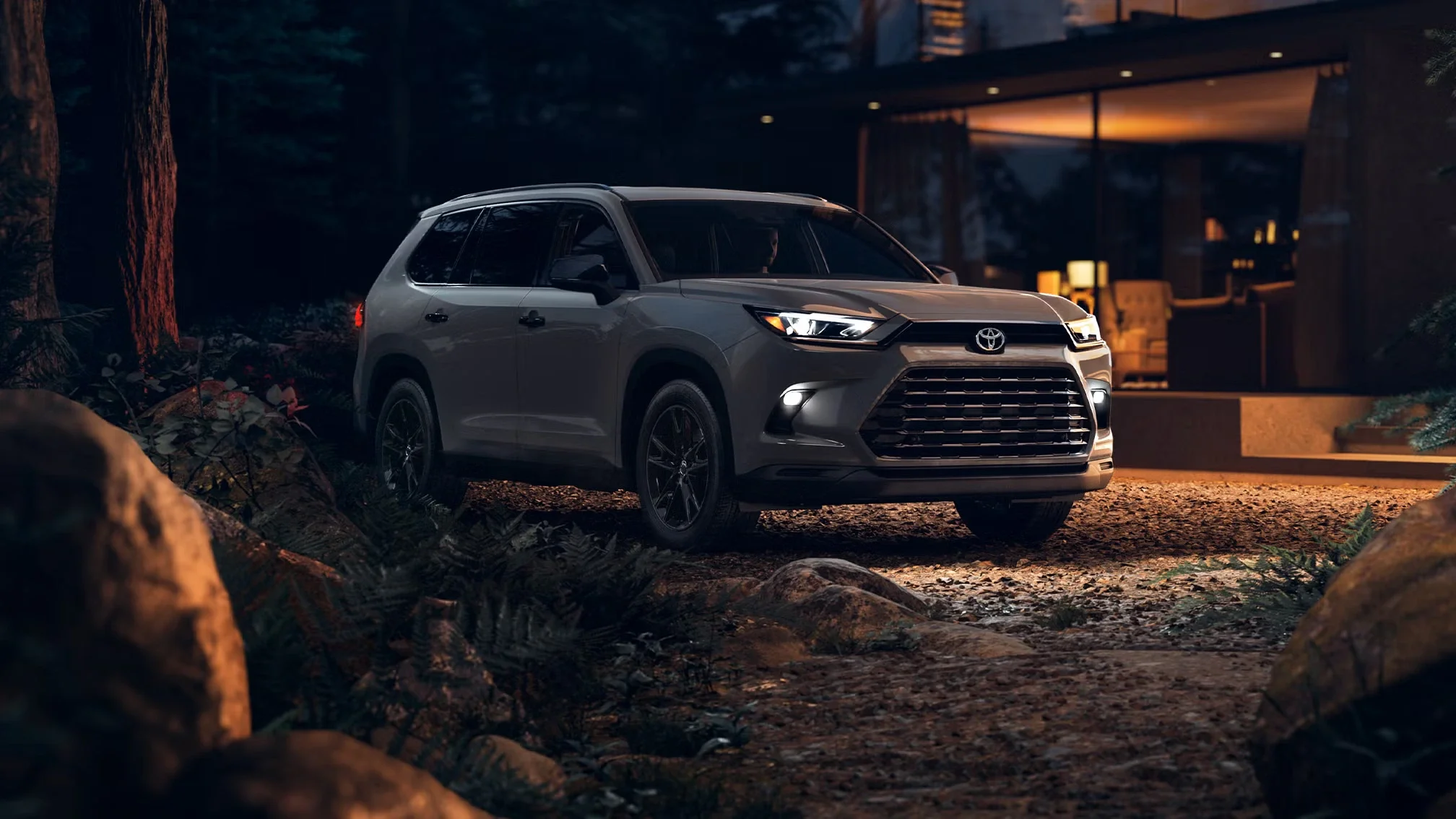
If you have shopped for a new Toyota recently, you have probably seen "TSS" or "Toyota Safety Sense" listed as standard equipment and wondered exactly what that means for your day-to-day driving. Our sales team fields this question often, because the answer changes depending on the model, the model year, and sometimes the trim. This article breaks down what Toyota Safety Sense 3.0 actually includes, what it is designed to do, and where its limits are, so you know what to expect before you get behind the wheel. We will also cover how the system generation can vary across the Toyota lineup and how to confirm exactly what is equipped on a specific vehicle, along with what these features mean for the kind of driving common around Panama City, Panama City Beach, and the rest of Bay County. Toyota Safety Sense Features, Limitations, and Driving Guide What Is Toyota Safety Sense? Definition What Toyota Safety Sense 3.0 Includes What Toyota Safety Sense Does Not Do Why These Features Matter for Florida Panhandle Driving Real-World Use Cases for Panama City-Area Drivers Experience Toyota Safety Sense for Yourself Key Takeaways FAQ What Is Toyota Safety Sense? Toyota Safety Sense is a suite of driver-assistance technologies that Toyota builds into its vehicles to help drivers notice hazards, keep their lane, and manage following distance. Toyota Safety Sense 3.0 includes Pre-Collision System, Lane Departure Alert, Dynamic Radar Cruise Control, Lane Tracing Assist, Road Sign Assist, Automatic High Beams, and Proactive Driving Assist, according to Toyota's official Safety Sense 3.0 brochure. These are driver-assist features, not self-driving or autonomous systems, and they work alongside an attentive driver rather than in place of one. Ask About Toyota Safety Sense Visit Panama City Toyota Definition Definition: Toyota Safety Sense is Toyota's name for a bundled set of active safety and driver-assistance technologies that use cameras, radar, and other sensors to help detect road hazards, monitor lane position, and manage following distance. It is a driver-assist system, not an autonomous driving system, and it is intended to support an attentive driver rather than operate the vehicle independently. For Panama City-area drivers, the practical implication is that these features can add an extra layer of awareness on highways like US-98 and I-10, but they do not remove the driver's responsibility to watch the road. What Toyota Safety Sense 3.0 Includes Toyota Safety Sense 3.0 is one generation of the system, and according to Toyota's official Safety Sense 3.0 brochure, it includes seven core features. Here is what each one does and the conditions under which it operates. Pre-Collision System (PCS). This feature is designed to detect vehicles, pedestrians, bicyclists, or motorcyclists ahead of the vehicle and provide an audio and/or visual forward collision warning along with brake assist if the driver responds to the warning. In TSS 3.0, PCS has been enhanced to identify potential threats coming from multiple lanes and from lateral directions, not just straight ahead. This makes it more capable of flagging a vehicle merging from an adjacent lane or crossing into the vehicle's path, in addition to a vehicle stopped directly ahead. Lane Departure Alert (LDA). LDA detects when the vehicle drifts out of its lane without a turn signal at speeds above 30 mph and issues an audio and visual warning to the driver. If the driver does not respond, the system can apply gentle steering corrections to help guide the vehicle back toward its lane. TSS 3.0 includes improved 3D object recognition that helps the system better distinguish lane markings from roadside features like guardrails. Toyota Safety Sense 3.0 combines seven features with specific operating thresholds: Pre-Collision System with pedestrian, bicyclist, and motorcyclist detection; Lane Departure Alert with steering assist above 30 mph; Dynamic Radar Cruise Control active above 20 mph with four selectable following-distance settings; Lane Tracing Assist, which centers the vehicle in its lane while DRCC is engaged; Road Sign Assist, which reads speed limit, stop, yield, do-not-enter, and pedestrian-crossing signs; Automatic High Beams, which operate above 25 mph; and Proactive Driving Assist, which provides gentle braking in curves and steering support to help maintain lane position. These specifications come from Toyota's official Safety Sense 3.0 brochure. Dynamic Radar Cruise Control (DRCC). DRCC is an adaptive cruise control system that maintains a preset distance from the vehicle ahead at speeds over 20 mph. Drivers can choose from four distance settings depending on preference and traffic conditions, and TSS 3.0's enhanced vehicle detection allows for smoother speed adjustments as traffic ahead speeds up or slows down. Lane Tracing Assist (LTA). LTA works together with DRCC to help center the vehicle within its lane by reading lane markings and tracking the vehicle ahead. It can also offset the vehicle's path slightly within the lane to provide extra clearance when passing an adjacent vehicle, cyclist, or other object close to the lane line. Road Sign Assist (RSA). RSA recognizes speed limit signs, stop signs, do-not-enter signs, and yield signs, along with warning signs such as pedestrian crossings. It displays the relevant icon on the instrument cluster and can alert the driver if the vehicle's speed does not match a posted speed limit sign the system has read. Automatic High Beams (AHB). AHB operates above 25 mph and is designed to help the driver see farther down the road at night by keeping the high beams on when appropriate, while switching to low beams to reduce glare for oncoming or leading traffic. Proactive Driving Assist (PDA). PDA provides gentle braking support when approaching curves, works to detect obstacles such as parked vehicles and pedestrians, and offers steering support to help the driver maintain a centered position in the lane. Safety Sense 3.0 Features and Operating Thresholds Feature Function Operating Threshold Pre-Collision System (PCS) Forward collision warning with brake assist; detects vehicles, pedestrians, bicyclists, motorcyclists Active at applicable driving speeds Lane Departure Alert (LDA) Warns of unintended lane drift; can apply gentle steering correction Above 30 mph Dynamic Radar Cruise Control (DRCC) Adaptive cruise control with 4 selectable following-distance settings Above 20 mph Lane Tracing Assist (LTA) Centers vehicle in lane while DRCC is engaged Works with DRCC Road Sign Assist (RSA) Reads and displays speed limit, stop, yield, do-not-enter, pedestrian-crossing signs When operating and detection conditions are met Automatic High Beams (AHB) Switches between high and low beams automatically at night Above 25 mph Proactive Driving Assist (PDA) Gentle braking in curves; steering support to help maintain lane position When operating and detection conditions are met Every one of these features is designed to work with the driver, prompting a warning or offering light assistance rather than taking control of the vehicle on its own. Compare Toyota Safety Features What Toyota Safety Sense Does Not Do This is the part of the conversation we think matters most, because it is easy to see a long feature list and assume more than the system actually delivers. Toyota Safety Sense, including TSS 3.0, is a driver-assistance suite. It is not a self-driving system, and Toyota does not market it as one. None of the seven features described above are designed to replace an attentive driver who is watching the road, checking mirrors, and staying ready to brake or steer. Toyota Safety Sense features are driver-assistance technologies designed to support, not replace, an attentive driver, and no combination of these features makes a Toyota vehicle self-driving or capable of avoiding every collision. Because the exact TSS generation and feature set can vary by model and model year, the most reliable way to confirm what is equipped on a specific vehicle is to check that vehicle's window sticker or ask our sales team directly. This matters most for shoppers cross-shopping different Toyota models or comparing a current vehicle to a newer one, since assuming identical safety equipment across the lineup can lead to a mistaken understanding of what a specific car actually includes. A second point worth being direct about: Toyota Safety Sense 3.0 is confirmed as standard equipment on the 2027 Toyota Crown. Beyond that, the generation of Toyota Safety Sense equipped on a given model, whether that is TSS 4.0, TSS 3.0, or an earlier generation such as TSS 2.5 or 2.5+, varies by model and by model year. Toyota already offers TSS 4.0 on the 2026 RAV4. A Camry, a RAV4, a Tacoma, and a Highlander do not necessarily carry the same generation of the system, and the same model can carry a different generation from one model year to the next as Toyota updates its lineup. Contact Panama City Toyota for the exact Toyota Safety Sense generation and features equipped on the vehicle you are considering. That is why the most reliable way to know what is equipped on a specific vehicle is to check that vehicle's window sticker, which lists the standard safety equipment for that exact car, or to ask our sales team to confirm it before you buy. If you already own a Toyota and are unsure which generation of Toyota Safety Sense your vehicle has, your owner's manual and window sticker (or the original build sheet) are the most accurate sources, rather than assuming your vehicle matches a newer model you may have seen advertised. It is also worth understanding the practical limits of what these systems can do even when they are working as designed. A forward collision warning depends on the system's sensors detecting a hazard, and no system is described as working in every weather or visibility condition or as guaranteed to prevent a collision. Lane Tracing Assist provides steering support, not hands-free driving, and Toyota requires the driver to keep hands on the wheel and stay engaged. Treat every Toyota Safety Sense feature as a layer of support for a driver who is already paying attention, not a substitute for that attention. Toyota Safety Sense Does vs. Does Not Do Toyota Safety Sense Does Toyota Safety Sense Does Not Do Warns of a potential forward collision and can apply brake assist Guarantee collision avoidance in every situation Alerts the driver to unintended lane drift and can nudge steering Drive the vehicle hands-free or autonomously Maintains a preset following distance above 20 mph Replace the need for an attentive, engaged driver Reads and displays posted road signs Guarantee accurate detection in all weather or visibility conditions Helps manage high-beam use at night above 25 mph Adjust for every road or weather condition on its own Ask About a Specific Toyota Model Get Help With Your Toyota's Settings Why These Features Matter for Florida Panhandle Driving Driving conditions around Bay County give some practical context for why these features can be useful day to day, without needing to overstate what they do. US-98 and I-10 both see heavy seasonal traffic as visitors head toward Panama City Beach, and stop-and-go conditions on these corridors are exactly the kind of scenario where Dynamic Radar Cruise Control's ability to maintain a preset following distance can reduce some of the manual speed adjustments a driver would otherwise make constantly. Florida Panhandle summers also bring frequent heavy rain and afternoon thunderstorms. Pre-Collision System and Lane Departure Alert are designed to help flag hazards and lane drift, but sensor-based systems like these can be affected by heavy rain, fog, or road spray, so they should never be treated as a substitute for slowing down and increasing following distance in poor visibility. The same caution applies to glare, whether from a low afternoon sun over St. Andrews Bay or headlights on a dark stretch of US-231. Automatic High Beams is built to help with nighttime visibility above 25 mph, but the driver should still adjust speed and following distance for actual road and weather conditions rather than relying on the system to compensate. Local road sign variety is another place where Road Sign Assist can be a genuine convenience, particularly on routes through Lynn Haven, Callaway, and Springfield where speed limits change frequently near schools, intersections, and commercial corridors. Reading the posted sign and displaying it on the instrument cluster gives drivers one more reference point, though drivers should still watch for posted signage themselves rather than depending on the system alone. Florida Panhandle Driving Conditions and Relevant TSS Features Local Condition Relevant TSS 3.0 Feature What to Keep in Mind Heavy seasonal traffic on US-98/I-10 Dynamic Radar Cruise Control Still requires driver attention in stop-and-go conditions Summer thunderstorms and heavy rain Pre-Collision System, Lane Departure Alert Sensor performance can be affected by rain, fog, or road spray Low sun glare over St. Andrews Bay or night driving on US-231 Automatic High Beams Driver should still adjust speed and following distance for conditions Frequent speed-limit changes near schools/intersections in Lynn Haven, Callaway, Springfield Road Sign Assist Drivers should still watch posted signage directly Real-World Use Cases for Panama City-Area Drivers The following scenarios are hypothetical examples meant to illustrate how these features could be used in everyday driving around Bay County. They are not based on specific customer experiences. The daily I-10 commuter. Imagine a driver commuting from Marianna or Chipley into Panama City several days a week. With Dynamic Radar Cruise Control and Lane Tracing Assist active on the open highway stretches, that driver could let the system help maintain following distance and lane position during long, monotonous stretches, while still staying alert and ready to take full control in heavier traffic near the Panama City interchanges. A parent with a new teen driver. Consider a parent about to hand their teenager the keys for the first time. Understanding that Pre-Collision System is designed to warn of a potential forward collision and can apply brake assist if the driver responds to the alert might be one factor, among many, in choosing a particular Toyota for a new driver, alongside actual driver training and supervised practice. A tourist-season grocery run. Picture a Panama City Beach resident driving Front Beach Road during peak tourist season, where pedestrian traffic and sudden stops are common. Pre-Collision System's pedestrian detection and Automatic High Beams for nighttime visibility could both be relevant in that kind of congested, mixed-use corridor, alongside the driver's own attention to crosswalks and slowing traffic. Experience Toyota Safety Sense for Yourself Reading about these features only tells part of the story. If you want to see how Pre-Collision System, Lane Tracing Assist, Dynamic Radar Cruise Control, and the rest actually feel on the road, we invite you to schedule a test drive at our dealership at 959 West 15th Street in Panama City. Our sales team can walk you through exactly which Toyota Safety Sense generation is equipped on the specific vehicle you are considering, show you where to find that information on the window sticker, and answer any questions about how the system operates before you decide. Request a Toyota Test Drive Call 850-769-3377 Key Takeaways Toyota Safety Sense 3.0 includes seven features: Pre-Collision System, Lane Departure Alert, Dynamic Radar Cruise Control, Lane Tracing Assist, Road Sign Assist, Automatic High Beams, and Proactive Driving Assist. Toyota Safety Sense 3.0 is confirmed standard equipment on the 2027 Toyota Crown; the generation equipped on other models and model years varies, so confirm the exact system on any specific vehicle before assuming it matches another model. Several features have specific speed thresholds: Lane Departure Alert's steering assist activates above 30 mph, Dynamic Radar Cruise Control above 20 mph, and Automatic High Beams above 25 mph. Toyota Safety Sense is a driver-assistance suite, not a self-driving system, and it does not remove the driver's responsibility to stay attentive. Weather, glare, and road spray common in the Florida Panhandle can affect sensor-based systems, so drivers should not rely on these features as a substitute for slowing down in poor conditions. The most reliable way to confirm what is equipped on a specific vehicle is the window sticker or a conversation with our sales team. FAQ Can Toyota Safety Sense features be turned off? Some individual Toyota Safety Sense features can be adjusted or temporarily disabled through vehicle settings, and specific steps vary by model and model year. If you want to know how to adjust a specific feature on your vehicle, your owner's manual or our service team can walk you through the exact process for that model. Is Toyota Safety Sense the same on every current Toyota model? No. The generation of Toyota Safety Sense equipped on a vehicle, along with the exact feature set, varies by model and model year. Toyota Safety Sense 3.0 is confirmed standard on the 2027 Toyota Crown, while the 2026 RAV4 has TSS 4.0. Other models may carry TSS 3.0 or an earlier generation. Check the window sticker on a specific vehicle or ask our sales team to confirm. Does Toyota Safety Sense replace the need for safe driving habits? No. Every feature in the Toyota Safety Sense suite is designed to assist an attentive driver, not to operate the vehicle independently or guarantee collision avoidance. Drivers should keep their hands on the wheel, stay focused on the road, and treat these features as an added layer of support rather than a replacement for careful driving. Do Toyota Safety Sense features work in all weather conditions? Sensor-based systems like Pre-Collision System, Lane Departure Alert, and Automatic High Beams can be affected by heavy rain, fog, glare, or road spray, all of which are common in the Florida Panhandle. Drivers should reduce speed and increase following distance in poor visibility rather than relying on these systems to compensate for weather conditions. Toyota Safety Sense 3.0 brings together seven driver-assistance features, from Pre-Collision System and Lane Departure Alert to Dynamic Radar Cruise Control, Lane Tracing Assist, Road Sign Assist, Automatic High Beams, and Proactive Driving Assist. Each one is built to support an attentive driver rather than take over the driving task, and the exact generation equipped on a given Toyota depends on the model and model year, so the window sticker remains the most reliable place to confirm what a specific vehicle includes. If you are weighing which current Toyota fits your daily drive around Panama City, Lynn Haven, or the wider Bay County area, our team at 959 West 15th Street can show you exactly which safety features come standard on the vehicles you are considering. Call us at 850-769-3377 or stop by to schedule a test drive and see Toyota Safety Sense in action for yourself. Talk With Our Toyota Team Get Directions Related Articles Family SUV Safety Safest 2026 Toyota SUVs for Families With Kids in Panama City, FL Read More Crown & Crown Signia 2026 Toyota Crown and Crown Signia: Hybrid Luxury at Panama City Toyota Read More Toyota Hybrid Lineup Your Complete Guide to the 2026 Toyota Hybrid Lineup in Panama City Read More
Toyota Cabin and Engine Air Filter Service in Panama City, FL
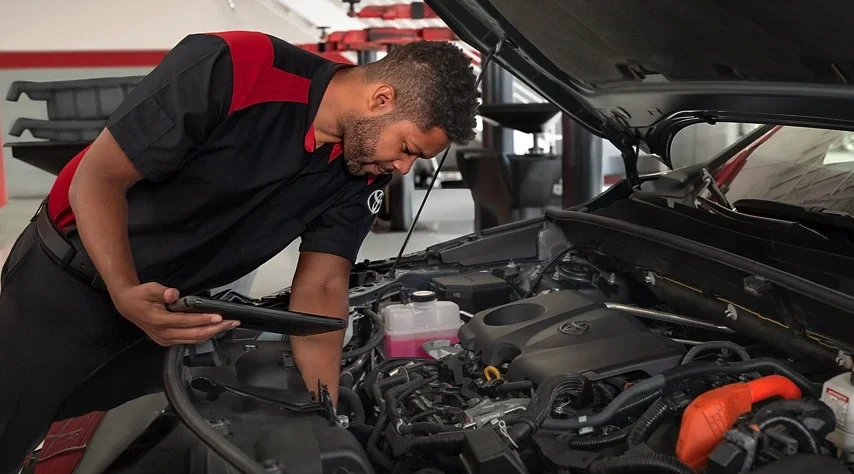
In this article, our team at Panama City Toyota breaks down what each filter does, the signs that indicate it needs attention, how local heat, dust, and pollen affect replacement timing, and whether this service falls under ToyotaCare. We will also cover genuine Toyota filters versus aftermarket options so you can make an informed decision the next time either filter comes up during a service visit. Toyota Air Filter Service Guide: Differences, Replacement Timing, and Coverage Introduction What is a cabin air filter? Cabin Air Filter vs. Engine Air Filter: What Each One Does How Often to Check Each Filter, Genuine Parts vs. Aftermarket, and ToyotaCare Coverage Why the Florida Panhandle Climate Affects Filter Life Real-World Use Cases for Panama City-Area Drivers Schedule Your Filter Service Key Takeaways FAQ Introduction Your Toyota actually uses two separate air filters, and they do different jobs. The cabin air filter cleans the air that flows through your vents and into the passenger compartment, while the engine air filter cleans the air your engine draws in for combustion. Most manufacturer guidance points to replacing a cabin air filter roughly every 12,000 to 15,000 miles, or about once a year, and an engine air filter roughly every 15,000 to 30,000 miles depending on the model and driving conditions. Your exact interval varies by model year and trim, so always confirm the specific mileage in your Toyota owner's manual. Both filters are easy to overlook because neither one is part of a visible, moving system you interact with daily. Yet both affect how your Toyota feels to drive and how comfortable it is to sit in. A clogged cabin filter can leave your air conditioning working harder than it should for less airflow, which matters in a Florida Panhandle summer. A neglected engine filter can quietly restrict the airflow your engine relies on for efficient combustion. Schedule an Air Filter Inspection Explore Our Toyota Service Center What is a cabin air filter? A cabin air filter is a filtration element inside a vehicle's HVAC system that removes dust, pollen, and other airborne particles from the air entering the passenger compartment. An engine air filter is a separate filtration element that cleans the air drawn into the engine for combustion, protecting internal components from debris. Both are wear items that require periodic replacement, and the correct interval for each depends on the specific Toyota model, model year, and driving conditions. Cabin Air Filter vs. Engine Air Filter: What Each One Does Although they share a name and a basic function (trapping particles before air reaches somewhere important), the cabin air filter and the engine air filter serve completely different systems, sit in different locations, and show different symptoms when they need replacing. What the Cabin Air Filter Does The cabin air filter is part of your Toyota's heating, ventilation, and air conditioning (HVAC) system. Air pulled in from outside, or recirculated from inside the cabin, passes through this filter before it reaches your vents. The filter is designed to capture dust, pollen, mold spores, road debris, and other particulates so they do not circulate through the interior of the vehicle. Most Toyota models locate the cabin air filter behind the glovebox, which makes it one of the more accessible filters on the vehicle. Because it sits directly in the path of your HVAC airflow, a clogged cabin filter has an immediate and noticeable effect on how the system performs. Common signs that a cabin air filter needs replacing include: Noticeably weaker airflow from the vents, even at the highest fan setting A musty, stale, or dusty odor when the air conditioning or heat first kicks on Increased sneezing, congestion, or other allergy symptoms while driving, particularly during pollen season Visible dust or debris around the vents Fogging on the windshield that takes longer than usual to clear What the Engine Air Filter Does The engine air filter is a separate component housed in the engine bay. It filters the air the engine pulls in before that air mixes with fuel for combustion. A clean engine air filter allows the engine to draw in the correct volume of air for efficient combustion, while a severely clogged filter can restrict airflow enough to affect performance and, in some cases, fuel economy. Toyota generally recommends inspecting or replacing the engine air filter more frequently in dusty or unpaved driving conditions than in typical paved-road commuting. Unlike the cabin filter, the engine air filter does not affect your comfort directly. Its condition shows up instead in how the vehicle runs. Signs that an engine air filter may need attention include: Reduced acceleration or a feeling that the engine is not responding as quickly as usual Unusual engine sounds, particularly a rougher idle A visibly dark, dirty, or clogged filter when inspected (a clean filter is typically light-colored and free of heavy debris) In more severe cases, reduced fuel economy, since a badly restricted air supply forces the engine's fuel system to compensate Because the engine air filter sits inside a sealed housing in the engine compartment, checking it is a bit more involved than a cabin filter check, though our service technicians can inspect both during a routine visit. Why the Difference Matters Cabin Air Filter vs. Engine Air Filter Category Cabin Air Filter Engine Air Filter Protects Passenger compartment air quality Engine combustion Typical location Behind the glovebox Engine bay, sealed housing Typical replacement interval Roughly 12,000 to 15,000 miles (about 1 year) Roughly 15,000 to 30,000 miles Key symptoms when dirty Weak vent airflow, musty odor, allergy symptoms Sluggish acceleration, rough idle, reduced fuel economy Covered by ToyotaCare No No The core distinction is simple: the cabin air filter protects the people inside the vehicle, and the engine air filter protects the engine itself. Confusing the two, or assuming that replacing one accomplishes the same thing as replacing the other, is a common mistake. A driver who complains about weak air conditioning airflow needs a cabin filter check, not necessarily an engine air filter replacement, and vice versa for a driver noticing sluggish acceleration. Because the two filters wear at different rates and respond to different conditions, they should be evaluated independently rather than assumed to need service on the same schedule. Have Both Toyota Air Filters Checked How Often to Check Each Filter, Genuine Parts vs. Aftermarket, and ToyotaCare Coverage General Replacement Intervals As a general guideline, cabin air filters commonly need replacement roughly every 12,000 to 15,000 miles, or approximately once a year for an average driver. Engine air filters commonly last longer, with a typical range of roughly 15,000 to 30,000 miles, though that range narrows considerably for drivers who spend meaningful time on dusty, sandy, or unpaved roads. These figures are general maintenance guidance, not a fixed rule for every Toyota. The exact interval for your vehicle depends on the model, model year, and powertrain, and it is published in your Toyota owner's manual maintenance schedule. If you are unsure which interval applies to your Toyota, our service advisors can pull the manufacturer-recommended schedule for your exact model and mileage. Genuine Toyota Filters vs. Aftermarket Filters Genuine Toyota cabin and engine air filters are engineered to the exact fit and filtration specifications of your vehicle, which supports consistent airflow and a proper seal within the filter housing. Aftermarket filters vary in quality, materials, and fit from one brand to another, and some are built to a lower price point rather than to Toyota's original specifications. The tradeoff for most owners comes down to fit consistency and manufacturer specification with a genuine filter versus a lower upfront cost with an aftermarket option, and either can be a reasonable choice depending on what you prioritize. Genuine Toyota Filters vs. Aftermarket Filters Category Genuine Toyota Filter Aftermarket Filter Fit Engineered to exact vehicle housing dimensions Varies by brand; may require researching correct part number Filtration specification Matches Toyota's original specification Varies by brand and price point Upfront cost Typically higher Typically lower Consistency across brands Consistent (single source) Varies Availability Panama City Toyota parts department and online parts ordering Varies by retailer This is not a case where every aftermarket filter performs poorly. Reputable aftermarket brands can offer adequate filtration for the price. The practical difference is consistency: because a genuine Toyota filter is manufactured to match your vehicle's exact housing dimensions and airflow requirements, you generally do not need to research which aftermarket part number actually fits your specific trim and model year. Our parts department stocks genuine Toyota filters for current models, and you can also order parts directly through our online parts ordering tool if you prefer to handle a filter swap yourself. Order Genuine Toyota Air Filters Is This Covered by ToyotaCare? This is a question we hear often, and the honest answer is that cabin and engine air filter replacement is typically not included under ToyotaCare. ToyotaCare's no-cost maintenance coverage is generally built around scheduled services such as oil changes, tire rotations, fluid level checks, and multi-point vehicle inspections for a defined period after purchase. Air filters are considered a wear item that falls outside that included coverage, which means filter replacement is typically billed as a separate service rather than something ToyotaCare covers automatically. If you are unsure whether a specific service on your Toyota is included under your current ToyotaCare terms, our team can confirm exactly what applies to your vehicle and mileage before any work begins. Symptom-to-Likely-Cause Quick Reference Symptom You Notice Likely Filter Weak airflow from vents at highest fan setting Cabin air filter Musty or dusty odor when A/C or heat starts Cabin air filter Worsening allergy symptoms while driving Cabin air filter Windshield fogging that clears slowly Cabin air filter Sluggish acceleration Engine air filter Rougher engine idle Engine air filter Visibly dark or clogged filter on inspection Engine air filter Reduced fuel economy (severe cases) Engine air filter Review ToyotaCare Coverage Ask About Your Maintenance Coverage Why the Florida Panhandle Climate Affects Filter Life Panama City and the surrounding Bay County area put both filters through conditions that differ meaningfully from a cooler, drier climate. Three local factors in particular tend to shorten the practical life of both the cabin and engine air filters: heat, pollen, and dust. Florida Panhandle summers mean near-constant air conditioning use for most drivers, often for months at a time. Every hour the HVAC system runs, air continues to pass through the cabin air filter. More running time means more particulate accumulation over the same mileage compared to a vehicle that uses air conditioning only occasionally. Drivers who commute daily between Panama City, Lynn Haven, Callaway, or Panama City Beach and keep the air conditioning running for most of the year may notice reduced airflow sooner than the general mileage guideline would suggest, which is a reasonable signal to have the filter checked rather than waiting strictly for a mileage milestone. Pollen season across the Panhandle, particularly in spring, adds another layer of particulate load. Pine pollen and other seasonal allergens are heavy in this region, and a cabin air filter that is already due for replacement can become saturated more quickly during peak pollen weeks. Drivers who deal with seasonal allergies often notice the connection directly: symptoms that seem to worsen specifically while driving can point to a cabin filter that needs attention. Dust plays a larger role in engine air filter wear than most drivers expect. While most Bay County commuting happens on paved roads, drivers who regularly travel unpaved or rural routes, whether for work, hunting or timber-land access, or trips toward more rural parts of Washington or Jackson County, expose the engine air filter to a higher volume of airborne particulate than a typical paved commute. In those conditions, checking the filter closer to the shorter end of the recommended range, or having it inspected at each service visit, is a sensible approach rather than assuming the longer mileage interval automatically applies. None of these factors change the manufacturer-recommended interval itself. What they change is how quickly a given vehicle may reach the point where the filter is doing less than it should, which is why we recommend having both filters checked at routine service visits rather than waiting for a symptom to appear. Real-World Use Cases for Panama City-Area Drivers The following scenarios are hypothetical examples meant to illustrate how these factors typically play out. They do not describe actual customers or specific vehicles. The allergy-sensitive commuter. Picture a driver commuting daily from Lynn Haven into Panama City during peak spring pollen season. Around the one-year mark, they notice the air conditioning seems to blow noticeably softer than it used to, and they start sneezing more during the drive than they do once they arrive. That combination, weaker airflow paired with worsening symptoms specifically in the vehicle, is a fairly clear indicator that a cabin air filter check is worth scheduling, even if the vehicle has not yet hit the upper end of the typical mileage range. The rural commuter near Fountain or Youngstown. Consider a driver whose daily route includes several miles of unpaved or heavily graveled road on the way to and from more rural parts of Bay County. Because that kind of driving exposes the engine air filter to more airborne dust than a purely paved commute, this driver may find it worthwhile to have the engine air filter inspected at every service visit rather than relying on the longer end of the standard mileage interval. The near-daily A/C user. Imagine a Panama City Beach resident who runs the air conditioning almost every time they drive, given how much of the year stays warm in this part of Florida. Even with modest annual mileage, the cumulative hours of HVAC operation can outpace what the mileage-based interval alone would suggest, making it reasonable to have the cabin filter checked based on time elapsed rather than mileage alone. Schedule Your Filter Service If it has been a while since either filter was checked on your Toyota, or you are noticing any of the symptoms described above, our service team can inspect both the cabin and engine air filters and let you know whether replacement makes sense based on their actual condition rather than mileage alone. We carry genuine Toyota filters for current models and can typically handle this as a quick service alongside routine maintenance you already have scheduled. You can book an appointment through our online scheduling tool, or call our service department directly if you would rather set up a time over the phone. Schedule Toyota Air Filter Service Call 850-769-3377 Key Takeaways The cabin air filter cleans air entering the passenger compartment through the HVAC system, while the engine air filter cleans air entering the engine for combustion; they are separate components with separate replacement schedules. General guidance suggests cabin air filter replacement roughly every 12,000 to 15,000 miles (about once a year) and engine air filter replacement roughly every 15,000 to 30,000 miles, but the exact interval for your Toyota is listed in your owner's manual. Weak vent airflow, musty odors, and worsening allergy symptoms while driving point to the cabin filter; sluggish acceleration, rough idle, or a visibly dirty filter point to the engine filter. Florida Panhandle heat, pollen, and dust can shorten practical filter life compared to the general mileage guideline, particularly for drivers with heavy A/C use or unpaved-road commutes. Genuine Toyota filters are built to your vehicle's exact specifications; aftermarket filters vary in quality and fit, so the choice comes down to fit consistency versus upfront cost. Cabin and engine air filter replacement is typically not included under ToyotaCare and is generally billed as a separate maintenance service. FAQ Can a dirty air filter hurt my fuel economy? A severely clogged engine air filter can restrict the airflow your engine needs for efficient combustion, which in more extreme cases can reduce fuel economy. A moderately dirty filter is less likely to produce a noticeable change on its own, but it is still worth replacing on schedule since airflow restriction tends to get worse gradually rather than all at once. Is cabin or engine air filter replacement covered under ToyotaCare? Typically, no. ToyotaCare's no-cost coverage generally centers on services like oil changes, tire rotations, fluid checks, and multi-point inspections. Air filters are considered a wear item and are usually billed as a separate service. Our team can confirm exactly what your current ToyotaCare terms include for your specific vehicle. Can I replace either filter myself? On many Toyota models, the cabin air filter is relatively accessible behind the glovebox and can be a manageable DIY task for owners comfortable with basic maintenance, provided you use the correct filter for your exact model and follow your owner's manual instructions. The engine air filter is also accessible on many models, though its housing and clip locations vary more by vehicle. If you would rather not handle it yourself, our service team can complete either replacement, and our parts department can also order the correct genuine filter if you want to do the work on your own. How do I know which filter is causing a problem I'm noticing? Airflow, odor, and allergy-related symptoms almost always point to the cabin air filter, since that filter sits directly in your HVAC system's path. Performance-related symptoms, such as sluggish acceleration or a rougher idle, point to the engine air filter, since that filter affects combustion rather than cabin comfort. If you are not sure which one applies to what you are noticing, our service advisors can inspect both during your visit. Cabin and engine air filters rarely get much attention because neither one is something you see or touch during normal driving, but both affect how your Toyota feels and performs day to day. The cabin filter shapes your air conditioning airflow and interior air quality, while the engine filter supports efficient combustion. General guidance points to roughly 12,000 to 15,000 miles for the cabin filter and roughly 15,000 to 30,000 miles for the engine filter, though your owner's manual has the exact interval for your model. If you are due for a check, noticing weaker airflow, an odd odor, or a change in how your Toyota accelerates, our service team at Panama City Toyota can inspect both filters and recommend genuine Toyota replacements when needed. Stop by our service center at 959 West 15th Street in Panama City, or schedule an appointment online, and we will take it from there. Book Your Filter Inspection Get Directions Related Articles Oil Change Service Oil Changes: DIY Or Professional? Read More Routine Maintenance Toyota Tire Rotation Schedule for Panama City Drivers Read More Brake Maintenance Toyota Brake Fluid Change Schedule in Panama City, FL Read More